Mapping the Resilience Connectome: AI Deciphers SuperAger Resistance to Alzheimer’s
Researchers have developed a machine learning framework that identifies functional connectivity patterns distinguishing cognitively resilient SuperAgers from those at risk for Alzheimer’s.
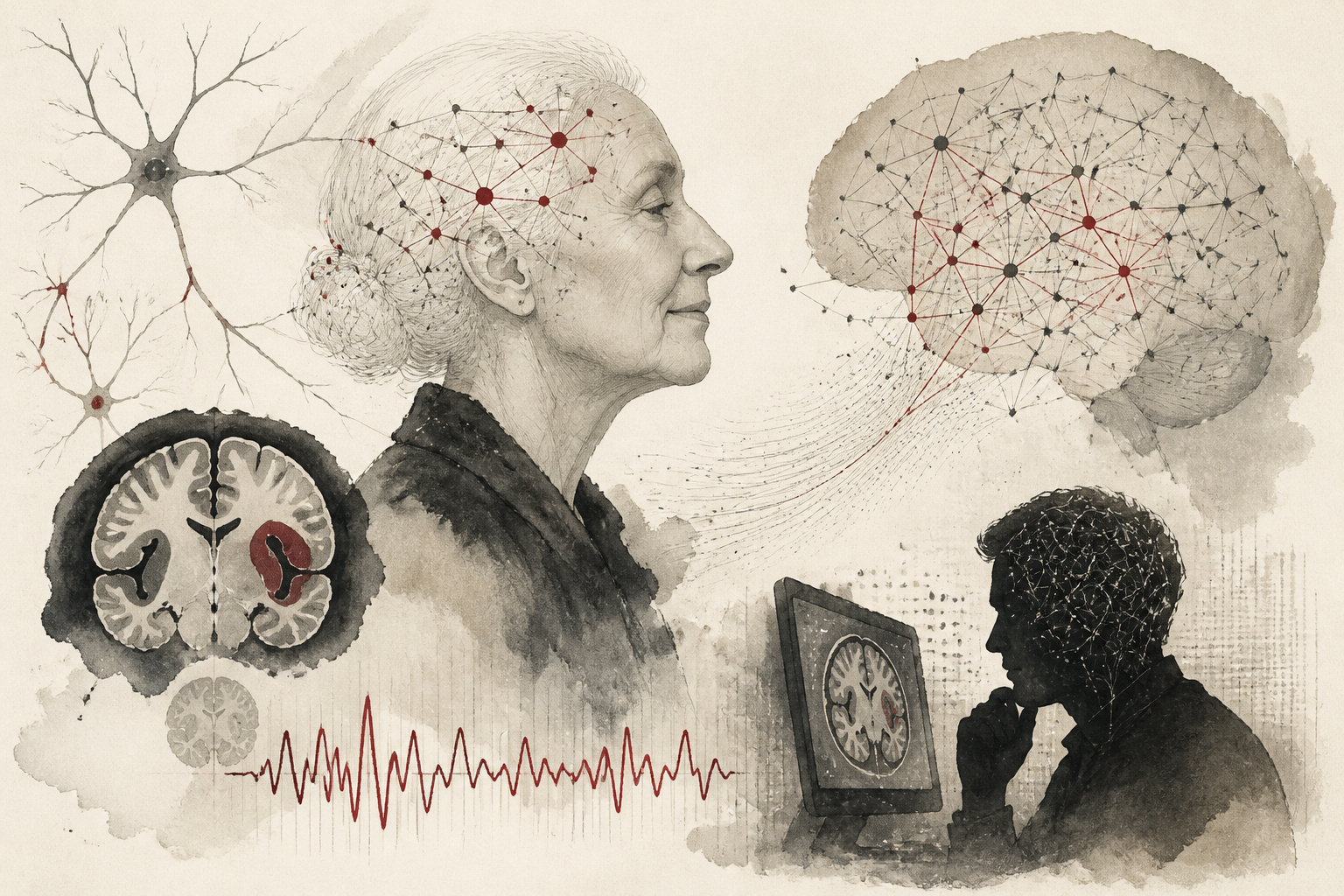
The pursuit of understanding human longevity has traditionally focused on the avoidance of disease, yet a growing field of neuroscientific inquiry seeks to understand the biological mechanisms of active resistance. Within the landscape of cognitive aging, a specific cohort known as SuperAgers represents individuals aged 80 and older whose memory performance remains equal to or better than that of individuals decades their junior. As reported by Neuroscience News, a new study utilizing advanced artificial intelligence has successfully mapped the functional connectome of these resilient brains, providing a predictive framework that may identify Alzheimer’s disease years before the clinical onset of symptoms. By contrasting the neural architecture of SuperAgers with that of individuals progressing toward neurodegeneration, researchers are uncovering a physiological blueprint for cognitive durability.
The Architecture of Cognitive Resilience
Traditional diagnostic models for Alzheimer’s disease have largely relied on the detection of physical markers, such as the accumulation of amyloid-beta plaques and tau tangles. However, these markers do not always correlate perfectly with cognitive function, as some individuals maintain sharp mental acuity despite the presence of significant pathology. This discrepancy suggests the existence of a resilience mechanism within the brain’s communication network. The study featured on Neuroscience News highlights the development of the ARC machine learning framework, a computational tool designed to analyze the complex web of brain functional connectivity. Unlike structural imaging, which looks at the brain’s physical shape, functional connectivity measures how different regions of the brain communicate and synchronize their activity. By studying these interactions, the AI identifies specific patterns that allow SuperAgers to bypass the standard cognitive decline associated with aging.
Deciphering the ARC Machine Learning Framework
The methodology behind this discovery involves the synthesis of massive datasets regarding brain activity and cognitive performance. The ARC framework functions by mapping the connectome—a comprehensive map of neural connections—and identifying specific "hubs" of activity that distinguish SuperAgers from both normally aging adults and those in the early stages of Alzheimer's. The AI was trained to recognize the subtle nuances in how information flows across the default mode network, the salience network, and the executive control network. The researchers found that SuperAgers possess a unique signature of connectivity that is not merely a lack of deterioration, but rather a robust maintenance of specific pathways that typically degrade in late life. This data-driven approach allows for a more nuanced understanding of vulnerability, moving beyond the binary of "healthy" versus "diseased" to a spectrum of neural efficiency.
Predictive Capabilities and Longitudinal Insights
One of the most significant aspects of the ARC framework is its predictive power. According to the original reporting, this AI-driven connectome mapping can predict the likelihood of developing Alzheimer’s disease years in advance. This is achieved by comparing a patient's functional brain signature against the established SuperAger template. When an individual’s connectivity patterns begin to diverge from the resilient model toward a vulnerable state, the AI can flag these shifts long before memory loss becomes apparent in clinical testing. This early detection is critical for the development of preventative interventions. The study suggests that the brain’s functional organization provides a more sensitive barometer for future health than current behavioral assessments, offering a window of opportunity where lifestyle or pharmacological interventions might be most effective in preserving cognitive integrity.
Functional Connectivity vs. Pathological Progression
The findings shift the academic conversation from what is lost during neurodegeneration to what is preserved in those who remain resilient. The research indicates that SuperAgers exhibit heightened connectivity in regions associated with memory and executive function, which may act as a buffer against the physical damage of Alzheimer's pathology. Even when the brain shows signs of structural thinning, the functional connectivity remains efficient, suggesting that the way the brain is "wired" for communication may be as important as the health of the neurons themselves. This insight challenges the singular focus on clearing plaques and tangles, suggesting that strengthening or maintaining specific connectivity patterns could be a parallel strategy in the fight against dementia. The AI's ability to isolate these resilience-related nodes provides a new target for future neuro-modulation therapies and cognitive training protocols.
Limitations and the Path to Clinical Integration
While the results of the ARC framework represent a breakthrough in neuroimaging analysis, the researchers acknowledge several limitations that must be addressed before such technology can be implemented in a standard clinical setting. Currently, the acquisition of high-resolution functional MRI data required for the connectome mapping is expensive and technically demanding, limiting its accessibility. Furthermore, while the AI can identify patterns of resilience, the underlying biological and genetic reasons why some individuals become SuperAgers while others do not remain partially obscured. The study calls for further longitudinal research to determine how these connectivity patterns evolve over time and whether they can be intentionally modified. There is also the question of generalizability across diverse populations, as factors like socio-economic status, education, and cardiovascular health all influence brain connectivity and must be accounted for in broader applications of the AI model.
The Broader Implications for Gerontology
The significance of this research extends beyond the realm of Alzheimer’s diagnostics into the broader field of gerontology and the psychology of aging. By defining what a "resilient brain" looks like at a functional level, the scientific community can begin to develop more personalized approaches to aging. The ability to identify vulnerability years early allows for a paradigm shift in geriatric care, moving from reactive treatment to proactive preservation. As the global population ages, the burden of neurodegenerative disease increases, making the insights provided by the SuperAger AI connectome invaluable. It offers a message of hope, suggesting that cognitive decline is not an inevitable consequence of aging, but rather a process that may be mitigated by fostering the specific neural architectures identified in the world’s most resilient minds.
Quick answers
- What is a SuperAger in the context of Alzheimer's research?
- SuperAgers are individuals aged 80 and older who maintain memory and cognitive functions comparable to or better than individuals significantly younger, often showing resilience to typical age-related decline.
- How does the ARC machine learning framework predict Alzheimer's?
- The ARC framework maps functional brain connectivity (the connectome) to identify patterns that distinguish resilience from vulnerability, allowing for early prediction of cognitive decline.
- Why is functional connectivity important for studying brain health?
- Functional connectivity measures how brain regions communicate; it can reveal cognitive resilience even when physical brain pathology, like plaques, is present.
Rewritten by Zeit editorial AI. Based on original reporting at NeuroscienceNews.com.