Mapping the Prenatal Architecture: New Insights into Human Cortical Development
UCLA researchers identify glucose metabolism and thalamic signaling as the dual drivers behind the production of upper-layer neurons in the developing human brain.
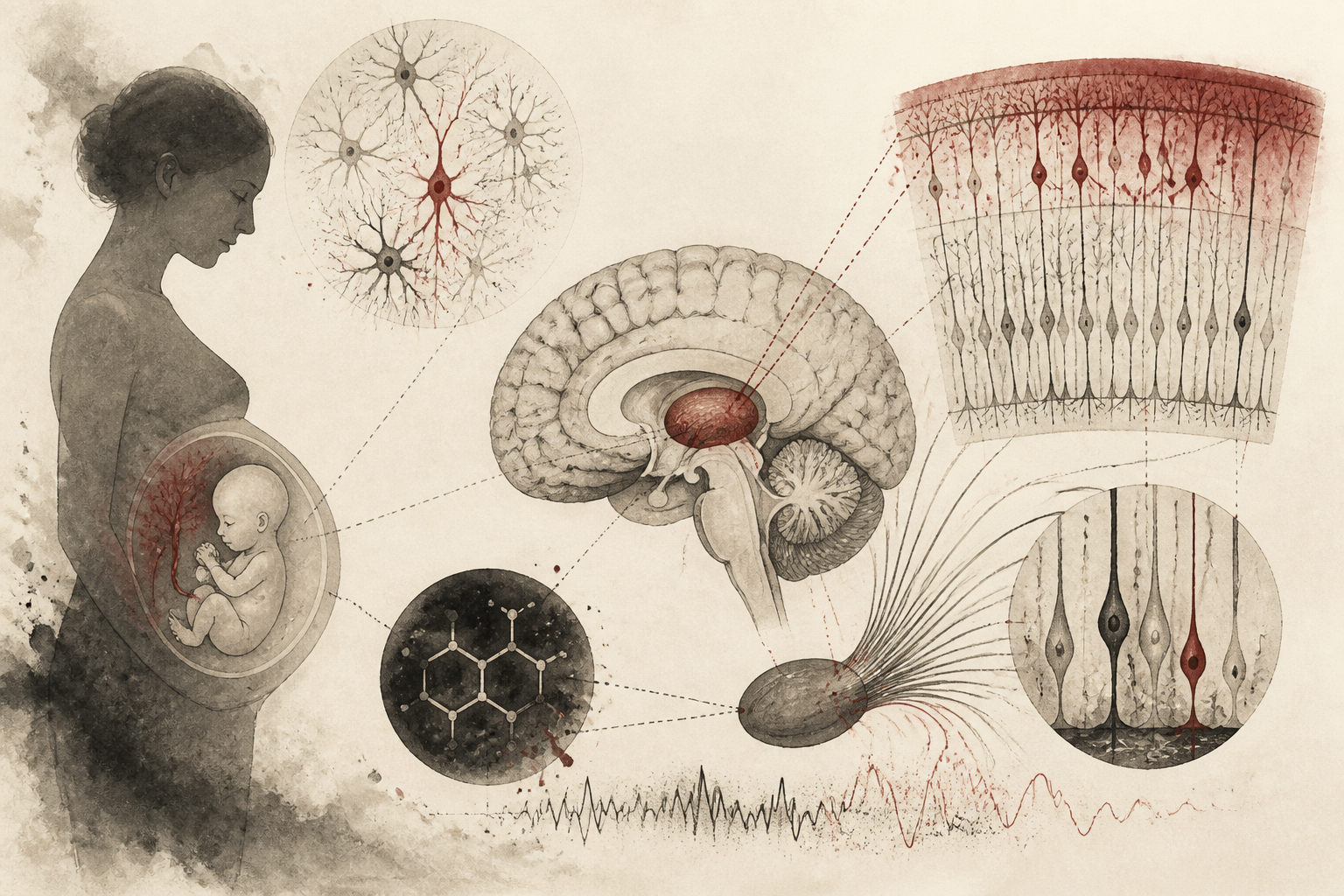
The human cerebral cortex is arguably the most sophisticated biological structure known, responsible for the high-order functions that define the human experience—from language and abstract reasoning to complex social interaction. For decades, developmental neurobiologists have sought to understand how the embryonic brain manages to produce the specific variety and volume of neurons required to construct this architecture. A landmark study from the University of California, Los Angeles, has now provided a more granular look at this process, revealing that the development of the human brain is not a purely internal genetic program but is significantly influenced by external physiological signals. By focusing on radial glia, the primary stem cells of the developing cortex, researchers have identified two hidden instructions that dictate the expansion of the human brain: the cellular processing of glucose and physical contact with signals originating from the thalamus.
According to the findings published via ScienceDaily, these mechanisms appear to be critical in the generation of upper-layer neurons, which are significantly more abundant in humans than in other species. This research challenges the traditional view of brain development as a rigid, pre-programmed sequence. Instead, it suggests a dynamic system where the metabolic environment and long-range neural connections actively shape the cellular output of the prenatal brain. Understanding these pathways is not merely a matter of academic curiosity; it provides a vital framework for investigating the origins of neurodevelopmental disorders and the evolutionary divergence that sets the human brain apart from those of other primates.
The Role of Radial Glia and Metabolic Signaling
At the heart of cortical expansion are radial glia, the versatile stem cells that serve as the building blocks for the brain’s architecture. During gestation, these cells undergo a series of divisions to produce both more stem cells and the specialized neurons that will eventually inhabit the six layers of the cerebral cortex. The UCLA study highlights that these radial glia are not autonomous; their behavior is heavily influenced by how they metabolize energy. Specifically, the researchers found that the way these cells process glucose serves as a primary signal for their developmental trajectory.
Metabolism has traditionally been viewed as a secondary housekeeping function—a way to keep the cell alive while it performs its "real" work. However, this new evidence suggests that glucose processing is actually an instructional signal. When radial glia engage in specific metabolic pathways, it triggers a shift in their reproductive output. This metabolic shift is particularly relevant to the production of upper-layer neurons. These neurons, which reside in layers II and III of the cortex, are responsible for communicating between different areas of the cortex and are thought to be the foundation for the increased cognitive capacity seen in humans. The UCLA team’s discovery implies that the availability and processing of nutrients in the prenatal environment may have a direct impact on the physical scaling of the brain’s most advanced regions.
Thalamic Influence and Physical Connectivity
A second, equally critical discovery involves the thalamus, a central hub of the brain usually associated with relaying sensory information in adults. The UCLA researchers found that even before the brain is fully formed, the thalamus sends long-range projections that make physical contact with radial glia in the developing cortex. This physical touch acts as a regulatory mechanism. The signals arriving from the thalamus provide spatial and temporal instructions that tell the radial glia when to stop producing one type of neuron and when to begin producing another.
This finding is significant because it demonstrates that the development of the cortex is integrated with the development of other brain regions from a very early stage. The thalamus does not simply wait for the cortex to finish building itself before establishing a connection; rather, it participates in the construction process. By interacting with the radial glia, the thalamus helps ensure that the correct proportions of neurons are created to support future sensory and cognitive processing. This crosstalk between distant brain regions highlights a level of prenatal coordination that was previously underappreciated. The physical nature of these signals—the requirement for direct contact—suggests that the three-dimensional organization of the developing brain is a crucial factor in its own growth.
Mechanisms of Cellular Specialization
The methodology employed by the UCLA team allowed them to observe how these two influences—glucose metabolism and thalamic signaling—converge to alter the genetic expression of radial glia. By altering these external inputs, the researchers were able to observe changes in the types of neurons being produced. In the human brain, the period of neurogenesis is extended compared to other mammals, allowing for the massive accumulation of upper-layer neurons. The study suggests that the human-specific expansion of the cortex is facilitated by these specific instructions that keep radial glia in a proliferative state for longer periods or bias them toward producing complex neuronal subtypes.
When these stem cells receive the correct metabolic and thalamic cues, they undergo a transformation in their transcriptional profile. This means that while the cells contain the same DNA, the "switches" that determine which genes are turned on or off are flipped by the cellular environment. This epigenetic regulation provides a bridge between the genetic blueprint of the individual and the environmental conditions of the womb. It suggests that the formation of the brain is a process of constant negotiation between the instructions written in the genome and the physiological reality of the developing organism.
Limitations and Open Questions in Neurodevelopment
While the UCLA study offers a breakthrough in our understanding of cortical formation, it also raises several questions that remain to be addressed. One primary limitation is the complexity of simulating the human prenatal environment. While researchers can identify these signals, the exact threshold of glucose or the specific molecular nature of the thalamic signals required for healthy development is still being mapped. Furthermore, while the study emphasizes the production of upper-layer neurons, the cortex is a highly integrated system of many different cell types, including inhibitory interneurons and various glial cells, whose development may be governed by different sets of hidden instructions.
Another open question involves the timing of these signals. The study focuses on the critical window of prenatal neurogenesis, but it is unclear how disruptions to these signals at different stages of pregnancy might manifest later in life. For instance, if glucose metabolism is compromised early in the second trimester, does the brain have compensatory mechanisms, or does it result in a permanent reduction in cortical volume? Understanding the plasticity of these radial glia in the face of environmental stressors remains a high priority for future research.
Implications for Human Health and Evolution
The importance of this research extends into both the past and the future. From an evolutionary perspective, the identification of these mechanisms provides a potential explanation for how the human brain became so large and complex in a relatively short geological timeframe. Small changes in the metabolic regulation of radial glia or the timing of thalamic connections could have resulted in the massive expansion of the upper-layer neurons that characterize our species.
In a clinical context, these findings offer new avenues for understanding neurodevelopmental and neuropsychiatric conditions. Disorders such as autism, schizophrenia, and microcephaly are often linked to disruptions in cortical architecture. If the instructions for building the cortex are found in glucose processing and thalamic signaling, then abnormalities in these areas during pregnancy could be the root cause of developmental divergence. By identifying the "hidden instructions" revealed by the UCLA team, scientists are now better equipped to develop interventions or diagnostic tools that monitor the health of these developmental pathways, ensuring that the complex blueprint of the human brain is executed as intended.
Quick answers
- What are radial glia and why are they important in brain development?
- Radial glia are neural stem cells that act as the primary progenitors for the cerebral cortex. They are responsible for producing the majority of neurons and provide a physical scaffold for new cells to migrate to their proper locations.
- How does glucose metabolism affect the developing brain?
- Glucose metabolism acts as a signaling mechanism for radial glia. The way these stem cells process sugar influences their developmental path, specifically helping to trigger the production of upper-layer neurons that are essential for high-level cognition.
- What role does the thalamus play in prenatal cortical growth?
- The thalamus sends physical signals and projections that contact radial glia in the developing cortex. These signals serve as instructions that help regulate the timing and type of neurons produced during brain formation.
Rewritten by Zeit editorial AI. Based on original reporting at ScienceDaily — Mind & Brain.