Mapping the Insular Cortex: Discovering Functional Specialization in Mouse Brain Models
Recent research in Nature Neuroscience identifies specific pyramidal cell types within the insular cortex that govern distinct emotional and sensory processing pathways.
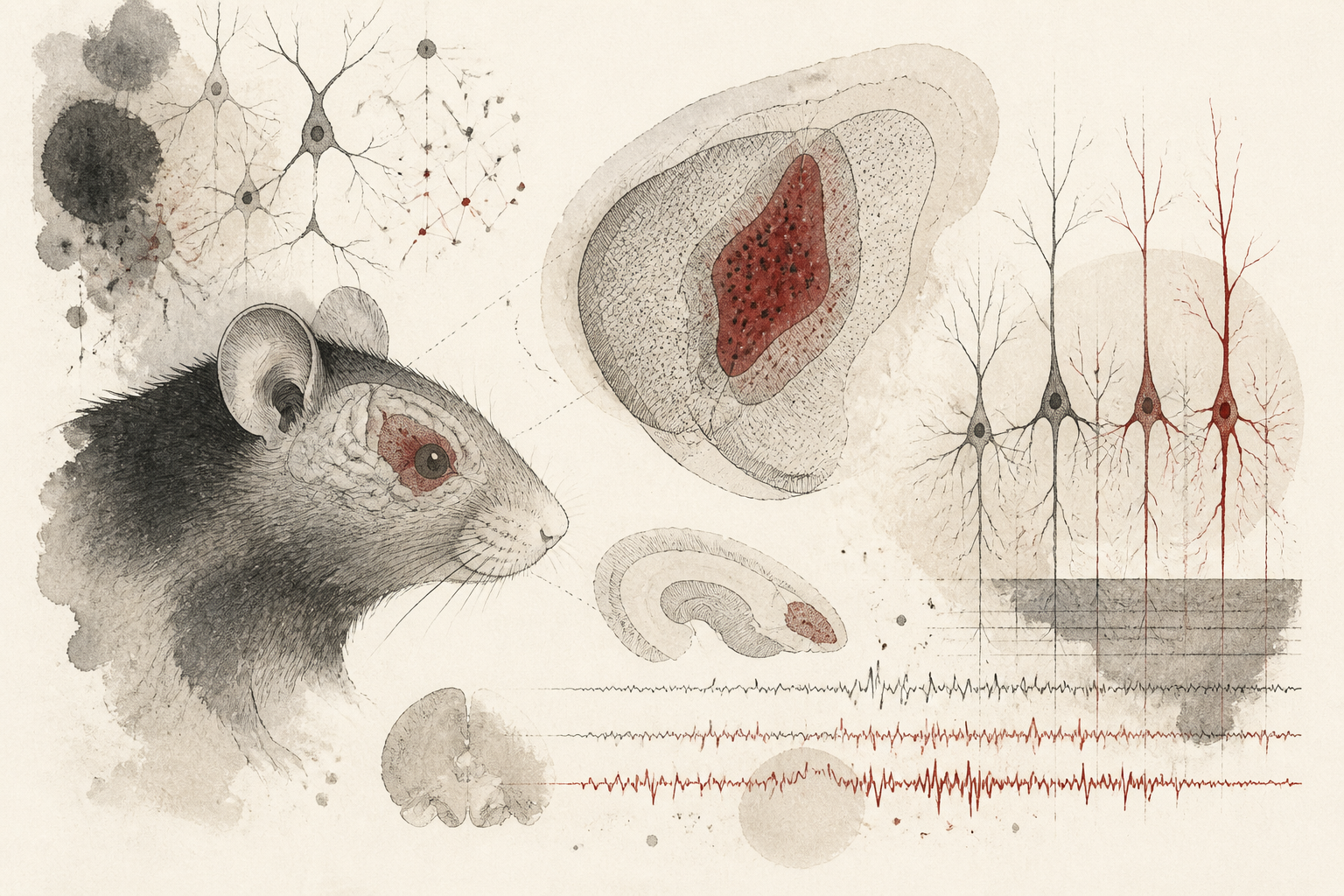
The insular cortex has long remained one of the most enigmatic regions of the mammalian brain. Tucked deep within the lateral sulcus, this cortical area acts as a primary hub for interoception—the sense of the internal state of the body—and the processing of emotional stimuli. While researchers have historically understood that the insula plays a role in everything from pain perception to social empathy, the precise cellular architecture and circuit organization underlying these diverse functions have been difficult to untangle. A comprehensive study published in Nature Neuroscience, titled "Pyramidal cell types and circuit organization of the mouse insular cortex reveal functional specializations," provides a groundbreaking map of this region. By examining the pyramidal cell types within the mouse insular cortex, researchers have revealed how specific neuronal populations are organized to handle distinct physiological and psychological tasks. This structural clarity offers a new lens through which to view the integration of bodily signals and emotional responses.
Cellular Heterogeneity and Circuit Architecture
The fundamental challenge in studying the insular cortex lies in its sheer multi-functionality. Unlike the primary visual cortex, which has a relatively straightforward topographical map of visual space, the insula must integrate disparate inputs from the viscera, the gustatory system, and the limbic system. To understand how one region manages such variety, the researchers focused on pyramidal cells, which serve as the primary excitatory neurons in the cerebral cortex. Using a combination of single-cell transcriptomics, retrograde labeling, and electrophysiological recording, the study identified several distinct classes of pyramidal neurons. These cells are not distributed randomly; instead, they are organized into precise layers and clusters that correspond to specific input-output pathways. This organization suggests that the insula is not a monolithic processing center but rather a highly specialized modular system where different cell types are dedicated to different aspects of internal and external monitoring.
One of the most significant findings involves the distinction between the anterior and posterior sections of the insula. While previous research suggested a gradient of function along this axis, the Nature Neuroscience study demonstrates that the cellular makeup of these regions is fundamentally different. The anterior insula is more heavily populated by cell types that project to regions involved in high-level cognitive and emotional processing, such as the prefrontal cortex and the amygdala. In contrast, the posterior insula contains neurons more closely linked to sensory and somatosensory inputs. By mapping these projections, the researchers have shown that the mouse insula serves as a bridge, translating raw sensory data from the body into complex emotional and behavioral outputs through specialized cellular pipelines.
Mechanisms of Signal Integration and Specialization
To further investigate how these cells function within the broader neural network, the researchers utilized optogenetic tools to manipulate specific cell types and observe the resulting changes in circuit activity. This methodology allowed them to move beyond mere anatomical description and into the realm of functional dynamics. They discovered that specific pyramidal neurons in the deeper layers of the insular cortex are responsible for relaying information to subcortical structures like the thalamus and the brainstem. These pathways are essential for the autonomic regulation of heart rate, respiration, and digestion. The study highlights a mechanism where interoceptive signals—such as a racing heart or a localized pain signal—are first processed by specialized sensory neurons in the posterior insula before being handed off to the anterior regions for emotional appraisal.
This hierarchical flow of information is supported by a unique microcircuitry within the insula itself. The researchers found that inhibitory interneurons play a crucial role in gating the activity of these pyramidal cells, ensuring that the brain does not become overwhelmed by internal sensory noise. This precise balance of excitation and inhibition allows the insula to remain sensitive to subtle changes in the body's internal state while still being able to prioritize urgent signals, such as those related to hunger or threat. The identification of these specific circuit motives provides a cellular basis for the "predictive coding" theory of the insula, which suggests the brain constantly predicts internal bodily states and adjusts behavior when those predictions are not met.
Implications for Neuropsychiatry and Limitations
The discovery of these functional specializations has profound implications for our understanding of various neuropsychiatric conditions. Many disorders, including anxiety, depression, and eating disorders, are characterized by "interoceptive interference," where an individual becomes either hyper-aware or dangerously unaware of their bodily signals. For instance, if the specific pyramidal cells responsible for relaying heart-rate information to the emotional centers of the brain are overactive, it could manifest as the physical symptoms of a panic attack. By identifying the exact cell types involved in these circuits, this research opens the door for more targeted therapeutic interventions. Instead of using broad-spectrum medications that affect the entire brain, future treatments might be able to target the specific cellular populations within the insular cortex that are malfunctioning.
However, it is vital to acknowledge the limitations of this study. While the mouse brain is an excellent model for mammalian neurobiology, there are significant differences between rodents and primates, particularly in the complexity of the anterior insula. In humans, the insula is much more developed and is thought to play a larger role in conscious self-awareness and social cognition—functions that are difficult to fully replicate or measure in a mouse model. Additionally, while the study provides a high-resolution map of pyramidal cells, it does not fully account for the role of non-neuronal cells, such as glia, which are increasingly recognized as active participants in synaptic signaling and circuit plasticity. Further research will be required to determine if these cellular identities remain consistent across different species and how they evolve over the lifespan.
Future Directions in Interoceptive Research
The work published in Nature Neuroscience marks a significant milestone in the field of systems neuroscience. By providing a detailed atlas of the pyramidal cell types in the mouse insular cortex, the researchers have moved the scientific community closer to a comprehensive theory of how the brain monitors the body. The open questions remaining are as compelling as the findings themselves. For example, how do these specialized circuits change in response to chronic stress or physical illness? Is the organization of the insula plastic enough to be reshaped through mindfulness or behavioral therapy? As researchers begin to apply these findings to human clinical models, the hope is that we will gain a better understanding of the biological roots of the mind-body connection. For the editorial team at Zeit Psychology Online University, this research underscores the importance of looking beneath the surface of behavior to find the precise cellular mechanisms that make us who we are. The insular cortex, once a hidden corner of the brain, is now firmly at the center of the conversation regarding the integration of physiology and psychology.
Quick answers
- What is the primary function of the insular cortex according to recent research?
- The insular cortex acts as a hub for interoception, integrating internal bodily signals with emotional and cognitive processes through specialized pyramidal cell circuits.
- How does the anterior insula differ from the posterior insula in mice?
- The anterior insula focuses on high-level cognitive and emotional projections, while the posterior insula is primarily dedicated to processing raw sensory and somatosensory inputs.
- Why is the study of pyramidal cells in the insula important for mental health?
- Identifying specific cell types helps explain how interoceptive signals can lead to anxiety or eating disorders, potentially leading to targeted therapies for these conditions.
Rewritten by Zeit editorial AI. Based on original reporting at Nature Neuroscience.