Mapping the Insula: The Neurological Intersection of Pain, Emotion, and Expectation
Recent intracranial research reveals how the human insula functions as a top-down regulator of pain through four distinct sub-regions, providing a map for the placebo effect.
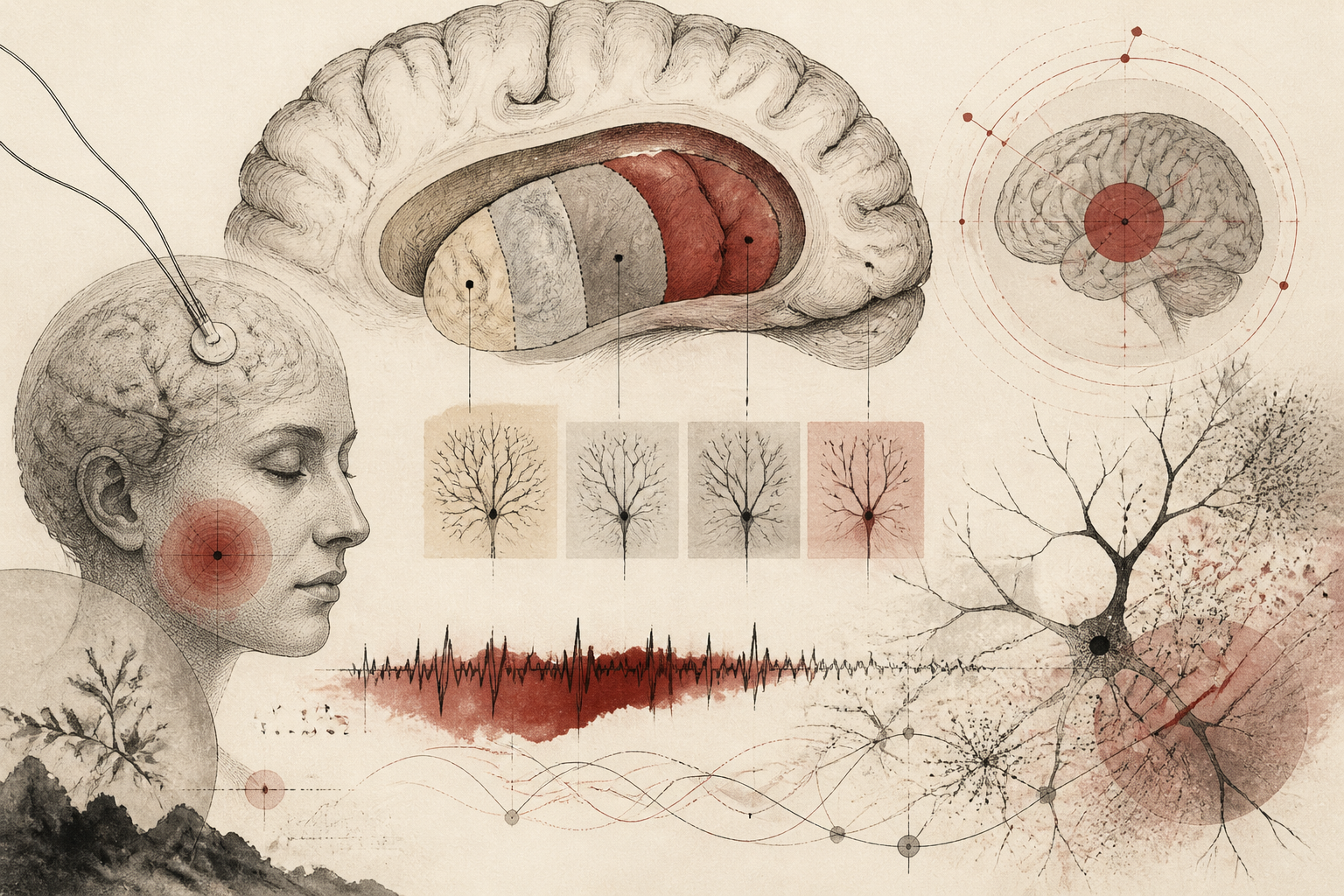
The subjective nature of physical pain has long presented a challenge to clinical neuroscience. While nociception provides the sensory input of tissue damage, the actual experience of suffering is heavily modulated by an individual’s internal state, including their emotional disposition and cognitive expectations. According to a recent report by Neuroscience News, a comprehensive 15-year study involving intracranial brain recordings from 87 patients has finally provided a high-resolution map of the human insula. This research clarifies how this specific brain region integrates sensory signals with psychological context, effectively shaping the reality of physical discomfort through a complex top-down circuit known commonly as the placebo effect.
For decades, the insular cortex was viewed as a somewhat mysterious structure tucked deep within the lateral sulcus. Earlier neuroimaging studies, primarily utilizing functional Magnetic Resonance Imaging (fMRI), identified the insula as a 'hotspot' for pain processing. However, fMRI lacks the temporal and spatial resolution to distinguish between the fine-grained sub-regions of the insula and their specific functional roles. By utilizing intracranial recordings—a method involving electrodes placed directly onto the brain surface—researchers have moved beyond broad observations to identify four distinct functional zones within the insula. These findings represent a significant leap in our understanding of how the brain prioritizes and interprets survival-relevant information.
Functional Architecture of the Human Insula
The mapping effort revealed that the insula is not a monolithic processing center but rather a highly specialized modular system. The research identifies four primary regions that operate in concert to translate electrical signals into a lived experience. The most posterior region appears to be the primary recipient of raw sensory data, acting as a gateway for incoming pain signals. As information moves toward the anterior portions of the insula, the nature of the processing shifts from purely physical to increasingly psychological.
One of the most significant findings is the identification of a specific sub-region dedicated to emotional integration. This area ensures that pain is not just felt as a location and intensity, but also as an unpleasant affective state. Another distinct zone was found to be responsible for cognitive appraisal, where the brain assesses the meaning of the pain based on past experiences. The most critical discovery, however, involves the top-down circuit located in the anterior insula. This circuit appears to be the primary driver of the placebo effect, where the mere expectation of relief triggers a physiological reduction in the perception of pain. By mapping these four regions, the study provides the first anatomical evidence of how the brain uses its internal belief systems to override external sensory input.
The Mechanism of the Placebo Response
The phenomenon of the placebo effect has often been dismissed as a psychological anomaly, yet this research demonstrates it is a fundamental neurological process. The study highlights a top-down regulatory mechanism where higher-level cognitive areas of the brain influence lower-level sensory regions. When a patient expects relief, the anterior insula activates a circuit that preemptively dampens the activity of the posterior sensory regions. This is not merely a change in reporting or a social desirability bias; it is a measurable alteration in how the brain processes nociceptive signals.
This circuit operates through a feedback loop. When the brain anticipates that a treatment will be effective, the insula modulates the intensity of the pain signals before they even reach conscious awareness. This explains why patients can feel genuine relief from inert substances. The intracranial data suggests that the insula acts as a central hub or 'comparator' that weighs incoming sensory evidence against internal predictions. If the prediction of relief is strong enough, it can effectively silence the neural representation of the pain stimulus. This mechanism suggests that the human brain is optimized not for absolute accuracy, but for survival-oriented utility, prioritizing expectations that may mitigate stress and promote recovery.
Interpretation and Clinical Implications
The implications of these findings for clinical psychology and pain management are profound. Understanding the insula’s role as a mediator between emotion and sensation allows for more targeted therapeutic interventions. If pain is a product of both sensory input and emotional appraisal, then treating the emotional component via cognitive-behavioral strategies is not just a secondary support; it is a direct intervention into the neural circuitry of pain itself. The identification of the four distinct sub-regions allows researchers to consider how different chronic pain conditions might stem from malfunctions in specific parts of the insula.
Furthermore, this research validates the importance of the patient-provider relationship and the environment in which care is delivered. Because the anterior insula is sensitive to context and expectation, the way a treatment is presented can fundamentally change its neurological efficacy. The study suggests that the 'ritual' of medicine—the white coat, the reassuring words, and the clinical setting—activates the top-down circuit in the insula, priming the patient’s brain to downregulate pain. This shifts the view of the placebo effect from a 'false' response to a legitimate therapeutic tool that can be harnessed to improve patient outcomes across various medical disciplines.
Limitations and Future Directions
Despite the groundbreaking nature of these intracranial recordings, the study acknowledges several limitations inherent in its methodology. The data was gathered from 87 patients who were already undergoing invasive brain monitoring, usually for the treatment of severe epilepsy. This raises questions about the generalizability of the findings to a healthy population, as the neurological state of patients with chronic seizure disorders may differ from the norm. Additionally, while the mapping of the four regions is precise, the exact neurochemical messengers involved in the communication between these regions remain a subject for further investigation.
Open questions also remain regarding the variability of the placebo effect across individuals. Why do some patients have a highly active top-down insular circuit while others seem more reliant on bottom-up sensory input? Future research will need to explore how genetics, personality traits, and long-term trauma might reshape the insula’s functional architecture. There is also the question of whether this circuit can be intentionally trained or strengthened through mindfulness or biofeedback, potentially allowing individuals to better regulate their own pain responses without pharmacological intervention.
Why the Insula Matters in Modern Psychology
This 15-year mapping project, as detailed by Neuroscience News, underscores the necessity of a biopsychosocial approach to medicine. It proves that the division between the 'physical' and the 'psychological' is a false dichotomy at the level of the brain. The insula serves as the physical bridge where these two worlds meet, integrating the raw data of the body with the complex narratives of the mind. By uncovering the specific circuits responsible for this integration, neuroscience is providing a more compassionate and accurate framework for understanding human suffering.
For the academic community at Zeit Psychology Online University, these findings serve as a reminder that perception is an active, constructive process. We do not simply feel the world; we project our expectations onto it. As we continue to refine our maps of the human brain, the role of the insula will likely remain central to our understanding of how consciousness, emotion, and physical health are inextricably linked. The discovery of a specific top-down circuit for the placebo effect marks a turning point where subjective experience is finally given its due weight in the objective study of human biology.
Quick answers
- What is the role of the insula in the human brain?
- The insula acts as a hub that integrates physical sensory information with emotional and cognitive context, mapping how we perceive pain and internal bodily states.
- How does the placebo effect work in the brain?
- It functions through a top-down circuit in the anterior insula where the expectation of relief triggers the brain to dampen sensory signals of pain.
- What were the four regions of the insula identified in the study?
- Researchers identified four zones ranging from a posterior sensory gateway to an anterior top-down regulatory circuit, with intermediary zones for emotion and cognitive appraisal.
Editorial Team