Mapping the Insula: Comparative Perspectives on a Hub of Consciousness and Emotion
Recent neuroscientific synthesis explores how the insular cortex integrates internal states with external stimuli across different species to shape mammalian behavior and cognition.
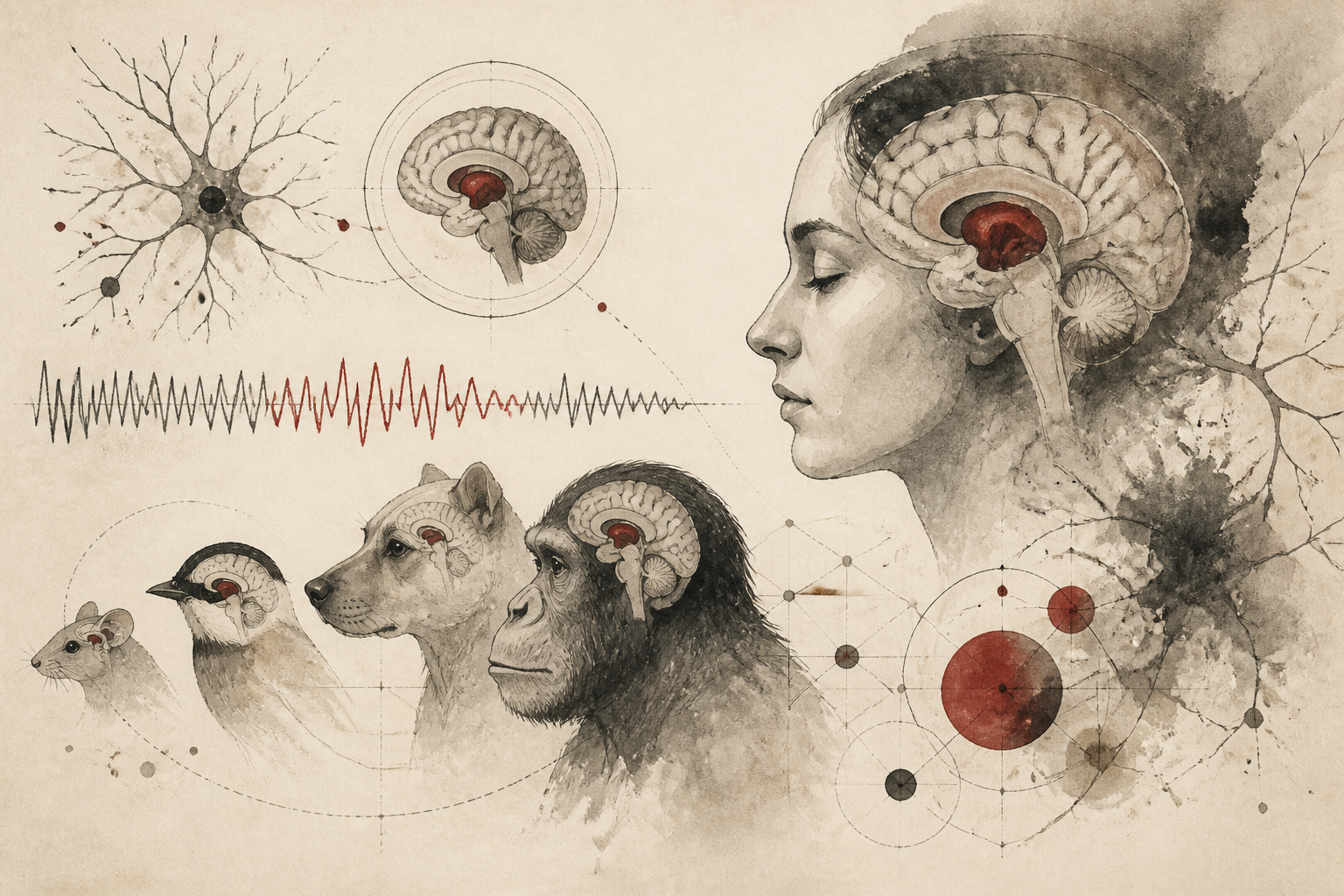
The human experience is defined by a continuous synthesis of internal bodily signals and external environmental cues. At the center of this integration lies the insular cortex, a deeply recessed region of the cerebral cortex that has long been regarded as a critical hub for interoception, emotional processing, and social cognition. According to a recent comprehensive synthesis published in *Nature Neuroscience*, titled "Comparative insights into insula structure and function," the evolutionary trajectory and functional architecture of the insula provide a unique window into how mammalian brains manage the complex demands of homeostasis and environmental adaptation. By examining the insula through a comparative lens, researchers are uncovering how this structure facilitates everything from basic survival reflexes to the sophisticated social behaviors observed in primates and humans.
Evolutionary Foundations and Structural Complexity
The insula, or insular cortex, is situated within the lateral sulcus, largely hidden by the overlying opercula of the frontal, parietal, and temporal lobes. While its anatomical concealment made it difficult to study in early neuroscience, current comparative data suggests that the insula is a highly conserved structure among mammals, albeit one that has undergone significant expansion and specialization in higher primates. The research indicates that the insula acts as a primary receptive area for viscerosensory inputs—signals originating from the heart, lungs, gut, and skin. These inputs are not merely recorded; they are organized into a sophisticated map of the body's internal state, a process known as interoception.
In rodents and other smaller mammals, the insula appears more simplified, focusing heavily on gustatory processing and basic autonomic regulation. However, as we move up the evolutionary tree toward cetaceans and primates, the insula demonstrates increased granularity and connectivity. The research highlights the presence of specific cell types, such as von Economo neurons, which are particularly prominent in the anterior insula of humans and great apes. These large, spindle-shaped neurons are thought to facilitate rapid communication across long distances in the brain, potentially supporting the high-speed processing required for social intuition and complex decision-making. The transition from a sensory relay station in early mammals to a multi-modal integration center in humans underscores the insula's role in the emergence of self-awareness.
Mechanisms of Multisensory Integration and Homeostasis
Central to the findings discussed in the *Nature Neuroscience* report is the mechanism by which the insula bridges the gap between the physiological and the psychological. The insula does not function in isolation; rather, it serves as a critical node in the salience network, alongside the anterior cingulate cortex. This network is responsible for detecting behaviorally relevant stimuli and directing cognitive resources accordingly. The researchers describe a posterior-to-anterior gradient of integration within the insula itself. The posterior insula receives raw sensory data—such as temperature, pain, and touch—while the mid and anterior sections progressively integrate this data with emotional and motivational contexts.
This hierarchical processing allows the brain to translate a physical sensation, such as a racing heart, into a subjective feeling, such as anxiety or excitement, depending on the external environment. The study emphasizes that this integration is bidirectional. The insula not only monitors the body but also sends descending signals to the autonomic nervous system to adjust physiological states in anticipation of future needs. This predictive regulation, or allostasis, is fundamental to survival, ensuring that an organism maintains equilibrium before a deficit occurs. Through this lens, the insula is viewed not just as a reactive sensor, but as a proactive manager of the body’s internal economy.
Implications for Social Cognition and Psychopathology
Beyond internal regulation, the comparative insights provided by the research team shed light on the insula's contribution to social life. In humans, the anterior insula is consistently activated during tasks involving empathy, moral judgment, and the perception of social fairness. The synthesis suggests that these high-level functions are evolutionary extensions of the insula's role in disgust and pain. For instance, the same neural pathways that process the physical discomfort of noxious odors are recruited to process the "social disgust" of witnessing an unfair action. This suggests that the biological machinery for social cooperation is built upon the foundational circuits of physical self-preservation.
Furthermore, the research identifies the insula as a key player in various neuropsychiatric conditions. Dysfunctional interoceptive processing within the insula has been linked to anxiety disorders, depression, and addiction. In cases of addiction, the insula may over-represent the "craving" signals from the body, making it difficult for the prefrontal cortex to exert top-down control. By understanding the comparative differences in insula connectivity, clinicians may eventually develop more targeted interventions that address the specific neural circuits responsible for these imbalances. The ability to distinguish between a malfunctioning sensory relay and a failure in higher-order integration remains a primary goal for future psychiatric research.
Limitations and Future Directions in Comparative Neuroscience
Despite the significant strides made in mapping the insula's function, the authors of the *Nature Neuroscience* review acknowledge several critical limitations and open questions that remain. One of the primary challenges is the difficulty of translating findings across species. While the basic architectonic features of the insula are shared, the specific connectivity patterns that give rise to human consciousness are not easily replicated in animal models. The use of non-invasive neuroimaging has provided a wealth of data in humans, but these methods often lack the temporal and spatial resolution needed to observe the activity of individual neuronal populations, such as the aforementioned von Economo neurons.
Another open question involves the precise role of the insula in the subjective experience of time. Some researchers hypothesize that the insula’s integration of rhythmic bodily signals (like heartbeats) serves as a biological clock, but the specific mechanisms of this timing function are still under debate. Additionally, the degree to which the insula contributes to "consciousness" versus merely providing the data for other regions to process remains a point of philosophical and scientific contention. Future research will likely require a combination of high-resolution optogenetics in animal models and advanced computational modeling of human brain networks to tease apart these complexities.
Why the Insula Matters for the Future of Psychology
Understanding the insula is fundamental to the mission of modern psychology because it represents the physical intersection of the mind and the body. For decades, the field was divided between behaviorist approaches that focused on external actions and cognitive approaches that focused on internal thought. The emerging science of the insula, as synthesized in *Nature Neuroscience*, proves that these two domains are inextricably linked through neural hardware. As we gain a clearer picture of how the insula translates visceral sensations into complex emotions, we move closer to a holistic understanding of human nature.
For students and practitioners at Zeit Psychology Online University, these findings underscore the importance of biological literacy in psychological practice. Whether one is treating a patient with chronic pain or studying the dynamics of group cooperation, the insula’s role in balancing the "internal" and "external" worlds is ever-present. The research serves as a reminder that our highest cognitive achievements—our capacity for empathy, our sense of justice, and our awareness of self—are deeply rooted in the primal necessity of maintaining a functioning, living body. Continued study of this hidden cortical island will undoubtedly remain at the forefront of neuroscience for decades to come.
Quick answers
- What is the primary function of the insular cortex according to recent research?
- The insular cortex acts as a hub for interoception, integrating internal bodily signals like heart rate and pain with external sensory information to regulate emotions and social behavior.
- How does the insula differ between humans and other mammals?
- While basic functions are shared, humans and higher primates have a more expanded anterior insula containing specialized von Economo neurons that support complex social cognition and self-awareness.
- Why is the insula important for mental health research?
- Dysfunction in the insula's ability to process internal body states is linked to anxiety, depression, and addiction, making it a key target for understanding how physiological feelings influence psychiatric conditions.
Rewritten by Zeit editorial AI. Based on original reporting at Nature Neuroscience.