Mapping the Heterogeneity of Depression: Five Distinct Neural Profiles Identified
Recent neuroimaging research identifies five unique brain connectivity patterns within depression, suggesting a move toward personalized psychiatric diagnostics.
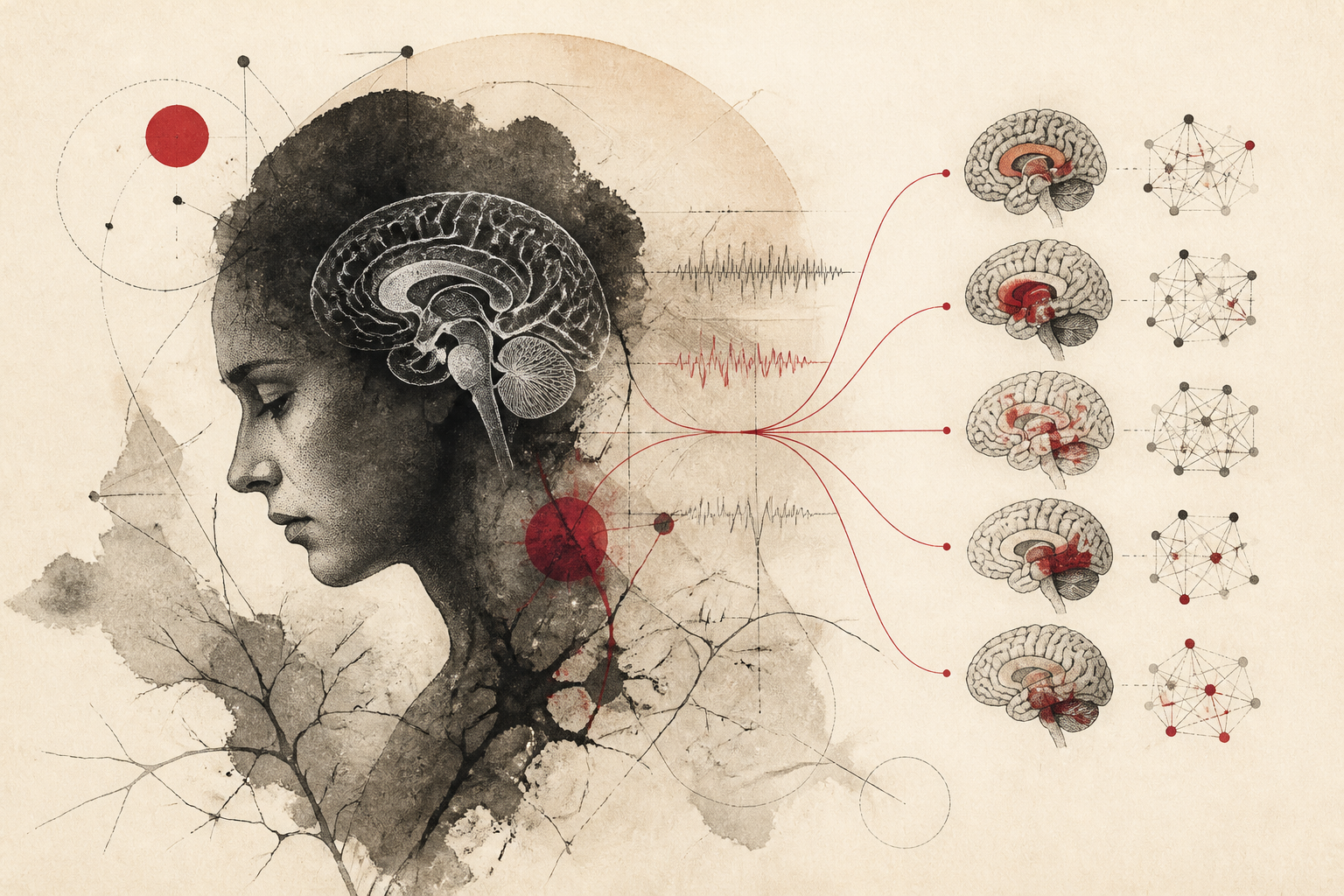
The historical categorization of major depressive disorder has long relied on a collection of overlapping behavioral symptoms, an approach that frequently masks the profound biological diversity inherent in the condition. In a significant advancement for the field of biological psychiatry, a new study reported by ScienceDaily reveals that clinical depression is not a singular neurological state but rather a constellation of at least five distinct patterns of brain activity. By moving beyond traditional diagnostic labels, researchers have begun to map the specific neurobiological circuits that dictate how different individuals experience mood disorders, anxiety, and trauma, potentially paving the way for more precise, individualized therapeutic interventions.
Toward a Neurobiological Taxonomy of Mood Disorders
For decades, clinicians have observed that two patients with the same diagnosis of depression might present with entirely different symptoms and respond differently to the same medications. This clinical inconsistency suggests that the underlying neural architecture of the disorder varies significantly across the population. The study, which analyzed the neural configurations of 263 individuals diagnosed with depression, sought to identify the root of this variance. Rather than treating the study group as a homogenous cohort, the research team utilized advanced neuroimaging techniques to observe the functional communication between disparate brain regions. Their findings suggest that what we currently call depression is an umbrella term for multiple biological realities, each characterized by its own signature of neural connectivity.
This shift toward a neurobiological taxonomy represents a departure from the Diagnostic and Statistical Manual of Mental Disorders (DSM) model, which relies on subjective self-reporting. By focusing on the "connectome"—the map of neural connections within the brain—the investigators were able to isolate profiles that correlate more accurately with specific life experiences and co-occurring conditions than traditional diagnostic categories. This research emphasizes that the future of psychiatry may lie in treating the specific brain circuit dysfunction rather than the general label of depression.
Identifying the Five Neural Subtypes
The core of the research findings lies in the identification of five specific brain profiles. These profiles were distinguished by the way different regions of the brain communicate, a process known as functional connectivity. The researchers observed that these patterns were not randomly distributed but were closely linked to specific phenotypic expressions of the disorder. For instance, some profiles were characterized by heightened connectivity in regions associated with emotional processing, while others showed diminished communication in circuits responsible for executive function and cognitive control.
Crucially, these five profiles were associated with distinct symptomatic clusters. One profile might show a strong correlation with high levels of anxiety and physiological tension, while another might be more closely tied to experiences of early-childhood trauma or a history of substance abuse. The ability to link a specific brain pattern to a history of trauma or a predisposition to addiction is a landmark development. It suggests that the brain’s physical wiring is shaped by a combination of genetic factors and environmental stressors, resulting in a unique "biological fingerprint" for every patient’s depression. This granular level of detail provides a much clearer picture of why certain symptoms, such as anhedonia or cognitive fog, dominate in some patients while being absent in others.
Methodology and the Role of Functional Neuroimaging
The methodology employed in this study relied on resting-state functional magnetic resonance imaging (fMRI). This technique allows scientists to observe the brain's baseline activity when a person is not performing a specific task, providing a window into the intrinsic organization of the organ. By monitoring the fluctuations in blood flow to different areas, the researchers could determine which regions were "talking" to one another and at what intensity. The study of 263 participants provided a sufficiently robust dataset to apply sophisticated statistical modeling, which eventually clustered the participants into the five aforementioned profiles.
What sets this method apart is its focus on circuits rather than isolated structures. In the past, depression research often focused on the size or activity of a single area, such as the amygdala or the prefrontal cortex. However, modern neuroscience recognizes that mental health is a product of complex networks. The five patterns identified in this study reflect how these networks interact, providing a holistic view of the brain's internal communication. By analyzing these interactions, the research team was able to see the "hidden" patterns that are invisible to standard clinical assessments, proving that the brain's functional landscape is far more varied than previously understood.
Clinical Interpretation and the Promise of Precision Medicine
The interpretation of these findings has profound implications for the treatment of mental health. Currently, the treatment of depression often involves a period of trial and error, where patients cycle through various antidepressants or therapy modalities until something proves effective. If a clinician can identify which of the five neural patterns a patient possesses, they may be able to bypass this lengthy process. For example, a patient whose profile is characterized by a specific dysfunction in the reward circuit might benefit more from a treatment that targets dopamine, whereas a patient with a trauma-linked profile might require a more intensive focus on psychotherapeutic processing of past events.
Furthermore, this research aids in destigmatizing the disorder by framing it as a measurable biological condition. When depression is viewed as a series of observable brain patterns, it moves the conversation away from "character flaws" or "lack of willpower" and toward a medical framework of circuit-based dysfunction. This objective approach is essential for the development of new, targeted pharmacological agents and neuromodulation techniques, such as Transcranial Magnetic Stimulation (TMS), which can be tuned to the specific connectivity issues identified in the patient's brain profile.
Limitations and Open Questions in Neuropsychiatric Research
Despite the significant breakthroughs presented in this study, several limitations remain. The sample size of 263, while substantial for an fMRI study, is still relatively small when considering the global prevalence of depression. Larger, more diverse populations must be studied to confirm if these five patterns are universal across different cultures and demographics. Additionally, the study primarily provides a snapshot of brain activity at a single point in time. It remains to be seen how these profiles evolve over the course of a lifetime or in response to treatment. Are these brain patterns permanent, or can they be rewired through successful intervention?
Another open question involves the causality of these patterns. It is currently unclear whether a specific brain profile causes certain symptoms, or if a life of chronic stress and depression eventually molds the brain into that specific pattern. Determining the direction of this relationship will be critical for preventative care. Moreover, the integration of these findings into standard clinical practice remains a hurdle, as access to fMRI and the expertise required to interpret these complex connectivity maps is currently limited to high-level research institutions and specialized hospitals.
Why Connectivity Patterns Matter for the Future
The discovery of these five hidden patterns marks a pivotal moment in the transition toward precision psychiatry. It challenges the reductionist view of mental illness and honors the complexity of the human brain. For the millions of individuals living with depression, this research offers hope that their specific experience can be understood and treated at a biological level. By moving toward a model where treatment is dictated by the patient's unique neural signature, the medical community can improve outcomes, reduce the burden of ineffective treatments, and ultimately provide a more compassionate and effective standard of care. As we continue to decode the brain's internal language, the boundary between biological neuroscience and clinical psychology will continue to blur, leading to a more unified understanding of the human mind.
Quick answers
- What are the five brain patterns discovered in depression research?
- Researchers identified five distinct profiles based on functional connectivity between brain regions, each correlating with different symptoms like anxiety, trauma, or substance use, rather than a single diagnosis.
- How does this study change the treatment of depression?
- It suggests a move toward precision medicine where treatment is tailored to an individual's specific neural circuit pattern rather than using a one-size-fits-all approach to the diagnosis.
- What technology was used to find these depression subtypes?
- The study utilized resting-state functional magnetic resonance imaging (fMRI) to monitor blood flow and communication between various brain networks in 263 participants.
Rewritten by Zeit editorial AI. Based on original reporting at ScienceDaily — Mind & Brain.