Mapping the Genomic Architecture of the Developing Brain Through AI-Based Modeling
Researchers introduce Seal, a deep-learning framework designed to decode the spatiotemporal complexities of gene regulation and variant effects in the human fetal brain.
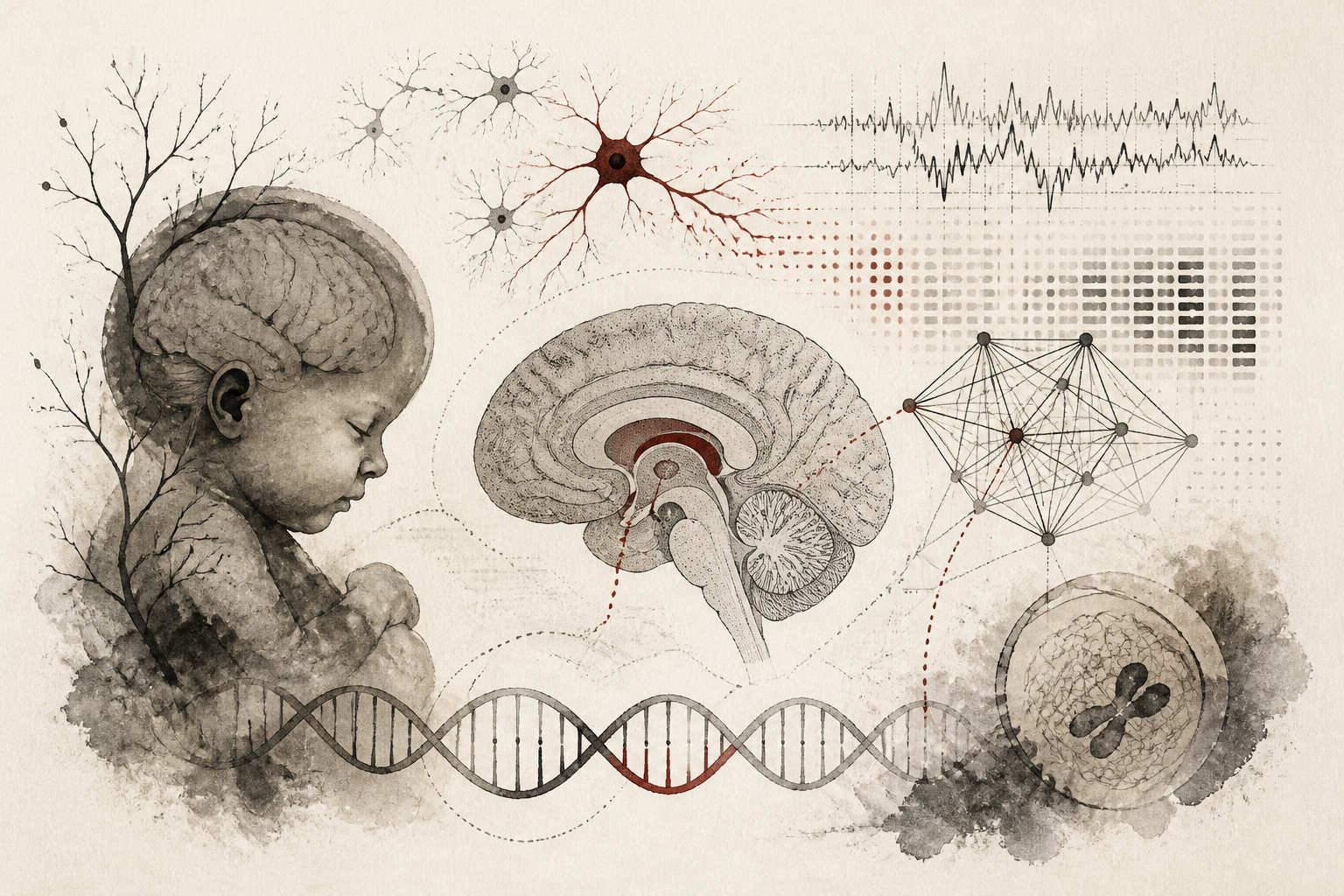
The developmental trajectory of the human brain is a masterwork of biological orchestration, involving the precise timing and spatial organization of gene expression across trillions of cellular interactions. Understanding how genetic sequences translate into the physical structures of the brain has long been a challenge for neuroscience, particularly when attempting to identify how non-coding genetic variants contribute to neuropsychiatric conditions. In a significant advancement published in Nature Neuroscience, researchers have introduced Seal, a sophisticated deep-learning framework designed to model the spatiotemporal dynamics of gene regulation. By leveraging functional genomic data from the developing human brain, this AI-driven approach provides a high-resolution map of how genetic variations influence neurodevelopmental outcomes, offering new insights into the molecular foundations of the human mind.
Genomic Foundations and the Challenge of Spatiotemporal Complexity
The human genome contains vast stretches of non-coding DNA that do not produce proteins but instead serve as regulatory switches, turning genes on or off in specific tissues and at specific times. In the context of the developing brain, this regulatory landscape is exceptionally dynamic. A genetic variant that is benign in an adult liver might be catastrophic when active in a fetal cortical neuron during the second trimester. Traditional methods of genomic analysis often lack the resolution to capture these fleeting windows of vulnerability. The researchers behind Seal recognized that to understand neurodevelopmental disorders like autism or schizophrenia, science required a tool capable of predicting the effects of genetic mutations across both time (gestational age) and space (specific brain regions).
Previous research has largely relied on bulk tissue analysis, which averages the signals from various cell types, or static models that do not account for the brain’s rapid transformation during gestation. The Seal framework addresses these shortcomings by integrating multi-omic data—including chromatin accessibility and gene expression profiles—into a unified deep-learning architecture. This allows for a more granular examination of how the physical structure of DNA changes to allow certain genes to be read, a process known as epigenetic regulation. By focusing on the fetal brain, the study targets the period where many psychiatric and neurological predispositions are thought to originate.
The Architecture of Seal: Methodological Innovations
At the core of the Seal framework is a spatiotemporal AI model trained on an extensive library of functional genomic assays. The methodology involves processing DNA sequences through neural networks to predict regulatory activity across different stages of brain development. Unlike standard models that might treat the brain as a monolithic organ, Seal distinguishes between various regions, such as the prefrontal cortex and the hippocampus, and tracks changes across various weeks of post-conception development. This dual-axis approach enables the model to identify 'hotspots' of genetic activity that are unique to certain developmental windows.
One of the most impressive facets of the Seal methodology is its ability to perform in silico mutagenesis. By computationally altering a single nucleotide in a genetic sequence, the researchers can observe how the model predicts a change in gene regulation. This predictive power is essential for interpreting the thousands of 'variants of unknown significance' found in patients through clinical sequencing. Seal effectively acts as a digital laboratory, allowing scientists to test the potential impact of rare and common genetic variants without the need for immediate, invasive biological validation. This throughput is critical for narrowing down the most likely genetic drivers of complex diseases.
Interpreting Variant Effects in Neuropsychiatric Health
The findings generated by the Seal model provide a detailed atlas of variant effects that correlate strongly with known clinical data. The study demonstrates that variants identified as high-impact by the model are frequently enriched in genes associated with neurodevelopmental delay and intellectual disabilities. Furthermore, the researchers utilized Seal to investigate the genetic architecture of common psychiatric conditions. They found that the model could successfully prioritize regulatory elements that are active during the peak periods of neurogenesis, suggesting that the timing of gene expression is just as important as the location.
Specifically, the model highlighted the role of enhancers—short regions of DNA that increase the likelihood of gene transcription—that are exclusively active in the fetal brain. Many of these enhancers are located in what was previously considered 'junk DNA.' Seal’s analysis reveals that mutations in these fetal-specific enhancers can disrupt the wiring of the brain, leading to long-term functional consequences. By linking these non-coding variants to target genes, the researchers have moved closer to a mechanistic understanding of how polygenic risk scores actually manifest in the developing biology of an individual.
Limitations and the Path Toward Clinical Integration
While Seal represents a paradigm shift in computational neuroscience, the authors acknowledge several limitations inherent in AI-based genomic modeling. First, the model is only as robust as the training data available. While the study utilized high-quality datasets from fetal brain samples, the sheer diversity of human genetic backgrounds means that certain populations may be underrepresented, potentially limiting the generalizability of the findings. Additionally, while Seal is adept at predicting regulatory changes, it cannot yet fully simulate the complex downstream interactions of proteins or the environmental factors that also influence brain development.
There is also the question of biological validation. While in silico predictions are a powerful filtering tool, the scientific community still requires experimental confirmation using technologies like CRISPR-based genome editing in organoids or animal models to prove causality. The researchers emphasize that Seal is intended to complement, not replace, traditional laboratory techniques. Future iterations of the model will likely incorporate single-cell data, which would allow for even greater resolution by distinguishing between different types of neurons and glia within the same brain region.
Why Spatiotemporal Modeling Matters for the Future
The implications of this research extend far beyond the technical sphere of bioinformatics. For the field of psychology and psychiatry, the ability to map genetic risk to specific developmental moments offers a roadmap for early intervention. If we can identify the precise gestational window when a genetic risk factor exerts its influence, we can begin to theorize about preventative strategies or targeted therapies that address the root molecular cause rather than just the adult symptoms.
Moreover, Seal provides a framework for understanding the 'missing heritability' of mental health disorders. By shedding light on the non-coding regions of the genome through a spatiotemporal lens, Zeit Psychology Online University recognizes this as a foundational step toward personalized genomic medicine. As we continue to refine these AI tools, the goal remains clear: to decode the intricate biological language that builds the human brain, ensuring that every child has the best possible start for their cognitive and emotional development. Through the lens of Seal, the mystery of the developing mind becomes a little more legible, one genetic variant at a time.
Quick answers
- What is the Seal AI framework in neuroscience?
- Seal is a deep-learning model designed to predict how genetic variants influence gene regulation in the developing human brain across different regions and gestational ages.
- How does Seal help in understanding psychiatric disorders?
- It identifies how non-coding genetic variants disrupt gene enhancers during critical fetal developmental windows, linking specific DNA changes to risks for conditions like autism and schizophrenia.
- Why is spatiotemporal modeling important for brain research?
- Because gene activity changes rapidly during pregnancy, modeling both the location (space) and timing (time) of gene expression is essential to catch developmental vulnerabilities that static models miss.
Rewritten by Zeit editorial AI. Based on original reporting at Nature Neuroscience.