Mapping the Epigenomic Architecture: A New Layer of Alzheimer’s Disease Revealed
Researchers identify how 3D DNA reorganization in specific brain cells disrupts gene regulation, offering a new frontier for Alzheimer's diagnosis and therapeutic intervention.
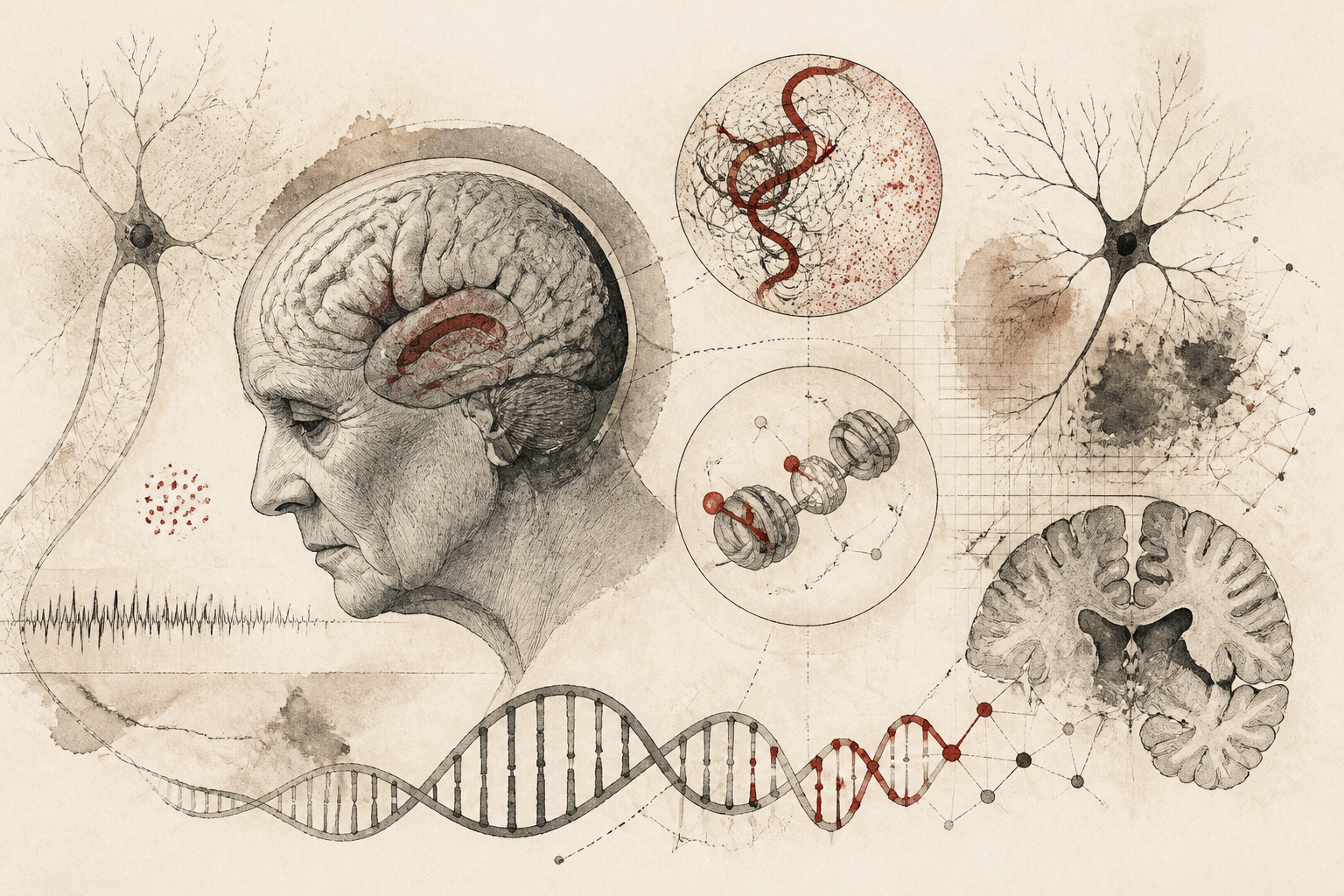
The pursuit of understanding Alzheimer’s disease has historically concentrated on the accumulation of protein aggregates, specifically amyloid-beta plaques and tau tangles. However, these physiological hallmarks often fail to explain the full complexity of cognitive decline or the failure of various clinical interventions. In a significant shift toward the molecular foundations of neurodegeneration, researchers have identified a previously hidden layer of the disease residing within the three-dimensional architecture of the human genome. According to a recent report by ScienceDaily, scientists have discovered that the spatial organization of DNA is fundamentally disrupted in brain cells affected by Alzheimer’s, a finding that redefines our understanding of how the disease alters cellular identity and function.
This discovery shifts the focus from the genetic code itself—the sequence of As, Ts, Cs, and Gs—to the physical topography of that code. In the nuclei of healthy neurons, DNA is not merely a linear string but a highly structured 3D configuration. This folding allows distant regulatory elements, such as enhancers, to come into physical contact with specific genes, effectively acting as biological switches that turn protein production on or off. The new findings suggest that in the Alzheimer’s-afflicted brain, these structural folds collapse or misalign, leading to a catastrophic breakdown in gene regulation that precedes or exacerbates the well-known symptoms of the condition.
The Breakdown of Genomic Topography
The research centers on the concept of the epigenome, the chemical and structural modifications that dictate how genes are expressed without changing the underlying DNA sequence. While previous studies have examined chemical markers like DNA methylation, this latest inquiry investigates the physical looping of the genome. Scientists found that in several distinct types of brain cells, including neurons and the supportive glia, the 3D loops that normally facilitate healthy brain function are significantly altered. As reported by ScienceDaily, these changes are not uniform across the brain; rather, they are cell-type specific, suggesting that Alzheimer’s attacks the structural integrity of the genome in a multifaceted manner.
When these 3D structures fail, genes that should remain dormant may be inadvertently activated, while essential genes for synaptic plasticity and metabolic health may be silenced. The precision of this folding is critical. Even a slight shift in the spatial orientation of a DNA loop can prevent a regulatory protein from binding to its target site. By mapping these disruptions, the research team has provided a new atlas of the diseased brain, one that characterizes Alzheimer’s not just as a disease of protein misfolding, but as a disease of genomic misfolding. This perspective provides a missing link in the transition from genetic risk factors to the actual manifestation of cellular dysfunction.
Methodological Advances in Chromatin Mapping
Identifying these subtle structural shifts required the use of advanced genomic sequencing technologies and computational modeling. The researchers utilized techniques designed to capture the frequency of physical interactions between different segments of DNA across the entire genome. By comparing samples from healthy control subjects with those from patients diagnosed with Alzheimer’s, the team could pinpoint specific locations where the 3D architecture had diverged. This comparative analysis revealed that the disruptions were most profound in regions of the genome previously linked to Alzheimer’s risk in large-scale association studies.
Crucially, the study utilized single-cell resolution, allowing the scientists to distinguish between the structural changes occurring in neurons versus those in microglia or astrocytes. This level of detail is vital because different brain cells play unique roles in the progression of the disease. For instance, if the 3D organization of DNA in microglia—the brain’s immune cells—is disrupted, it may trigger a chronic inflammatory response that damages surrounding neurons. By isolating these changes at the cellular level, the research provides a granular view of the molecular chaos that defines the Alzheimer’s brain, moving beyond the generalized observations of past decades.
Implications for Neuroscientific Interpretation
The interpretation of these findings suggests that the 3D organization of the genome acts as a master regulator of brain health. When this organization is compromised, the cell loses its ability to respond to environmental stressors or maintain homeostatic balance. This "genomic instability" could explain why individuals with similar levels of amyloid buildup experience vastly different rates of cognitive decline. It may be that the resilience of one’s 3D genomic structure determines how long a neuron can function despite the presence of toxic proteins.
Furthermore, this layer of the genome offers a new explanation for the hereditary nature of the disease. Many genetic variants associated with Alzheimer’s risk are located in the so-called "dark matter" of the genome—areas that do not code for proteins. The ScienceDaily report highlights that these variants often reside within the regulatory elements that form the 3D loops. Consequently, a person might inherit a genetic sequence that is more prone to structural collapse, making their brain cells more vulnerable to the regulatory failures observed in this study. This integrates genetic predisposition with the physical mechanics of the cell nucleus.
Limitations and Future Directions
Despite the groundbreaking nature of this discovery, the researchers acknowledge several limitations that necessitate further exploration. First, while the study establishes a clear correlation between 3D DNA disruption and Alzheimer’s, the question of causality remains open. It is not yet fully determined whether these genomic changes are the primary driver of the disease or a secondary consequence of other pathological processes, such as neuroinflammation or oxidative stress. Determining the chronological order of these events is a high priority for future longitudinal studies.
Additionally, the study relied on post-mortem brain tissue, which provides a static snapshot of the end-stage of the disease. While this data is invaluable, it does not capture the dynamic shifts that occur during the early, preclinical stages of Alzheimer’s. Future research will need to employ innovative modeling techniques, perhaps using stem-cell-derived neurons, to observe how DNA folding changes in real-time as pathology develops. There is also the challenge of therapeutic delivery; while identifying a new target is a major step, developing drugs that can safely modify the 3D folding of DNA within the brain remains a significant hurdle for the pharmaceutical sciences.
A New Paradigm for Clinical Intervention
The significance of this discovery lies in its potential to revolutionize the diagnostic and therapeutic landscape for Alzheimer’s disease. If 3D genomic disruptions can be detected early, perhaps through biomarkers that reflect these structural changes, it could allow for intervention long before cognitive symptoms appear. Furthermore, the field of "epigenetic editing" offers a theoretical pathway for treatment. If scientists can identify the specific loops that have collapsed, they may eventually develop tools to physically re-engineer those connections, restoring the cell's natural gene expression patterns.
Ultimately, this research underscores the necessity of a holistic view of neurodegeneration. By looking beyond the proteins and into the very structural heart of the genome, the scientific community is beginning to unravel the multifaceted layers of Alzheimer’s. This new layer of the genome does not replace existing theories but rather enhances them, providing a more comprehensive framework for understanding how the brain’s molecular machinery fails. As reported by ScienceDaily, this discovery opens a new door in the search for a cure, offering hope that by fixing the structural foundations of our DNA, we may one day be able to preserve the integrity of the human mind.
Quick answers
- What did scientists recently discover about Alzheimer's and DNA?
- Researchers found that the 3D physical organization of DNA is disrupted in the brain cells of Alzheimer's patients, which interferes with how genes are turned on and off.
- How does 3D DNA structure affect brain function?
- The folding of DNA into 3D loops allows regulatory 'switches' to reach and control specific genes. When this structure collapses, genes essential for brain health can be silenced or harmful genes activated.
- Does this discovery mean Alzheimer's is caused by genetic mutations?
- Not necessarily. It suggests that even without changes to the genetic code itself, the physical shape and folding of the genome (the epigenome) can trigger the disease.
Rewritten by Zeit editorial AI. Based on original reporting at ScienceDaily — Mind & Brain.