Mapping the Continuum: A New Framework for Neural Compositionality and Intelligence
Recent research in Nature Neuroscience proposes a 'compositionality continuum' as a unifying principle for understanding how the brain organizes complex information.
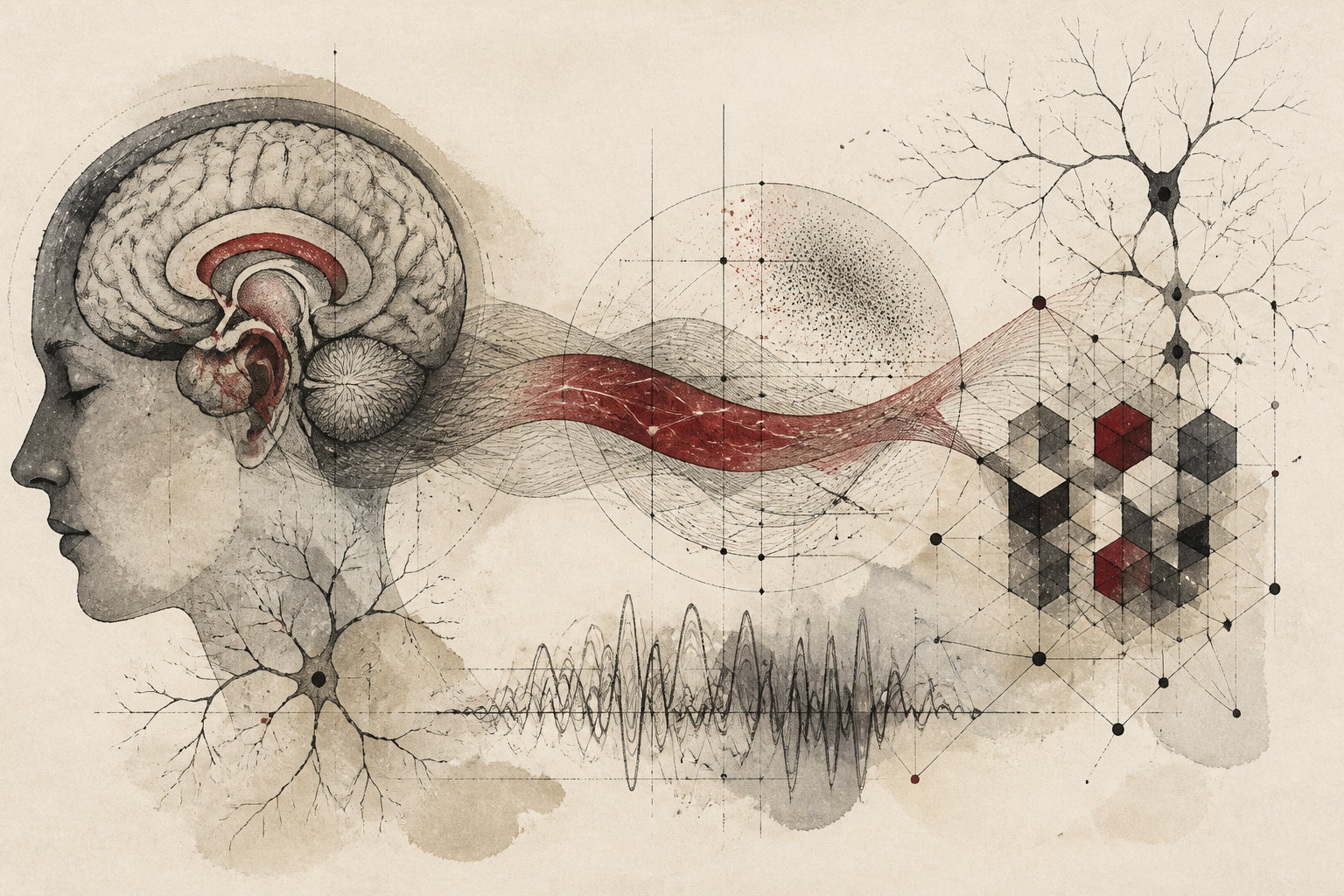
A groundbreaking theoretical framework has emerged, positing that human intelligence, and indeed the broader landscape of cognitive processing, can be understood through the lens of a "compositionality continuum." This novel perspective, detailed in a recent analysis published in *Nature Neuroscience*, challenges traditional binary views of information structuring in the brain, proposing instead that the ability to synthesize complex representations from simpler mental elements operates along a spectrum. This continuum offers a unifying principle for investigating both the intricate biological mechanisms of cognition and the evolving architectures of artificial intelligence.
The Spectrum of Cognitive Synthesis
Historically, models of cognition have grappled with adequately explaining the remarkable flexibility inherent in human thought. The concept of compositionality – the capacity to combine discrete mental components into novel, complex structures – has been central to these discussions. However, the new framework advocates for a more nuanced understanding, suggesting that this capacity is not an all-or-nothing phenomenon but rather spans a range of sophistication. At one end lie rigid, highly predefined associations, while at the other, highly fluid and novel combinations of ideas are formed. By conceiving compositionality as a dynamic scale, researchers can gain a more precise understanding of how distinct brain regions collaborate to facilitate sophisticated logical reasoning and effective problem-solving. This approach posits that the efficiency and adaptability with which a neural system navigates this continuum directly correlates with its general intelligence.
The implications for understanding human intelligence are profound. The ability to abstract, generalize, and innovate, hallmarks of advanced cognition, are intimately tied to this compositional flexibility. Rather than viewing intelligence as solely residing in processing speed or memory capacity, this framework highlights the structural dynamics of information organization. It suggests that the cognitive prowess observed in humans is a direct consequence of the brain's sophisticated capacity to move along this compositional scale, from rudimentary pattern recognition to highly creative synthesis.
Neural Underpinnings of Compositionality
From a neuroscientific vantage point, this continuum framework emphasizes the dynamic interplay between specialized sensory processing regions and higher-order associative areas of the brain. The brain's remarkable capacity for abstraction, a cornerstone of intelligent behavior, is theorized to be rooted in its inherent ability to decompose complex tasks into reusable, fundamental components. These components can then be dynamically reassembled in varied configurations, depending on the specific contextual demands of a situation. This adaptive decomposition and reassembly process is deemed critical for generalization, enabling individuals to effectively transfer knowledge and skills acquired in one domain to entirely new, unfamiliar scenarios.
Consider, for instance, learning a new language. Basic phonemes and morphemes represent elemental units. Through compositional processes, these are combined into words, then sentences, and ultimately complex narratives. A rigid system might only recognize predefined phrases. A highly compositional system, however, can generate and comprehend entirely novel sentences, even those never encountered before, by applying grammatical rules and semantic understanding to known elements. The brain's capacity to flexibly manipulate these elements, adapting their arrangement based on context and desired outcome, is precisely what the compositionality continuum seeks to capture and quantify.
A Unified Metric for Intelligence
Beyond its explanatory power for biological cognition, this research provides a standardized metric that can be applied to compare biological and machine intelligence. As artificial neural networks continue to advance, with the ambition of replicating human-like reasoning abilities, the compositionality continuum emerges as a crucial benchmark. This framework allows researchers to evaluate whether these artificial systems are genuinely synthesizing information in a flexible, compositional manner or merely relying on sophisticated statistical pattern matching and recall of previously learned associations.
For example, a machine learning model that can accurately classify images of cats after being trained on thousands of cat pictures might be operating at a lower compositional level if it struggles to generalize this knowledge to recognize an entirely novel, unseen feline species or to understand the abstract concept of "mammal." A system demonstrating higher compositionality would be able to break down the concept of "cat" into features like "fur," "four legs," "whiskers," and then recombine these and other features to form new concepts or recognize variations, demonstrating true generalization. The findings unequivocally underscore the critical importance of structural flexibility and adaptability in the evolution and development of cognitive sophistication, whether in biological organisms or artificial constructs.
Limitations and Future Directions
While offering a compelling new lens, this theoretical framework inherently presents several open questions and acknowledges limitations. Quantifying an individual's position or a system's capacity along such a continuum requires robust and innovative experimental paradigms and computational models. Developing precise metrics to measure the "fluidity" or "rigidity" of compositional processes in different brain regions or AI architectures remains a significant challenge. Furthermore, the precise neurobiological mechanisms that govern the transition between different levels of compositionality – how the brain shifts from forming simple associations to generating complex, novel ideas – are still largely unknown. Future research will need to delve into the neural circuitry and molecular underpinnings that facilitate this dynamic range. Understanding how developmental processes influence an individual's compositional capacity throughout their lifespan also represents an important avenue for investigation.
Relevance for Psychology and Neuroscience
For students and clinicians in psychology and neuroscience, this framework offers a powerful new way to conceptualize intelligence, learning, and cognitive disorders. It moves beyond simplistic notions of "smart" or "unintelligent" and instead focuses on the underlying mechanisms of information organization. Understanding an individual's compositional profile could provide insights into specific learning disabilities, language impairments, or even certain neurological conditions where the ability to combine or separate mental elements might be compromised. For instance, a difficulty in generalizing learned information might be interpreted as a limitation in moving flexibly along the continuum.
Clinicians might eventually utilize principles derived from this framework to design targeted interventions that foster compositional thinking, potentially improving problem-solving skills or enhancing cognitive flexibility in diverse patient populations. For students, it provides a unifying conceptual tool to bridge disparate areas of cognitive science, from memory and perception to language and executive function, by considering how compositionality underpins each of these domains.
A Forward Look
The introduction of the compositionality continuum marks a significant stride in the quest to understand the neural basis of intelligence. It propels the field toward a more integrative and dynamic understanding of cognitive processes, moving beyond static models to embrace the inherent adaptability of thought. As researchers continue to explore its implications, this framework promises to foster deeper collaborations between cognitive neuroscience, artificial intelligence, and clinical psychology. It sets the stage for future research to precisely map the neural circuits involved in compositional processing, to develop advanced AI that genuinely emulates human-like generalization, and ultimately, to unlock new avenues for enhancing human cognition and addressing its impairments. This new conceptualization stands to reshape how we approach the study of the mind for decades to come.
Quick answers
- What is the compositionality continuum in neuroscience?
- It is a theoretical framework suggesting that the brain's ability to combine simple ideas into complex ones exists on a scale rather than being a simple on/off switch.
- How does this research impact our understanding of intelligence?
- It identifies the flexible assembly of mental representations as a core driver of general intelligence and cognitive generalization.
- Can this framework be applied to AI development?
- Yes, it provides a benchmark for evaluating whether AI systems are performing true symbolic synthesis or just statistical pattern recognition.
Rewritten by Zeit editorial AI. Based on original reporting at Nature Neuroscience.