Mapping the Cerebral Metabolic Landscape: The Bioenergetics of Cognitive Processing
A comprehensive analysis of how the brain manages its metabolic budget, investigating the conversion of glucose to ATP and the energetic cost of neural computation.
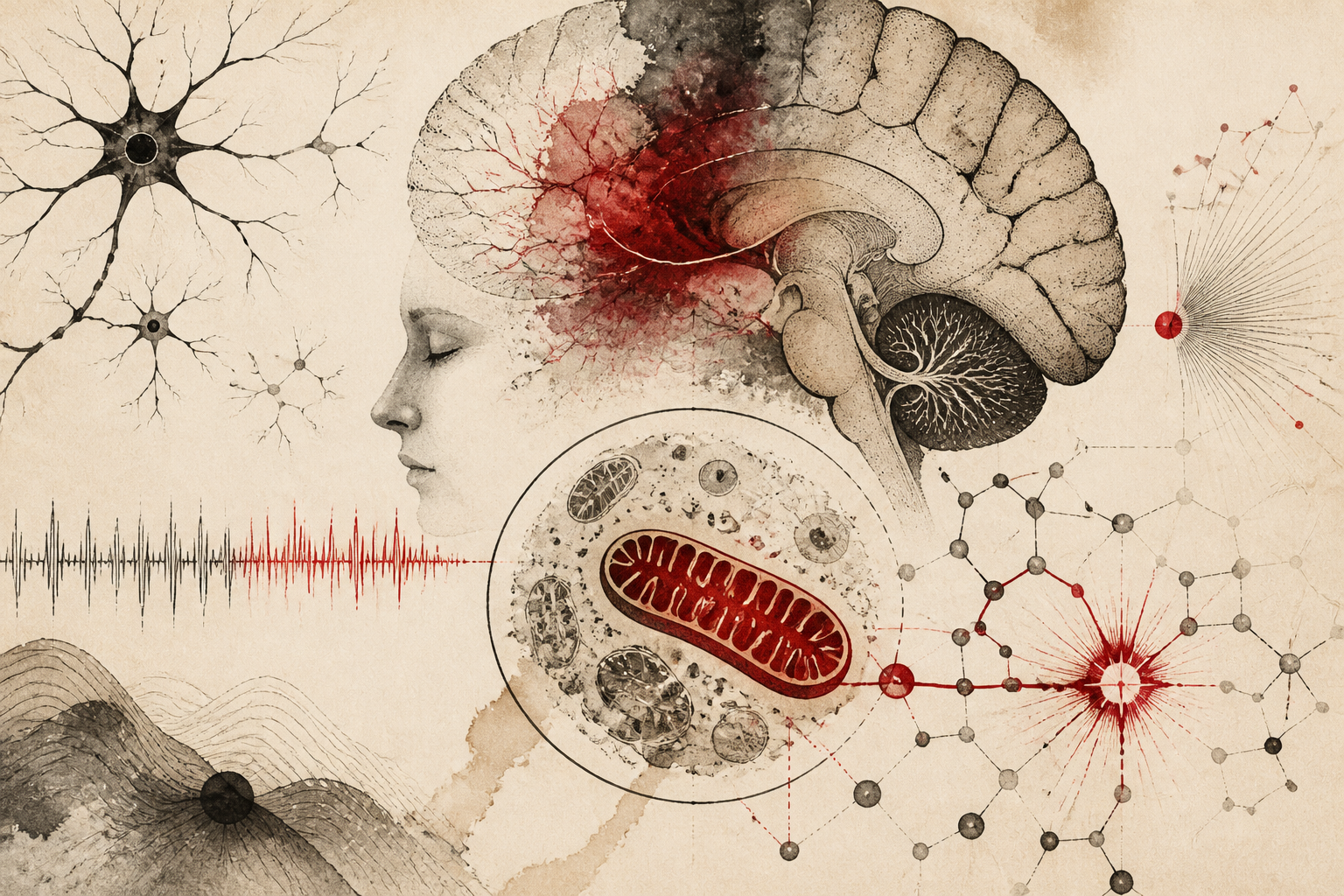
The human brain represents a paradox of biological engineering. While accounting for only two percent of the total body mass, this organ consumes approximately twenty percent of the body's entire metabolic energy supply. This disproportionate expenditure raises fundamental questions about the biological cost of cognition and the evolutionary pressures that shaped our neural architecture. According to a recent report by Neuroscience News, researchers are now embarking on an ambitious effort to map the brain's energy budget across multiple scales, from individual molecular interactions to large-scale network activities. This investigation aims to resolve long-standing mysteries regarding how neurons manage their Adenosine Triphosphate (ATP) resources and the precise mechanisms by which the brain sustains high-speed signaling even under physiological stress.
At the center of this inquiry is the role of glucose as the primary fuel for cognitive function. The brain lacks the capacity for significant energy storage, necessitating a constant, uninterrupted supply of sugar and oxygen through the bloodstream. When neurons become active, their demand for energy spikes instantaneously, triggering a cascade of metabolic processes to synthesize ATP, the universal energy currency of the cell. The current research focuses on the efficiency of this conversion and how the brain prioritizes certain functions over others when resources become scarce. By quantifying the metabolic overhead of a single thought, scientists hope to provide a blueprint for understanding both healthy cognitive aging and the onset of neurodegenerative conditions.
The Molecular Dynamics of Neural ATP Consumption
The fundamental unit of neural energy consumption lies in the maintenance of electrochemical gradients. For a neuron to fire an action potential, it must actively transport ions across its membrane, a process governed by molecular pumps that require significant ATP investment. The research highlighted by Neuroscience News suggests that the metabolic cost of maintaining these resting potentials is surprisingly high, even when the brain is not actively engaged in specific tasks. This 'baseline' energy expenditure suggests that the brain is always in a state of high-readiness, primed for rapid response to environmental stimuli. The transition from a resting state to an active state further increases this demand, as neurotransmitter recycling and synaptic vesicle mobilization require additional bursts of metabolic activity.
Investigating these processes requires a multi-scale approach. On a microscopic level, researchers are examining the mitochondria—the powerhouses of the cell—to understand how they adapt to the fluctuating needs of the synapse. During intense cognitive tasks, mitochondria must rapidly scale up production, yet this process generates oxidative stress as a byproduct. The new findings explore how the brain balances the need for rapid fuel with the necessity of protecting its delicate cellular structures from metabolic damage. The study posits that the brain has evolved highly specialized pathways to optimize this trade-off, ensuring that the most vital communication pathways receive priority during periods of high demand.
Metabolic Resilience and the Oxygen Paradox
One of the most significant aspects of this research involves the brain's response to metabolic crises, such as oxygen deprivation or hypoglycemia. Neurons are notoriously sensitive to a lack of oxygen; even brief interruptions in supply can lead to catastrophic cellular failure. The project reported by Neuroscience News seeks to uncover the compensatory mechanisms that allow certain brain cells to survive conditions that would normally prove fatal. This includes studying the role of astrocytes—supporting glial cells—which are thought to act as metabolic reservoirs, providing lactate to neurons when glucose levels dip. This collaborative energy management system between different cell types suggests that the brain's energy budget is a decentralized, highly cooperative ecosystem.
Understanding these resilience mechanisms has profound implications for clinical neurology. If researchers can identify the specific molecular markers that signal metabolic distress, it may be possible to develop interventions that mimic the brain's natural protective responses. The current study uses advanced imaging and computational modeling to track how ATP levels fluctuate in real-time across different regions of the brain. This allows for the identification of 'energy bottlenecks'—areas that are particularly vulnerable to metabolic failure due to their high signaling demands or limited vascular access. By mapping these vulnerabilities, the research provides a new lens through which to view ischemic events and chronic neurodegeneration.
Cognitive Scaling and Limitations of the Energetic Budget
The interpretation of these metabolic maps suggests that the brain operates under a strict 'energy cap.' Evolution has favored a neural architecture that maximizes information processing while minimizing caloric cost. This concept, known as neural economy, implies that the brain cannot simultaneously engage every region at maximum capacity. Instead, it employs selective attention and inhibitory circuits to focus metabolic resources on relevant tasks while suppressing noise. The findings from the Neuroscience News report indicate that the energy cost of a thought is not just the cost of firing neurons, but also the cost of inhibiting the vast majority of other possible neural pathways.
However, this research also acknowledges significant limitations. Measuring ATP consumption in a living human brain remains an indirect process, often relying on blood flow or glucose uptake as proxies for actual energy use. There is also the challenge of individual variability; factors such as genetics, diet, and sleep patterns significantly influence metabolic efficiency. Furthermore, the study raises open questions about how the brain's energy budget changes across the lifespan. Does an aging brain become less efficient at producing ATP, or does it simply become less effective at allocating it? Solving these questions will require longitudinal data and more precise non-invasive sensing technologies.
Implications for Neuropsychology and Future Research
Why does a comprehensive map of the brain’s energy budget matter? For the field of psychology and neuroscience, it represents a shift from a purely structural understanding of the brain to a functional, resource-based perspective. If we view cognitive fatigue not as a lack of willpower but as a literal depletion of localized ATP resources, it changes how we approach education, workplace productivity, and mental health. This research provides a biological basis for the limits of sustained attention and the necessity of metabolic recovery periods. It suggests that the 'cost of thought' is a physical reality that dictates the boundaries of human performance.
As this study progresses, it will likely serve as a foundational reference for neuroscientists, clinicians, and engineers alike. The development of neuromorphic computing—computer hardware designed to mimic the brain's efficiency—depends heavily on our understanding of how biological systems process information with such low power requirements. By deciphering the brain's metabolic ledger, we are not only learning about the biology of the mind but also discovering the fundamental principles of efficient information processing that could define the next generation of artificial intelligence and medical therapy. The ongoing work reported by Neuroscience News continues to bridge the gap between biochemistry and behavior, offering a clearer picture of the energetic engine that drives the human experience.
Quick answers
- What is the brain's primary source of energy?
- The brain primarily uses glucose, which is converted into Adenosine Triphosphate (ATP) to fuel cellular functions and neural signaling.
- Why does the brain consume so much energy compared to its size?
- Despite being only 2% of body mass, the brain uses 20% of the body's energy to maintain electrochemical gradients, fire action potentials, and recycle neurotransmitters.
- How do neurons survive during a loss of oxygen?
- Neurons rely on compensatory mechanisms and support from astrocytes, which can provide alternative fuel sources like lactate during brief periods of metabolic stress.
Editorial Team