Mapping Strategy Acquisition: How Structured Experience Shapes Entorhinal Neural Dynamics
Researchers have uncovered how the medial entorhinal cortex adapts to structured environments, facilitating the transition from trial-and-error to expert strategic behavior.
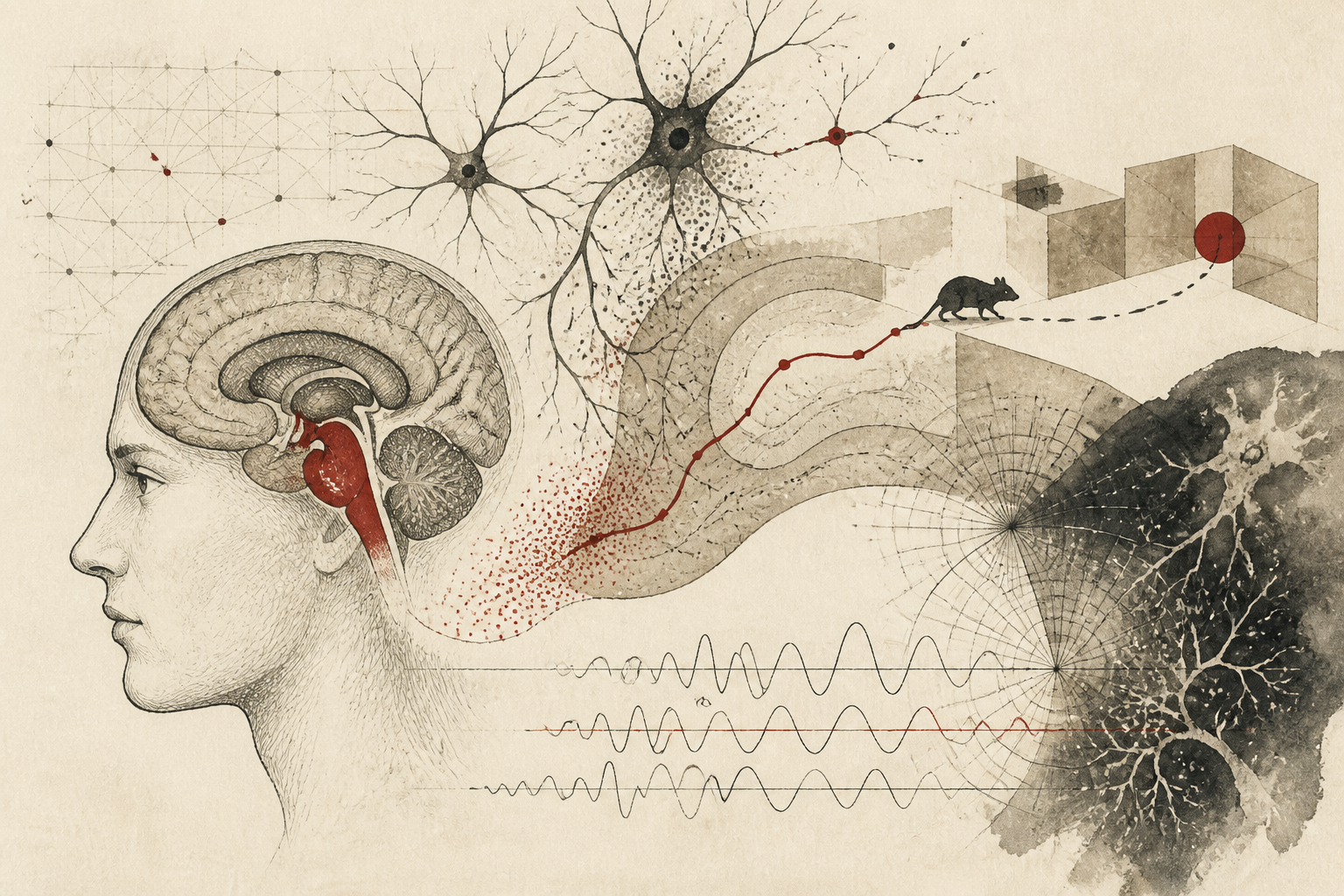
The acquisition of complex behavioral strategies is a cornerstone of cognitive flexibility, yet the neural substrates that facilitate the transition from naive exploration to expert-level execution remain a central focus of contemporary neuroscience. A recent study published in Nature Neuroscience, titled "Structured experience shapes strategy learning and neural dynamics in the medial entorhinal cortex," provides a comprehensive analysis of how the brain organizes information to optimize decision-making. By examining the activity within the medial entorhinal cortex (MEC), the researchers have elucidated the relationship between environmental structure, behavioral adaptation, and the underlying neural representations that allow organisms to navigate non-spatial tasks with spatial precision.
The Architecture of Strategy and the Entorhinal Cortex
Traditional understanding of the medial entorhinal cortex has long focused on its role in spatial navigation. The MEC is famously home to grid cells, which provide a coordinate system for physical space. However, recent theoretical shifts suggest that the MEC may serve a broader function as a general-purpose framework for organizing abstract information, including the logical structures of tasks and strategies. The research team explored how structured experience—exposure to predictable patterns within a task—influences the speed and stability of strategy acquisition. They hypothesized that the MEC does not merely react to external stimuli but instead builds an internal model of task logic, allowing for the emergence of efficient behavioral strategies.
To investigate this, the researchers utilized a paradigm where subjects were required to navigate a series of decisions to reach a goal. Unlike simple stimulus-response tasks, this experiment required the integration of multiple variables over time. The study focused on how the presence or absence of underlying structure in these experiences altered the learning trajectory. In environments where the task structure was consistent, subjects developed sophisticated strategies that moved beyond simple heuristics, suggesting that the brain actively leverages environmental regularity to compress complex information into actionable mental maps.
Decoupling Neural Dynamics from Behavioral Performance
One of the most significant findings of the study involves the specific neural dynamics observed during the learning process. Using high-density recordings, the researchers tracked the activity of populations of neurons in the MEC as subjects progressed from beginner to expert status. The results revealed that as a strategy is learned, the neural representations in the MEC become increasingly organized and distinct. In the early stages of learning, neural activity appeared chaotic and poorly correlated with the task requirements. However, as the subjects gained experience, a clear representational structure emerged, mirroring the logical structure of the task itself.
Interestingly, the study demonstrated that this neural reorganization is not a passive byproduct of time but is strictly dependent on the structured nature of the experience. When subjects were exposed to unstructured or randomized tasks, the MEC failed to develop the same level of representational clarity, and behavioral performance remained stagnant. This suggests that the MEC functions as a "cognitive map" not just for physical locations, but for the logical flow of complex tasks. The findings indicate that the medial entorhinal cortex is essential for distilling the underlying rules of an environment, transforming a series of disjointed events into a coherent strategic framework.
Mechanisms of Representation and Task Integration
The researchers utilized advanced computational modeling to decode how these neural patterns represented specific task variables. They found that the MEC encodes both the current state of the subject and the future goal, essentially bridge the gap between present action and long-term objective. This dual encoding is critical for strategy learning, as it allows the brain to evaluate the utility of specific actions in the context of an overall plan. The study highlights that the MEC’s ability to generate these structured representations is what facilitates the transition to expert behavior.
Furthermore, the methodology revealed that these neural dynamics are surprisingly robust. Once a structured representation is formed in the MEC, it remains stable even when the subject is presented with minor variations in the task. This suggests that the entorhinal cortex provides a generalized template that can be applied to similar problems, a hallmark of high-level cognitive function. The researchers posit that this mechanism is what allows humans and other animals to transfer knowledge from one domain to another, provided the underlying logical structures share commonalities.
Limitations and Theoretical Implications
While the study provides compelling evidence for the MEC’s role in strategy learning, it also opens several new avenues for inquiry. One limitation noted by the researchers is the specific focus on the medial entorhinal cortex in isolation. While the MEC is clearly a hub for these dynamics, it operates within a wider network involving the hippocampus and the prefrontal cortex. The exact nature of the communication between these regions during the strategy-building phase remains to be fully mapped. It is unclear, for instance, whether the MEC receives its structural templates from the prefrontal cortex or if it independently generates these maps based on environmental input.
Additionally, the study raises questions regarding the plasticity of these representations. While the MEC showed stability in structured environments, the research did not fully explore how these maps are reorganized when a previously stable environment becomes volatile. Understanding the "unlearning" or updating process is essential for a complete model of cognitive flexibility. These open questions highlight the complexity of the entorhinal system and suggest that while we have identified a key component of the cognitive map, the full blueprint of strategic intelligence is still being drafted.
Bridging Neuroscience and Educational Theory
The implications of this research extend far beyond the laboratory, offering valuable insights into how we understand learning and expertise in human contexts. By demonstrating that structured experience is the primary driver of neural organization in the MEC, the study reinforces the importance of curriculum design and environmental predictability in educational settings. If the brain requires structured input to build efficient internal models, then the way information is sequenced during the learning process is as important as the information itself.
In the realm of psychology and cognitive science, these findings provide a biological basis for why "scaffolded" learning—where new information is built upon a consistent logical framework—is so effective. The medial entorhinal cortex appears to be the engine of this process, turning the chaos of new experience into the order of strategic expertise. As we continue to bridge the gap between neural dynamics and behavioral outcomes, research like this serves as a vital link, explaining not just that we learn, but the fundamental mechanisms by which our brains map the path to mastery.
Quick answers
- What is the role of the medial entorhinal cortex in learning?
- The medial entorhinal cortex (MEC) acts as a cognitive mapping system that organizes task logic and strategy, allowing individuals to move from trial-and-error to expert behavior by identifying patterns in structured environments.
- How does structured experience affect the brain?
- Structured experience allows the MEC to develop organized neural representations. Without predictable task structures, neural activity remains disorganized, and the acquisition of efficient strategies is significantly hindered.
- What was the main finding of the Nature Neuroscience study on MEC and strategy?
- The study found that the MEC encodes both current states and future goals into a stable neural map, proving that this brain region is essential for distilling the underlying rules of complex, non-spatial tasks.
Rewritten by Zeit editorial AI. Based on original reporting at Nature Neuroscience.