Low-Dose Rapamycin May Enhance Cerebral Blood Flow in At-Risk Alzheimer's Carriers
Recent findings suggest that the anti-aging compound rapamycin could preserve neurovascular health in APOE4 carriers years before the clinical onset of Alzheimer’s disease.
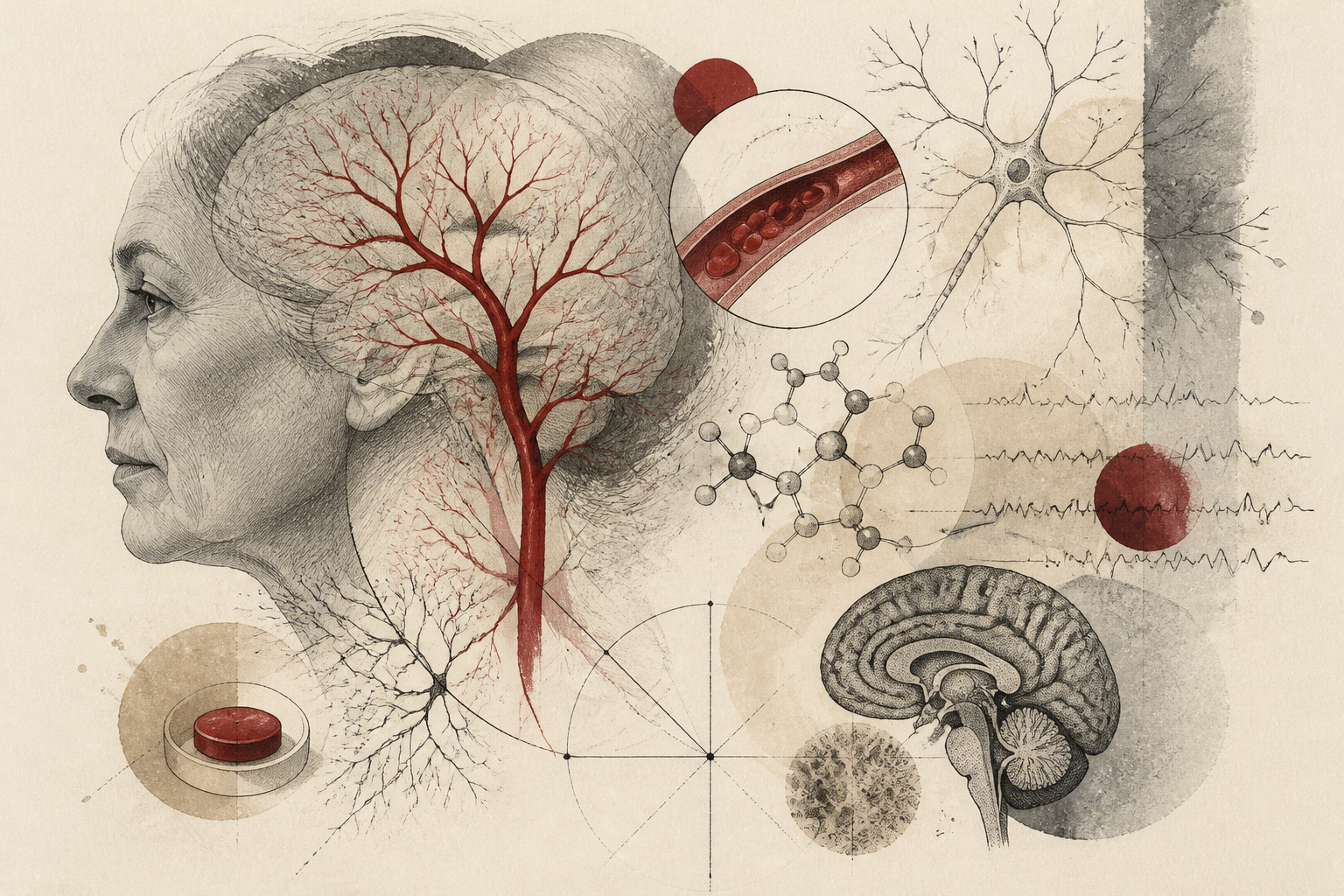
The intersection of aging research and neurodegenerative prevention has reached a significant milestone with new evidence suggesting that pharmacological intervention may stabilize the brain's vascular integrity long before cognitive decline manifests. A recent study, detailed by ScienceDaily, indicates that rapamycin, a compound traditionally utilized for its immunosuppressive and anti-aging properties, might serve as a prophylactic measure for individuals genetically predisposed to Alzheimer’s disease. By targeting the early physiological markers of the condition, specifically the degradation of cerebral blood flow, researchers are opening a new front in the battle against dementia that focuses on preservation rather than late-stage treatment.
The research centers on the APOE4 gene variant, which remains the most significant genetic risk factor for late-onset Alzheimer’s disease. While the presence of the gene does not guarantee a diagnosis, it is strongly associated with an earlier onset of symptoms and a more aggressive progression of neural degradation. Crucially, the pathology of Alzheimer’s often begins decades before a patient experiences memory loss. One of the earliest measurable changes in the aging brain is a reduction in cerebral blood flow, a condition that deprives neurons of essential oxygen and glucose while hindering the clearance of metabolic waste. This vascular decline is particularly pronounced in those carrying the APOE4 allele, suggesting that the cardiovascular and neurological systems are inextricably linked in the disease’s etiology.
Pharmacological Intervention and Vascular Response
In this clinical investigation, researchers explored the effects of a low-dose rapamycin regimen on a cohort of healthy middle-aged adults. The participants were specifically selected based on their carrier status for the APOE4 gene, representing a population that is traditionally considered high-risk yet currently asymptomatic. The study utilized a double-blind, placebo-controlled design to ensure that the physiological observations were directly attributable to the drug’s mechanism rather than external variables. Over a period of just four weeks, the subjects received a dosage significantly lower than what is typically prescribed for organ transplant patients, aiming to capture the drug’s geroprotective qualities without triggering its broader immunosuppressive side effects.
The findings were statistically significant and conceptually startling. Despite the brief duration of the trial, the researchers observed a measurable improvement in brain blood flow among the participants. The low-dose rapamycin appeared to bolster the vascular system's ability to perfuse the brain, effectively counteracting the subtle hemodynamic declines associated with the APOE4 genotype. This improvement was not uniform across all demographics; notably, the study found that women exhibited the most robust benefits from the intervention. Given that women are disproportionately affected by Alzheimer’s disease and often experience more severe vascular complications associated with the APOE4 gene, this gender-specific response provides a critical clue for future personalized medical strategies.
Mechanisms of Neurovascular Protection
The mechanism through which rapamycin exerts these effects is likely tied to its role as an inhibitor of the mechanistic target of rapamycin (mTOR) pathway. In the context of cellular biology, the mTOR pathway acts as a central regulator of metabolism and cell growth. While active mTOR is necessary for development, overactivity in aging organisms has been linked to cellular senescence and the accumulation of protein aggregates. By inhibiting this pathway, rapamycin may promote autophagy—the process by which cells clean out damaged components—and improve the functionality of the endothelial cells lining the blood vessels in the brain.
This vascular stabilization is vital because the brain’s blood-brain barrier and its capillary network are the first lines of defense against neurotoxicity. When blood flow is compromised, the brain becomes more susceptible to the accumulation of amyloid-beta plaques and tau tangles, the hallmark proteins of Alzheimer’s. By intervening at the level of blood flow, rapamycin acts as a systemic tuner, potentially keeping the neural environment healthy enough to prevent the cascade of protein misfolding that eventually leads to neuronal death. The speed of the results—visible after only a month—suggests that the vascular system retains a degree of plasticity that can be rapidly targeted by the right pharmacological agents.
Limitations and Future Research Paradigms
While the results are promising, the research community urges a measured interpretation of the data. The study was conducted over a very short time frame of four weeks, which, while sufficient to show changes in blood flow, is not long enough to determine if these changes translate into long-term prevention of cognitive decline. Furthermore, the use of rapamycin, even at low doses, requires careful monitoring. As an agent that modifies fundamental biological pathways, its long-term safety profile in healthy populations must be rigorously established before it can be recommended as a standard preventive measure. The current study serves as a proof of concept rather than a final clinical recommendation.
Another open question involves the specific biological reasons behind the heightened response in female participants. Researchers speculate that hormonal interactions or differences in baseline vascular health between genders might play a role, but further studies with larger, more diverse cohorts are necessary to decouple these variables. Additionally, the transition from improved blood flow to actual neuroprotection remains a theoretical leap that requires longitudinal observation. Future trials will likely need to follow APOE4 carriers for years, not weeks, to confirm whether maintaining vascular health through middle age significantly delays the clinical manifestation of memory loss.
Redefining Alzheimer’s Prevention
The importance of this study lies in its shift away from the "amyloid hypothesis" which has dominated Alzheimer’s research for decades with mixed success. Instead, it highlights the "vascular hypothesis," treating the brain as an organ that is only as healthy as its supply lines. By demonstrating that a known drug can improve physiological markers in high-risk individuals before they become patients, the research offers a glimpse into a future of proactive gerontology. If the decline in cerebral blood flow is indeed a canary in the coal mine for dementia, then interventions like low-dose rapamycin could become a cornerstone of preventive neurology.
Ultimately, according to the report from ScienceDaily, this study reinforces the idea that the most effective way to treat Alzheimer’s may be to ensure it never starts. By focusing on the middle-aged population—specifically those with a genetic predisposition—the medical community can transition from reactive care to a model of health maintenance. As the global population ages, the ability to delay the onset of symptoms by even a few years would have profound socio-economic impacts and significantly improve the quality of life for millions. This research marks a pivotal step in understanding how we might protect the aging brain by simply keeping the blood flowing.
Quick answers
- What is the role of the APOE4 gene in Alzheimer's disease?
- The APOE4 gene variant is the strongest genetic risk factor for late-onset Alzheimer's, often associated with earlier symptom onset and reduced cerebral blood flow.
- How does rapamycin potentially help the brain?
- Low-dose rapamycin appears to improve cerebral blood flow and vascular integrity, which may help maintain brain health and delay the onset of dementia symptoms.
- Why were the study results particularly significant for women?
- The study found that women carrying the APOE4 gene showed the strongest improvements in brain blood flow after taking rapamycin, which is notable as women are disproportionately affected by the disease.
Rewritten by Zeit editorial AI. Based on original reporting at ScienceDaily — Mind & Brain.