Low-Dose Aspirin and Dementia: A Genetic Switch for Cognitive Resilience
Researchers identify a specific genetic profile that correlates with a 70% reduction in dementia risk among older adults taking low-dose aspirin, offering a new lens for precision medicine.
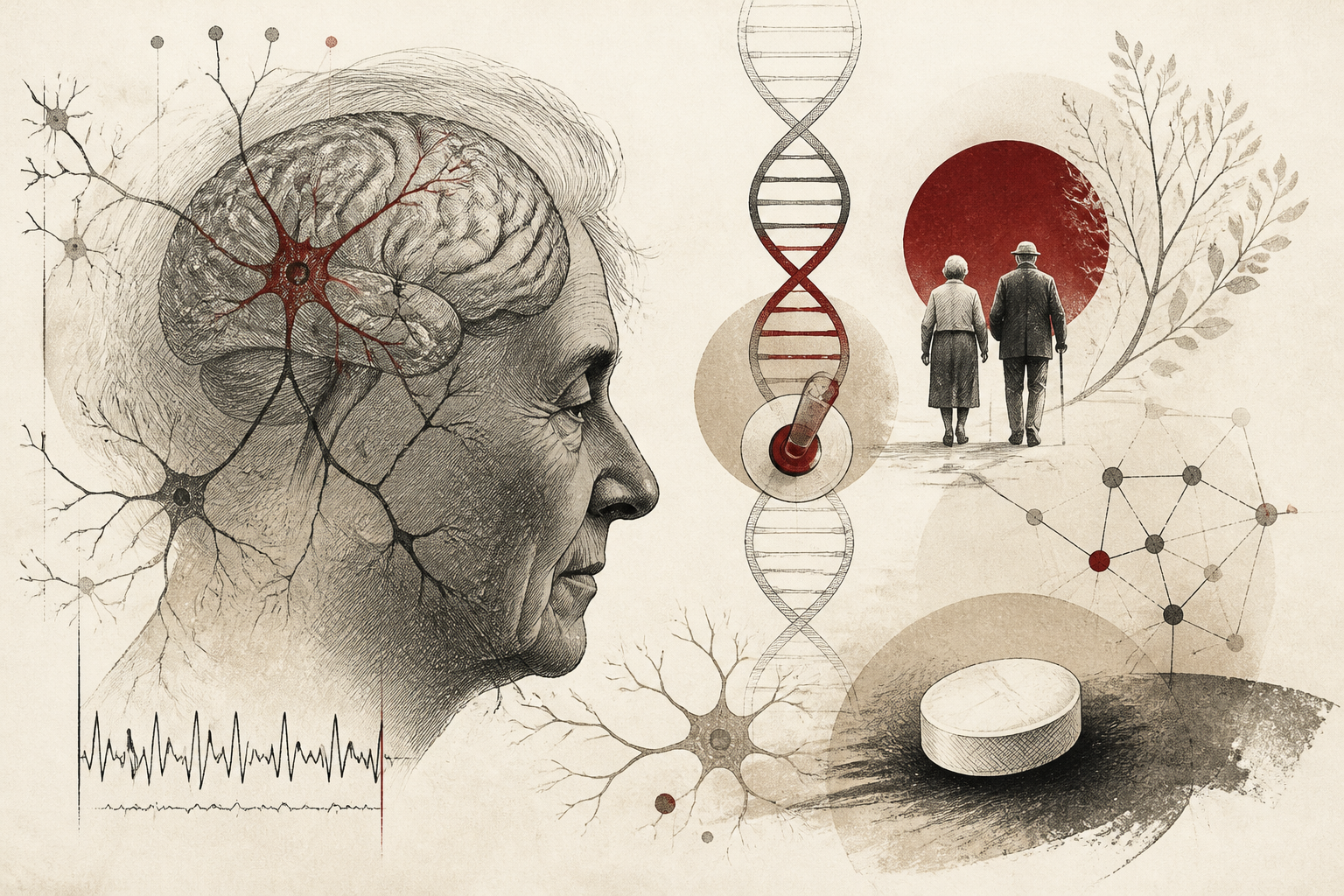
The pursuit of a pharmacological intervention for dementia has long been characterized by setbacks and conflicting clinical trial results. However, a significant development reported by ScienceDaily suggests that the effectiveness of one of the world's most common medications—low-dose aspirin—may be entirely dependent on an individual's unique genetic composition. While broad clinical trials have historically failed to show a universal protective effect of aspirin against cognitive decline, new data indicates that for a specific subset of the population, the relative risk of developing dementia may be reduced by as much as 70 percent. This finding marks a critical shift toward precision medicine in geriatric care, implying that the failure of past studies may have been due to the dilution of benefits across genetically diverse participant pools.
For decades, the medical community has debated the role of anti-inflammatory and anti-platelet agents in neuroprotection. Because Alzheimer’s disease and other forms of dementia are increasingly understood as having vascular and inflammatory components, aspirin—a salicylic acid derivative—became a primary candidate for investigation. Nevertheless, large-scale longitudinal studies often yielded neutral or even slightly negative results, leading many clinicians to move away from recommending daily low-dose aspirin for brain health. The recent findings reported by ScienceDaily challenge this retreat, suggesting that the "one-size-fits-all" approach to aspirin therapy has overlooked a profound biological interaction between the drug and the human genome. By isolating specific genetic markers, researchers have identified a cohort where the medication's mechanism appears to align perfectly with the physiological needs of the aging brain.
The Genetic Architecture of Neuroprotection
The central finding of this research rests on the observation that the 70 percent reduction in dementia risk was not a general phenomenon but was strictly limited to participants possessing a specific genetic profile. This discovery provides a long-sought explanation for why earlier clinical trials, such as the ASPREE (Aspirin in Reducing Events in the Elderly) study, failed to demonstrate significant cognitive benefits across their total populations. When the data is not segmented by genotype, the benefits experienced by one group are often masked by the lack of response or side effects in another. In this new analysis, the researchers focused on how genetic variations influence the body's inflammatory response and vascular integrity, two domains where aspirin is known to be biologically active.
According to the details reported by ScienceDaily, the study utilized a retrospective analysis of large datasets to correlate long-term aspirin use with cognitive outcomes, while simultaneously layering in genomic data. The researchers identified that individuals with certain alleles—variants of a gene that govern how the body processes inflammation or protects the blood-brain barrier—showed a markedly different trajectory of cognitive health when taking 100mg of aspirin daily. In these specific individuals, the drug appears to act as a potent stabilizer, preventing the chronic micro-inflammatory states that lead to neuronal death and the accumulation of toxic proteins like amyloid-beta and tau. For those without this genetic signature, the aspirin offered no such protection, and in some cases, the risks of internal bleeding outweighed any marginal benefit.
Mechanisms of Interaction and Methodology
To understand the mechanism behind this 70 percent risk reduction, one must look at how aspirin interacts with cyclooxygenase enzymes and blood platelets. In the general population, aspirin inhibits the production of prostaglandins, which are signaling molecules that promote inflammation. However, in the specific genetic cohort identified in the study, the pathway between aspirin and neuroinflammation appears to be more direct. The researchers hypothesize that in these individuals, the genetic variant may cause a higher sensitivity to the anti-inflammatory effects of salicylic acid within the microglia—the brain's resident immune cells. By dampening microglial overactivation, the aspirin helps maintain a stable environment for synaptic signaling.
Methodologically, the study leveraged advanced bioinformatics to re-examine existing longitudinal health records. By comparing the incidence of dementia diagnoses between aspirin users and non-users within specific genetic subgroups, the team was able to calculate the relative risk reduction. The statistical significance of the 70 percent figure is particularly striking given the complexity of dementia's etiology. It suggests that for the right person, aspirin is not merely a blood thinner, but a targeted neuroprotective agent. However, the researchers emphasize that these results are observational and derived from specific datasets, meaning that while the correlation is robust, the underlying biological causal chain requires further validation through prospective, genotype-directed clinical trials.
Limitations and the Risks of Self-Medication
Despite the optimistic findings, the "catch" mentioned in the original reporting by ScienceDaily serves as a vital cautionary note for the public and the medical community alike. The primary limitation is the inherent risk profile of daily aspirin therapy, which includes gastrointestinal bleeding, cerebral hemorrhages, and peptic ulcers. These risks do not disappear simply because an individual has the "protective" genetic profile. Furthermore, the study does not suggest that aspirin can reverse existing cognitive impairment; rather, it points toward a preventative or prophylactic role that must begin before significant damage has occurred. The identification of the genetic profile itself is also a hurdle, as genetic testing for these specific markers is not yet a standard part of primary care.
There is also the question of generalizability. Many of the large datasets used in such studies are historically skewed toward specific ethnic backgrounds, often those of European descent. It remains to be seen if the genetic markers identified in this study hold the same predictive power across diverse global populations. Additionally, the study did not fully account for all lifestyle factors, such as diet, exercise, and education, which are known to interact with both genetics and medication efficacy. The academic community warns that until the specific genetic markers are clearly defined and validated in a clinical setting, patients should not begin a daily aspirin regimen solely for dementia prevention without consulting a physician, as the risk of major bleeding could outweigh the potential for cognitive protection.
Future Directions in Precision Geriatrics
The implications of this research extend far beyond the use of a single drug. It serves as a proof-of-concept for the future of precision geriatrics, where prescriptions for age-related conditions will be tailored to the patient’s DNA. If further research can confirm these findings and make genetic screening accessible, the medical system could see a major shift in how dementia is managed. Instead of waiting for the onset of symptoms, clinicians could identify high-risk individuals in their 50s or 60s and prescribe low-dose aspirin as a targeted intervention, knowing precisely who will benefit and who will be put at risk of adverse effects.
As we look forward, the next step for researchers will be to conduct prospective trials where participants are pre-screened for the relevant genetic markers. Such studies will provide the definitive evidence needed to update clinical guidelines. The story of aspirin and dementia, as reported by ScienceDaily, is a reminder that the failure of a drug in the general population does not mean the drug is ineffective; it may simply mean we haven't yet found the right audience. In the era of genomic medicine, the re-evaluation of old drugs through a new genetic lens may yield the breakthroughs that have eluded us for decades. For the millions of families affected by dementia, the prospect of a low-cost, widely available prevention strategy—even one with a genetic catch—is a significant step toward a future of cognitive longevity.
Quick answers
- Can everyone take aspirin to prevent dementia?
- No. Recent research indicates the 70% risk reduction only applies to people with a specific genetic profile, while others may face risks like internal bleeding without any cognitive benefit.
- What was the specific finding regarding aspirin and dementia risk?
- According to ScienceDaily, older adults with a specific genetic profile showed a 70% lower relative risk of dementia when taking low-dose aspirin compared to those not taking the drug.
- Why did previous aspirin trials fail to show these results?
- Previous trials looked at the general population. The new findings suggest the benefits were hidden because they only occur in individuals with a particular genetic makeup, which was not isolated in earlier studies.
Rewritten by Zeit editorial AI. Based on original reporting at ScienceDaily — Mind & Brain.