Loneliness and Social Isolation Linked to Substantial Losses in Health-Adjusted Life Years
Recent findings reveal that social disconnect significantly reduces years of life free from mental health disorders, with notable gender-based disparities in long-term wellness outcomes.
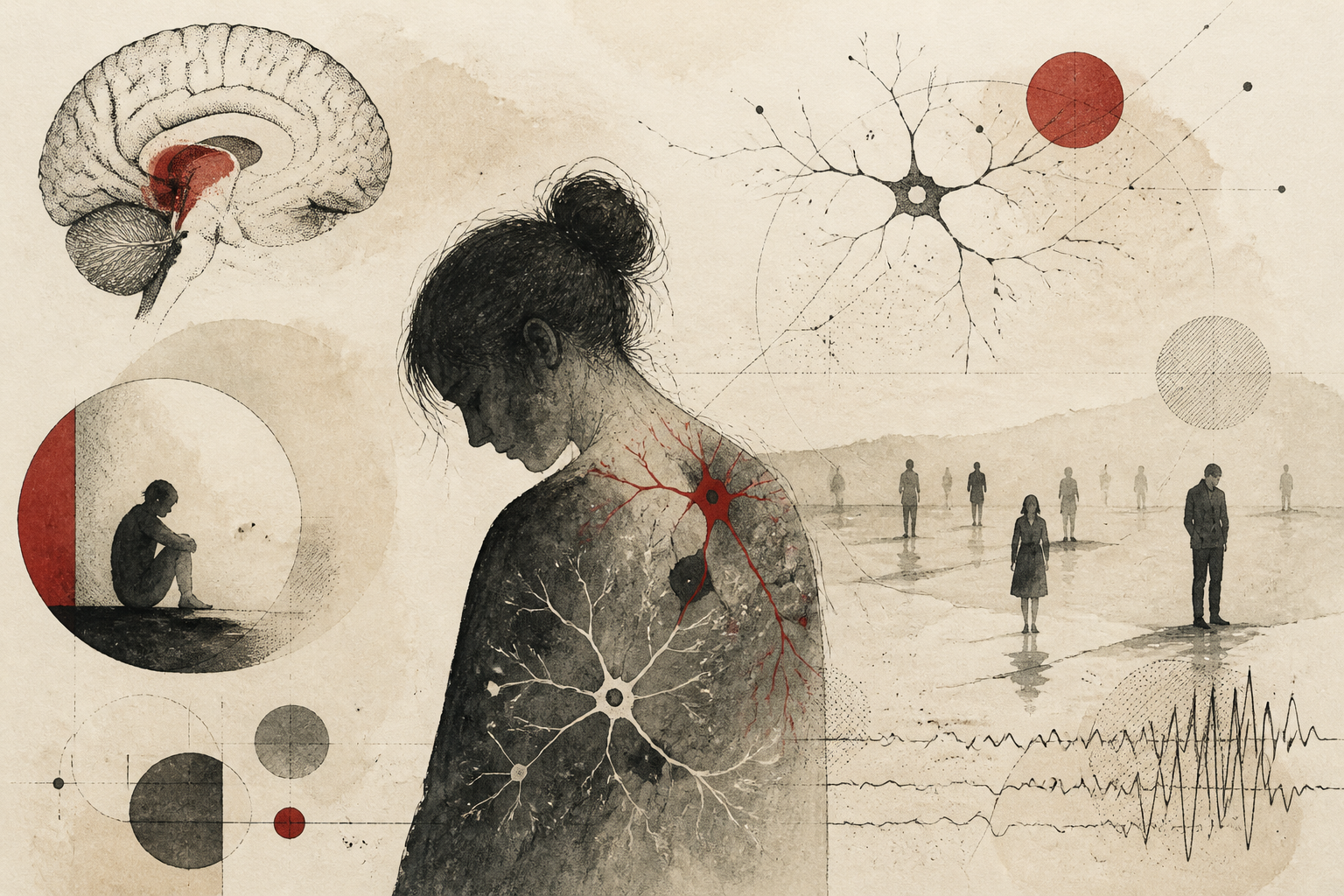
In the landscape of modern public health, the impact of psychological and social factors on physical longevity has long been recognized. However, recent empirical evidence suggests that the subjective experience of loneliness and the objective state of social isolation may be far more detrimental to the quality of human life than previously estimated. According to a significant study published in ScienceDaily, these social determinants of health are not merely emotional burdens but are significant drivers of morbidity. The research indicates that individuals experiencing profound social disconnect may lose several years of "healthy life," specifically those years characterized by the absence of debilitating mental health conditions such as depression and anxiety. This research shifts the focus from simple mortality to the concept of health-adjusted life expectancy, illustrating how our social environment dictates the functional utility of our later years.
The Quantifiable Burden of Social Disconnect
The core findings of this expansive study highlight a stark reality regarding the longitudinal health outcomes of those who lack robust social integration. The data indicates that for men who navigate both loneliness and social isolation, the cost is approximately 5.8 years of life free from depression and anxiety. Women are not immune to these effects, though the data suggests a different scale of impact, with an estimated loss of 3.6 to 3.7 years of healthy life. These figures are particularly striking when compared to other well-known risk factors like sedentary behavior or poor dietary habits. The distinction between social isolation—an objective measure of having few social contacts—and loneliness—the subjective distressing feeling of being alone—is critical here. The study suggests that while both independently harm health, their cumulative effect creates a synergistic decline in mental well-being that can persist for decades. By quantifying these losses in years, the research provides a tangible metric for policy makers and healthcare providers to understand the urgency of social interventions.
Mechanisms of Psychosocial Erosion
To understand why the absence of social connection translates so directly into years of lost health, one must examine the physiological and psychological mechanisms at play. The researchers point toward the chronic stress response as a primary culprit. When humans are socially isolated, the body often remains in a state of hyper-vigilance, leading to elevated levels of cortisol and inflammatory markers. Over time, this biological weathering erodes the neural pathways associated with emotional regulation, making individuals more susceptible to clinical depression and generalized anxiety disorders. Furthermore, social connections often serve as a buffer against life's stressors; without this "social capital," the psychological impact of negative life events is magnified. The gender disparity observed in the study—where men appear to lose more healthy years than women—may be attributed to differences in how genders maintain and utilize social networks. Men often have smaller, less diverse social circles, making the loss of a primary partner or friend more devastating to their overall health structure, whereas women often maintain broader emotional support systems that offer greater resilience against complete isolation.
Methodological Framework and Population Data
The strength of these conclusions rests on a rigorous methodological approach involving a large-scale population study. By tracking thousands of individuals over an extended period, the researchers were able to separate temporary fluctuations in mood from long-term trajectories of health. The study utilized standardized metrics for assessing social isolation, such as frequency of contact with family and friends, alongside validated scales for measuring subjective loneliness. By integrating these social variables with clinical records of mental health diagnoses, the team could calculate the specific number of years lost to illness. This statistical modeling account for various confounding variables, including baseline physical health, socioeconomic status, and preexisting genetic predispositions. The use of "healthy life years" as a primary endpoint is a significant departure from traditional research that often looks only at the date of death. It recognizes that living in a state of chronic mental illness represents a significant loss to both the individual and the economy, long before life itself concludes.
Limitations and Theoretical Open Questions
While the study provides a robust correlation between social status and health years, there remain several limitations that require further scholarly attention. First, the data relies heavily on self-reported feelings of loneliness, which can be influenced by cultural stigmas or individual personality traits such as neuroticism. There is also the question of directionality: while isolation leads to poor mental health, it is equally true that depression and anxiety often cause individuals to withdraw from social circles, creating a feedback loop that is difficult to disentangle. Furthermore, the study does not fully account for the quality of social interactions. A person may have high levels of social contact but still experience loneliness if those interactions are superficial or high-conflict. Future research must look deeper into the role of digital socialization versus in-person interaction to determine if the modern shift toward virtual connectivity offers the same protective benefits as traditional community structures. Additionally, more work is needed to explore why the discrepancy between men and women is so pronounced and whether targeted interventions could bridge this gap.
The Imperative for Integrated Public Health
The implications of this study are profound for the future of clinical psychology and public health policy. If loneliness can indeed "steal" nearly six years of healthy life, then social connectivity must be treated with the same clinical importance as blood pressure or cholesterol levels. The findings suggest that medical screenings should routinely include assessments of a patient's social health. For universities and large institutions, this research underscores the necessity of fostering inclusive environments that prevent social silos from forming. We are seeing a shift where the "loneliness epidemic" is no longer a metaphorical catchphrase but a documented epidemiological crisis. Addressing this requires a multi-faceted approach: urban planning that encourages communal living, workplace policies that prioritize human interaction, and a healthcare system that views mental health not as an isolated phenomenon but as a direct byproduct of our social fabric. As we move forward, the goal must be to extend not just the length of life, but the duration of life spent in a state of vibrant, social, and mental wellness.
Quick answers
- How many years of healthy life can loneliness cost?
- According to the study, men lose about 5.8 years and women lose roughly 3.7 years of life free from depression and anxiety.
- What is the difference between social isolation and loneliness in this research?
- Social isolation is an objective lack of contact with others, while loneliness is the subjective distress of feeling alone; both contribute to health decline.
- Why does loneliness affect men more than women according to the study?
- The research suggests men may lose more healthy years because they often have smaller social networks and fewer emotional support systems compared to women.
Rewritten by Zeit editorial AI. Based on original reporting at ScienceDaily — Mind & Brain.