Link Between FUS Proteins and Neuromuscular Transcription Clarified in ALS Research
Recent insights from researchers identify how the FUS protein regulates acetylcholine receptor transcription, offering new understanding of ALS pathology.
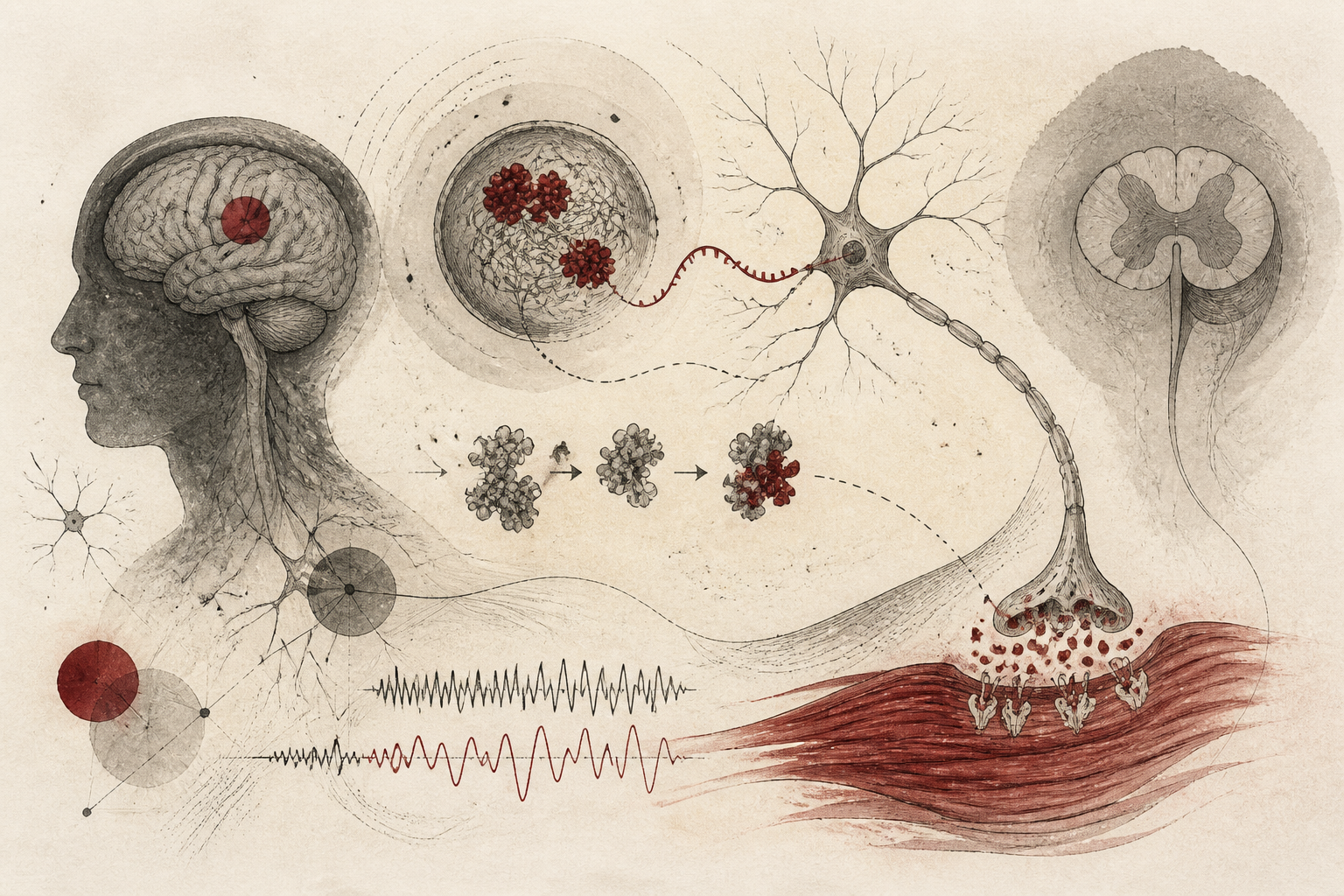
Recent research published in *Nature Neuroscience* has highlighted the critical role of the FUS (Fused in Sarcoma) protein in maintaining the integrity of the neuromuscular junction (NMJ). The study investigates the mechanisms through which FUS regulates the transcription of acetylcholine receptors (AChR), which are vital for communication between motor neurons and muscle fibers. In patients with Amyotrophic Lateral Sclerosis (ALS), these pathways appear to be significantly compromised, leading to the progressive muscle weakness and denervation characteristic of the disease.
The findings indicate that FUS is localized at the postsynaptic specialized compartment of the NMJ, where it facilitates the synthesis of AChR subunits. Under normal physiological conditions, FUS ensures that these receptors are produced at sufficient levels to sustain motor function. However, the study demonstrates that mutations or malfunctions in the FUS protein disrupt this transcriptional regulation. When FUS is unable to effectively mediate these genetic instructions, the density of acetylcholine receptors at the muscle surface decreases, effectively severing the reliable transmission of nerve impulses to the muscle.
This disruption is a key factor in the early stages of ALS-related physical decline. By pinpointing the specific transcriptional deficits at the synapse, the researchers contribute to a growing body of evidence that positions synaptic maintenance as a primary target for future therapeutic interventions. Understanding the precise molecular interaction between FUS and receptor transcription provides a more granular view of how neurodegenerative diseases impact peripheral motor systems.
While the original findings have undergone subsequent clarification regarding specific technical data points, the core conclusion remains steady: the loss of FUS-mediated regulation at the neuromuscular junction is a significant contributor to the pathology of ALS. This correction serves to refine the scientific record, ensuring that future research into neuromuscular therapies is based on precise molecular signatures.
*Source: Nature Neuroscience*
Quick answers
- What is the role of the FUS protein at the neuromuscular junction?
- FUS regulates the transcription of acetylcholine receptors, which are necessary for efficient signaling between nerves and muscles.
- How does ALS affect acetylcholine receptor transcription?
- In ALS, the FUS protein's regulatory function is compromised, leading to lower levels of receptor production and resulting in muscle weakness.
- Why is the Nature Neuroscience correction important for ALS research?
- It ensures the accuracy of the molecular data describing how FUS-mediated deficits contribute to the breakdown of neuromuscular communication.
Rewritten by Zeit editorial AI. Based on original reporting at Nature Neuroscience.