Liliputian Hallucinations and the Ethnobotanical Secrets of Lanmaoa asiatica
Recent research identifies the specific mushroom species responsible for consistent reports of tiny human apparitions in Southeast Asia and Southern China.
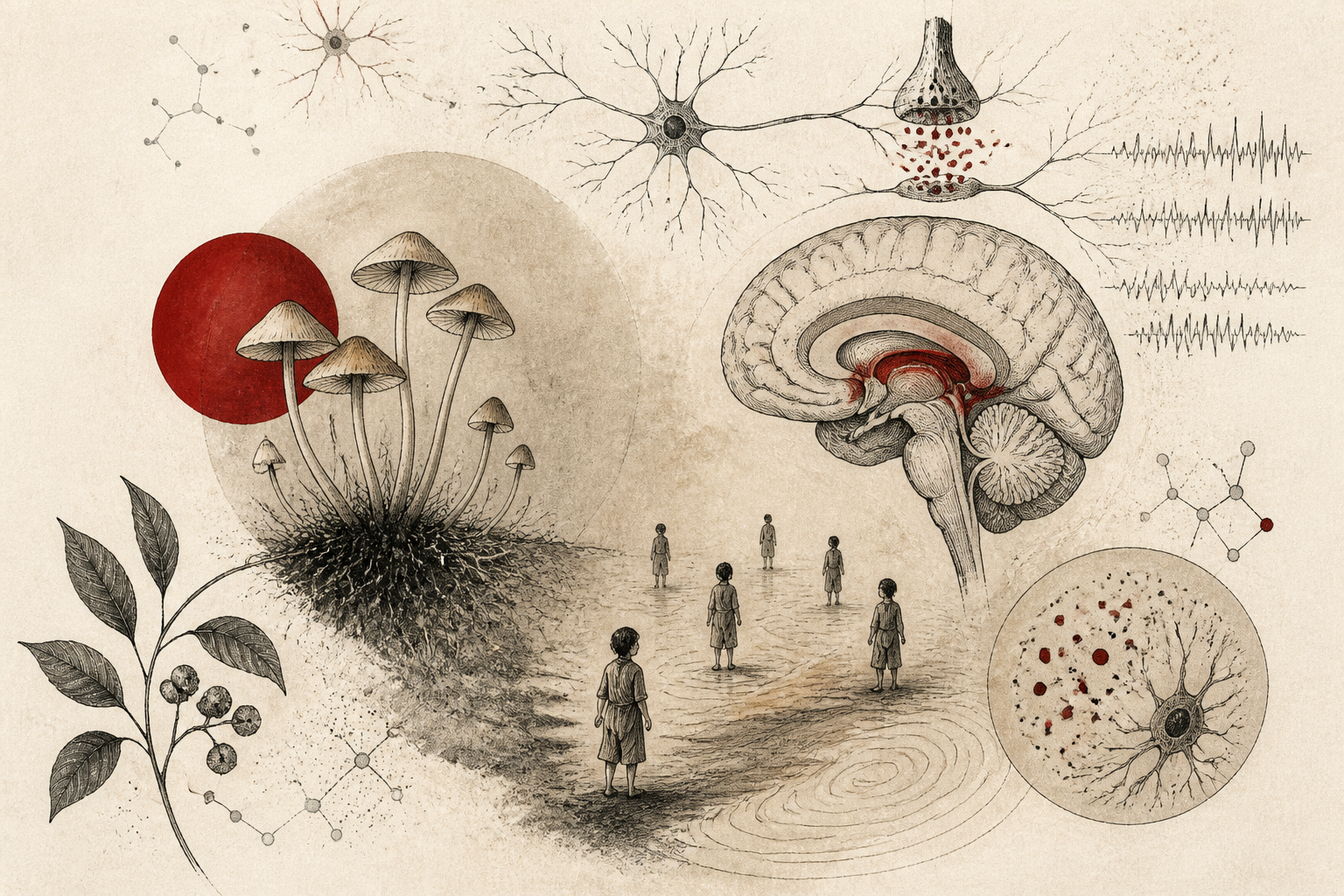
For nearly a century, anecdotal reports from remote regions of Southern China and the Philippines have detailed a strikingly consistent and bizarre psychological phenomenon. Individuals who consume specific varieties of wild fungi describe seeing dozens, or even hundreds, of miniature, vibrantly dressed human figures navigating the physical environment. These figures, often referred to in clinical literature as Liliputian hallucinations, appear to exist within the real world rather than in a dream state, moving across furniture, walls, and floors. While these accounts were long dismissed as local folklore or isolated instances of food poisoning, new scientific investigations have formally identified the biological agent behind these visions. According to a report featured by ScienceDaily, researchers have pinpointed the mushroom species Lanmaoa asiatica as the primary source of these unique hallucinogenic experiences.
Historically, the identification of mushrooms causing such specific visual distortions has been difficult due to the vast biodiversity of the region and the overlapping physical characteristics of different fungi. Lanmaoa asiatica, a member of the Boletaceae family, has long been consumed in the Yunnan province of China, where it is known locally for its culinary value despite its reputation for inducing "seeing spirits" if not prepared with extreme care. The identification of this species marks a significant milestone in ethnobotany and neuropsychology, providing a concrete link between a specific biological toxin and a highly specialized form of visual disturbance that differs significantly from the geometric or kaleidoscopic patterns typically associated with psilocybin or LSD.
The Mechanisms of Microptic Hallucinations
The phenomenon of seeing tiny people, medically categorized as micropsia or Liliputian hallucinations, presents a fascinating case study for cognitive neuroscience. Unlike general delirium where reality becomes entirely fractured, users of Lanmaoa asiatica remain largely tethered to their surroundings, perceiving these miniature figures as additions to their existing environment. ScienceDaily reports that the hallucinations are often described as highly detailed, with the tiny figures engaging in complex social behaviors or simply marching in unison. The specific chemical compound within Lanmaoa asiatica responsible for this effect remains an object of intense study, as it appears to target the visual processing centers of the brain in a manner that preserves spatial awareness while distorting the scale of perceived biological entities.
In the context of the recent findings, researchers have noted that the onset of these visions usually occurs several hours after ingestion. The duration and intensity of the experience vary depending on the quantity consumed and the method of preparation, such as whether the mushrooms were insufficiently sautéed. The consistency of the "tiny people" motif across different cultures and individual users suggests that the chemical triggers a very specific neural pathway. In neuropsychology, such consistency often points to a temporary disruption in the integration of size constancy—the mental process that allows humans to perceive objects as having a standard size regardless of distance. When this system is chemically altered, the brain may misinterpret environmental stimuli as autonomous, small-scale beings.
Methodological Challenges in Fungal Identification
The journey to identifying Lanmaoa asiatica involved a multi-disciplinary approach combining field botany, toxicology, and regional ethnography. For decades, the specific fungus was often misidentified as other members of the Boletus genus due to their similar blue-bruising reactions when cut or handled. However, through DNA sequencing and detailed morphological analysis, scientists were able to distinguish Lanmaoa asiatica from its non-hallucinogenic relatives. The research highlights the complexity of the Lanmaoa genus, which contains several species that look nearly identical but possess vastly different chemical profiles.
This identification process was also hindered by the localized nature of the consumption. Because the mushroom is primarily found in the high-altitude forests of the Himalayas and Southeast Asian mountain ranges, clinical observation was restricted to those who sought medical help in regional clinics. By synthesizing these medical records with modern mycological surveys, the research team corroborated the link between the ingestion of Lanmaoa asiatica and the specific visual pathology reported. This rigorous classification is essential not only for academic understanding but also for public health, as it allows medical professionals to better diagnose and treat accidental poisonings without the use of unnecessary invasive procedures.
Interpretations of the Human Figure Motif
One of the most compelling questions raised by the identification of Lanmaoa asiatica is why the brain defaults to perceiving "tiny humans" rather than other objects. In the field of evolutionary psychology, some theorists suggest that the human brain is hard-wired to detect human forms and faces—a phenomenon known as pareidolia. When a substance like the toxins in Lanmaoa asiatica overstimulates the visual cortex, the brain may attempt to make sense of the noise by projecting its most familiar template: the human body. The fact that these figures are perceived as small may be a byproduct of the toxin’s effect on the primary visual cortex (V1) or the temporal lobes, which handle object recognition and scaling.
Furthermore, the sociological interpretation of these findings suggests that cultural expectations may play a role in how the hallucinations are categorized. In the regions where Lanmaoa asiatica is native, folklore often includes stories of mountain spirits or little people. While the chemical catalyst is biological, the interpretation of the resulting vision as a "tiny person" may be reinforced by cultural narratives. However, the reported consistency of the size and movement of these figures among travelers who have no prior knowledge of the local myths suggests a primarily pharmacological origin for the scale and form of the hallucinations.
Limitations and Open Questions in Toxicological Research
Despite the successful identification of the species, several significant gaps in knowledge remain. The specific toxin or combination of alkaloids within Lanmaoa asiatica has not yet been fully synthesized or mapped in a laboratory setting. Unlike the well-documented psilocybin found in "magic mushrooms," the Lanmaoa toxin appears to belong to a different class of compounds entirely. Researchers are still investigating whether the effect is caused by a single molecule or a synergistic reaction between multiple chemical constituents within the mushroom’s flesh.
Additionally, there is the question of long-term neurological impact. While the hallucinations typically fade once the body metabolizes the fungus, the intensity of the experience raises questions about potential neurotoxicity. The ScienceDaily report emphasizes that while the hallucinations are often described as fascinating or whimsical, the ingestion of Lanmaoa asiatica is technically a form of poisoning. Without a standardized understanding of the lethal dose versus the hallucinogenic dose, the mushroom remains a significant health risk. Further clinical trials—monitored under strict ethical guidelines—would be required to understand how these compounds interact with serotonin or dopamine receptors.
Why Categorizing Lanmaoa asiatica Matters
The identification of Lanmaoa asiatica as the source of Liliputian hallucinations is more than a botanical curiosity; it represents a bridge between traditional knowledge and modern clinical science. For the university community and the broader scientific world, this discovery underscores the importance of biodiversity in understanding the human mind. By studying how these unique toxins alter perception, neuroscientists can gain deeper insights into how the brain constructs reality and maintains a sense of scale.
Moreover, this research has practical applications in the fields of emergency medicine and toxicology. With the precise identification of the species, hospitals in China and the Philippines can develop more effective protocols for managing mushroom poisoning cases. It also serves as a reminder of the untapped chemical potential within the world's fungi. As we continue to map the mycological landscape, we discover that the natural world holds the keys to understanding the most complex facets of human consciousness. The mystery of the tiny humans, once a matter of mountain myth, is now a verified subject of scientific inquiry, offering a window into the delicate mechanics of the visual brain.
Quick answers
- What is Lanmaoa asiatica?
- Lanmaoa asiatica is a species of mushroom found in China and the Philippines known to cause specific visual hallucinations of tiny people.
- What are Liliputian hallucinations?
- These are a type of visual distortion where a person sees miniature people or objects that appear to be part of the real world.
- Why do people see tiny humans after eating these mushrooms?
- While the exact toxin is still being studied, researchers believe the mushroom disrupts the brain's ability to process scale and object recognition, causing it to project human forms at a reduced size.
Rewritten by Zeit editorial AI. Based on original reporting at ScienceDaily — Mind & Brain.