HEPA Filtration and Cognitive Processing: Evaluating Indoor Air as a Neurological Factor
Recent findings suggest that utilizing HEPA air purifiers in domestic settings may enhance executive function speed by 12% among middle-aged and older adults within a four-week period.
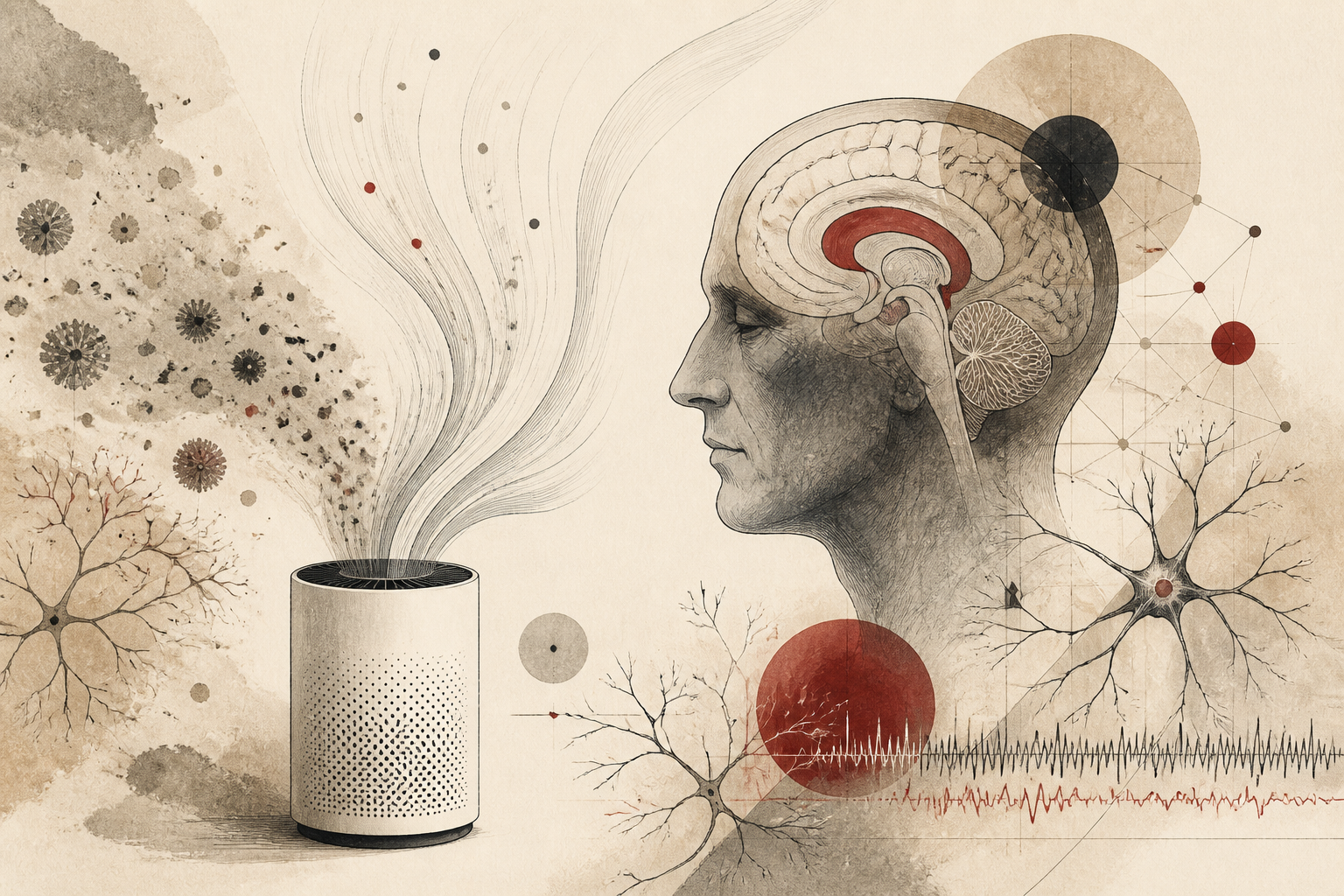
Recent research published via ScienceDaily has highlighted a significant correlation between indoor air quality and cognitive performance, suggesting that interventions as simple as high-efficiency particulate air (HEPA) filtration may yield measurable benefits for brain health. In a study focused on adults aged 40 and older, researchers observed that the consistent use of air purifiers in the home led to a 12 percent increase in the speed of executive function tasks after only one month of exposure. These findings contribute to a growing body of evidence linking environmental pollutants, specifically those originating from traffic and industrial sources, to the acceleration of cognitive decline and the impairment of neurological efficiency in aging populations.
The implications of this study are particularly salient given the increasing urbanization of the global population and the subsequent rise in exposure to ambient particulate matter. While outdoor air quality is often the focus of public health policy, the indoor environment remains the primary site of exposure for most individuals. This research underscores the possibility that mitigating indoor air pollutants is not merely a matter of respiratory health, but a critical component of neuroprotection. By removing fine particulate matter through mechanical filtration, individuals may be able to buffer their nervous systems against the inflammatory and oxidative stresses associated with modern environmental toxins.
Environmental Determinants of Executive Function
Executive function represents a suite of higher-order cognitive processes, including working memory, cognitive flexibility, and inhibitory control. These processes are essential for daily living, enabling individuals to plan, focus attention, and juggle multiple tasks simultaneously. As individuals age, these functions naturally experience a degree of decline; however, environmental factors can significantly alter the trajectory of this senescence. The recent study published on ScienceDaily indicates that the presence of traffic-related pollution—even at levels commonly found in residential areas—acts as a persistent drag on cognitive processing speed.
The primary mechanism identified in these findings centers on the reduction of fine particulate matter, often referred to as PM2.5. These particles are small enough to bypass the body's natural defenses, entering the bloodstream and potentially crossing the blood-brain barrier. Once in the neural environment, they are known to trigger neuroinflammation. By introducing HEPA filters, which are designed to capture 99.97% of particles as small as 0.3 microns, the study participants effectively reduced their cumulative exposure to these neurotoxic elements. The subsequent 12 percent improvement in cognitive speed suggests that the brain possesses a degree of plasticity that allows for relatively rapid recovery when the environmental burden is eased.
Methodology and Observed Cognitive Gains
The study utilized a longitudinal design involving a cohort of adults over the age of 40, a demographic traditionally considered at higher risk for the early stages of cognitive impairment. Participants were instructed to use HEPA-certified air purifiers within their primary living spaces for a duration of one month. Researchers employed standardized neuropsychological assessments to measure executive function, focusing specifically on reaction times and processing speeds during tasks that required mental shifting and information updates. This baseline-to-follow-up comparison provided a clear metric of change over the thirty-day window.
The 12 percent gain in speed is statistically significant because it suggests a level of improvement that exceeds what might be expected from practice effects alone. Furthermore, the short timeframe—just four weeks—indicates that the neurological response to cleaner air is not a slow, multi-year process but a relatively immediate physiological shift. The researchers posit that by cleaning the air, the internal biological environment of the participants experienced a reduction in systemic inflammation, thereby allowing for more efficient synaptic transmission and metabolic efficiency within the prefrontal cortex and other areas associated with executive control.
The Role of Traffic-Related Particulate Matter
A critical element of this research is the specific focus on traffic-related pollution. Urban residents are frequently exposed to a cocktail of nitrogen oxides and ultra-fine particles generated by internal combustion engines and tire wear. These pollutants are not confined to the outdoors; they readily infiltrate homes through ventilation systems, windows, and structural gaps. The study suggests that for those living in proximity to high-traffic corridors, the home may not be the sanctuary from pollution it is often assumed to be. Instead, without active filtration, the indoor environment can act as a reservoir for concentrated particulate matter.
By isolating the effect of HEPA filtration, the study provides a direct link between air purity and the biological markers of brain health. While previous studies have utilized large-scale epidemiological data to correlate air quality with dementia rates, this specific study offers a more granular look at the immediate functional benefits of intervention. It shifts the conversation from long-term disease prevention to immediate cognitive enhancement. The ability to perform executive tasks faster has real-world implications, ranging from improved performance in the workplace to safer operation of motor vehicles and more effective management of complex personal affairs.
Limitations and Future Avenues of Research
Despite the promising results, the study acknowledges several limitations that warrant further investigation. The sample size and the specific geographic locations of the participants may limit the generalizability of the findings to all climates or socioeconomic backgrounds. Additionally, while a 12 percent improvement in speed is notable, the study does not yet confirm if these gains are sustained over long periods or if there is a ceiling effect where further air purification no ceases to provide incremental benefits. There is also the question of whether HEPA filtration alone is sufficient, or if it must be paired with other indoor air quality measures, such as volatile organic compound (VOC) reduction, to achieve optimal neurological outcomes.
Future research should aim to incorporate neuroimaging techniques, such as functional MRI or PET scans, to visualize the specific changes in brain activity that correspond with the measured increase in processing speed. Understanding the structural changes—or the lack thereof—could help scientists determine if the air purification is merely reducing temporary inflammation or if it is fostering a more profound regenerative process within the brain’s white and gray matter. Furthermore, expanding the study to include younger populations could help determine if HEPA filtration serves a preventative role, potentially delaying the onset of age-related cognitive decline before it begins.
Practical Implications for Public Health
The findings reported by ScienceDaily offer a compelling argument for the integration of air purification technology into public health strategies for aging populations. As the global demographic shifts toward an older average age, the economic and social costs of cognitive decline are projected to rise. If a relatively low-cost, non-invasive intervention like HEPA filtration can provide a double-digit improvement in cognitive processing speed, it represents a highly scalable solution for maintaining the cognitive independence of older adults.
Ultimately, this research highlights that the air we breathe is a fundamental variable in the equation of mental health. In the context of Zeit Psychology Online University’s focus on holistic and environmental psychology, these findings reinforce the necessity of viewing the human mind not as an isolated system, but as one deeply integrated with its physical surroundings. Protecting the brain, it seems, requires a proactive approach to protecting the air that sustains it. As we continue to navigate the challenges of urban living, the HEPA filter may transition from a luxury appliance to an essential tool for neurological maintenance.
Quick answers
- How much does a HEPA filter improve brain function?
- According to the study, adults aged 40 and older saw a 12% improvement in the speed of executive function tasks after using a HEPA filter for one month.
- What type of cognitive tasks are improved by cleaner air?
- The research specifically noted improvements in executive function, which includes tasks related to planning, focus, and mental flexibility.
- Why does traffic pollution affect the brain?
- Fine particulate matter from traffic can enter the bloodstream and trigger neuroinflammation, which slows down cognitive processing and may accelerate aging.
Rewritten by Zeit editorial AI. Based on original reporting at ScienceDaily — Mind & Brain.