Gene Therapy Safety: Evaluating Sensorimotor Integrity in scAAV9 SMN Expression
Researchers at Nature Neuroscience examine the safety profile of clinical-grade gene therapy cassettes, finding no evidence of sensorimotor toxicity in spinal muscular atrophy treatments.
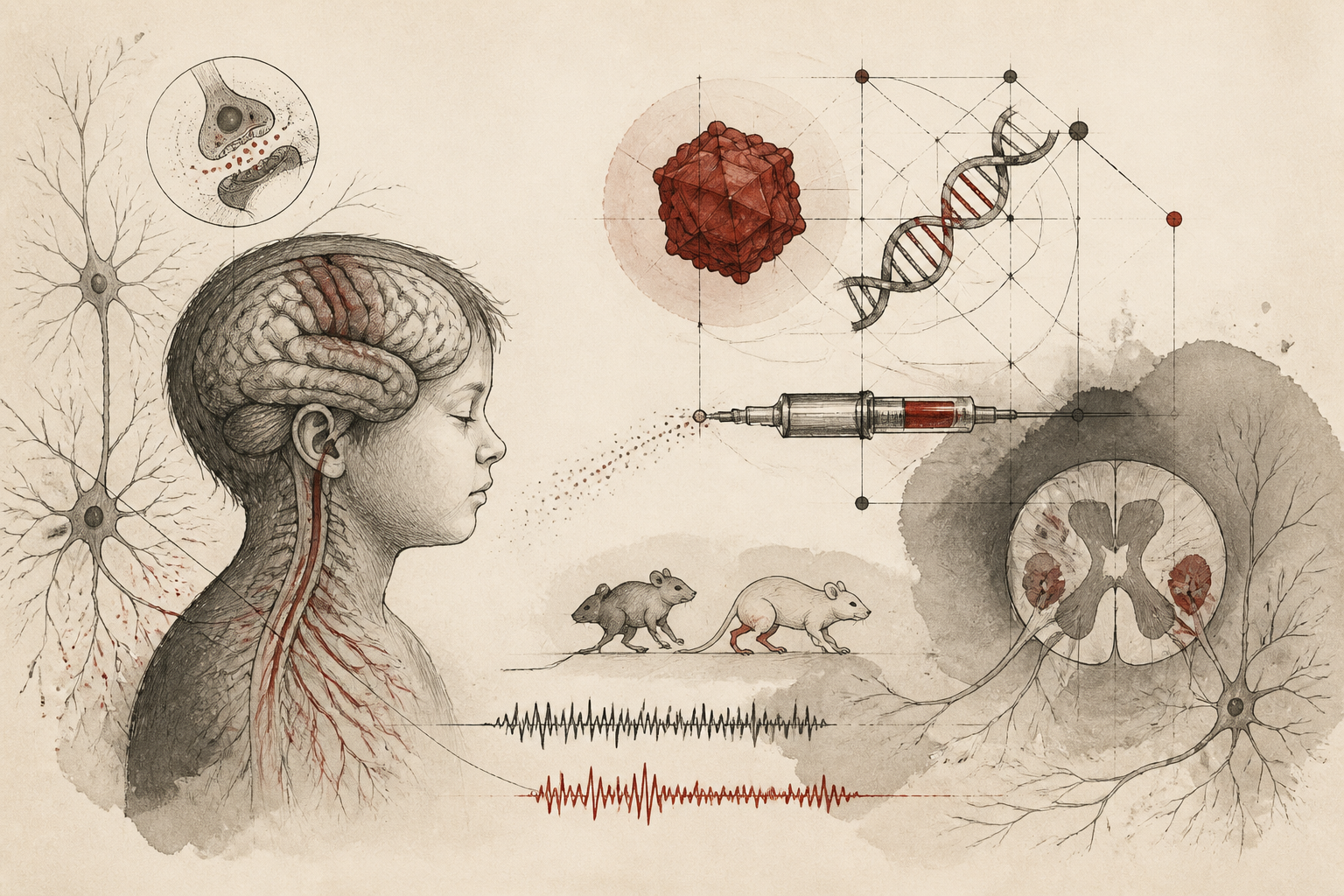
In the rapidly evolving landscape of regenerative medicine, the development of adeno-associated virus (AAV) vectors has transformed the therapeutic outlook for previously intractable genetic disorders. Among these, Spinal Muscular Atrophy (SMA) stands as a primary success story for gene replacement therapy. However, as these treatments transition from experimental trials to widespread clinical application, the scientific community has increasingly focused on the long-term physiological consequences of transgene overexpression. A recent study published in Nature Neuroscience, titled "Lack of sensorimotor toxicity when using the clinical SMN expression cassette in scAAV9," provides a critical evaluation of these concerns, specifically addressing whether the delivery of the Survival Motor Neuron (SMN) gene via self-complementary AAV9 (scAAV9) vectors induces unintended neurological damage.
The therapeutic premise of gene therapy for SMA involves the delivery of a functional copy of the SMN1 gene to motor neurons, which are otherwise deficient in patients. While the efficacy of this approach is well-documented, concerns have emerged regarding the potential for cellular stress or inflammatory responses triggered by high levels of exogenous protein expression. This investigation, reported by Nature Neuroscience, sought to determine if the specific genetic architecture used in current clinical treatments—namely the scAAV9 vector carrying the SMN expression cassette—might lead to sensorimotor toxicity, a side effect observed in some high-dose viral vector studies involving different transgene targets.
Methodological Foundations and Expression Kinetics
To assess the risk of toxicity, the research team utilized a rigorous experimental framework designed to mimic the clinical administration of gene therapy. The study focused on the scAAV9 vector, which is favored for its ability to cross the blood-brain barrier and its efficient transduction of both central and peripheral nervous system cells. The researchers administered the clinical-grade SMN expression cassette to animal models, monitoring them over an extended period to capture both immediate and delayed physiological responses. Unlike studies that use supra-physiological doses to force a toxic response, this investigation prioritized doses and delivery methods that align with established human clinical protocols.
The evaluation focused on two primary metrics: the integrity of the sensorimotor circuitry and the maintenance of neuronal health. By utilizing electrophysiological recordings and histopathological analysis, the team examined the communication between sensory neurons and motor neurons within the spinal cord. This pathway is essential for reflex actions and coordinated movement, making it a sensitive indicator of neurological dysfunction. The researchers also quantified the expression levels of the SMN protein to ensure that the absence of toxicity was not simply due to a lack of gene uptake, but rather a characteristic of the vector's interaction with the host's cellular machinery.
Findings and the Absence of Neurodegeneration
The primary findings of the study offer a reassuring perspective for the field of neuromuscular medicine. The data indicated a distinct lack of sensorimotor toxicity following the administration of the scAAV9-SMN construct. Specifically, the researchers observed no significant loss of sensory synapses on motor neurons, a hallmark of neurological decline that has been seen in other gene therapy contexts. Furthermore, the motor neurons themselves remained viable and functional, maintaining their typical morphology and electrophysiological properties throughout the duration of the study.
Critically, the study noted that the use of the specific clinical SMN expression cassette did not trigger the cellular stress pathways typically associated with protein overexpression. In some viral vector applications, excessive production of a transgene can lead to endoplasmic reticulum stress or the formation of protein aggregates, both of which can be fatal to the cell. However, the Nature Neuroscience report suggests that the SMN protein, when delivered via the scAAV9 system, is well-tolerated by the central nervous system. This finding underscores the importance of the specific genetic sequence and regulatory elements used within the cassette, suggesting that the clinical configuration is optimized for safety as well as efficacy.
Mechanisms of Cellular Tolerance
The lack of toxicity observed in this study can be attributed to several mechanical factors inherent to the SMN protein and the scAAV9 delivery system. SMN is an endogenous protein that plays a vital role in the assembly of small nuclear ribonucleoproteins (snRNPs), which are essential for pre-mRNA splicing. Because the body already possesses pathways to regulate and utilize SMN, the introduction of additional copies appears to be handled more effectively by the cell's homeostatic mechanisms than would be the case for a completely foreign or toxic-prone protein.
Furthermore, the scAAV9 vector provides a stable and predictable expression profile. By utilizing a self-complementary design, the vector bypasses the need for second-strand synthesis, leading to faster and more consistent protein production. The study suggests that the steady-state levels of SMN achieved through this method do not reach the threshold required to induce the "off-target" toxicity seen in experimental models where different promoters or vector types were used. The researchers emphasize that the synergy between the vector's delivery efficiency and the protein's biological compatibility is key to the observed safety profile.
Limitations and Future Inquiries
While the results are overwhelmingly positive, the study acknowledges certain limitations that warrant further investigation. Firstly, the duration of the study, while sufficient to detect intermediate-term toxicity, may not fully account for the decades-long lifespan of a human patient. Continuous monitoring of clinical cohorts remains essential to confirm that these findings translate to lifelong safety. Additionally, the study focused on the standard clinical dose; it remains to be seen if significantly higher doses—potentially required for older patients or different delivery routes—might eventually hit a toxicity ceiling.
Another open question involves the potential for variability among different patient populations. Genetic modifiers or pre-existing immune responses to the AAV9 capsid could theoretically alter the expression dynamics or the inflammatory environment of the spinal cord. Future research will likely focus on how these underlying biological variables might interact with the SMN expression cassette to influence long-term outcomes. The researchers also point toward the need for comparative studies between different AAV serotypes to determine if the safety profile remains consistent across diverse delivery platforms.
Clinical Implications for SMA Treatment
The implications of this research for the clinical community are profound. By providing empirical evidence that the clinical SMN expression cassette does not cause sensorimotor toxicity, the study validates the current therapeutic approach for SMA. This is particularly important for clinicians and families who may have concerns about the long-term neurological impact of high-potency gene therapies. The findings reinforce the safety of the current standard of care and provide a benchmark for the development of future gene-based interventions.
Beyond SMA, this study serves as a vital case study in gene therapy design. It demonstrates that with the correct combination of vector, transgene, and regulatory elements, it is possible to achieve high levels of protein expression in the central nervous system without compromising neuronal integrity. As the field of psychology and neurology continues to integrate genetic perspectives into treatment paradigms, the rigorous safety assessments provided by Nature Neuroscience will be instrumental in building public trust and ensuring the continued advancement of genomic medicine. The study concludes that the current clinical trajectory for SMN gene replacement is not only effective in mitigating the symptoms of SMA but is also fundamentally compatible with the complex architecture of the human sensorimotor system.
Quick answers
- What was the main finding of the Nature Neuroscience study on SMA gene therapy?
- The study found that using the clinical SMN expression cassette in scAAV9 vectors does not cause sensorimotor toxicity or damage to neuronal circuits.
- Why is the lack of sensorimotor toxicity significant for gene therapy?
- It confirms that the specific viral vector and protein used for treating Spinal Muscular Atrophy do not cause unintended neurological side effects, validating the safety of current clinical methods.
- What vector was used in this gene therapy safety research?
- The researchers used the self-complementary adeno-associated virus 9 (scAAV9), which is designed to efficiently deliver genes to the central nervous system.
Rewritten by Zeit editorial AI. Based on original reporting at Nature Neuroscience.