Frequency Over Intensity: The Longitudinal Impact of Exercise Consistency on Mental Health
New longitudinal research suggests that the regularity of physical activity is a more potent predictor of long-term mental health outcomes than exercise duration or intensity.
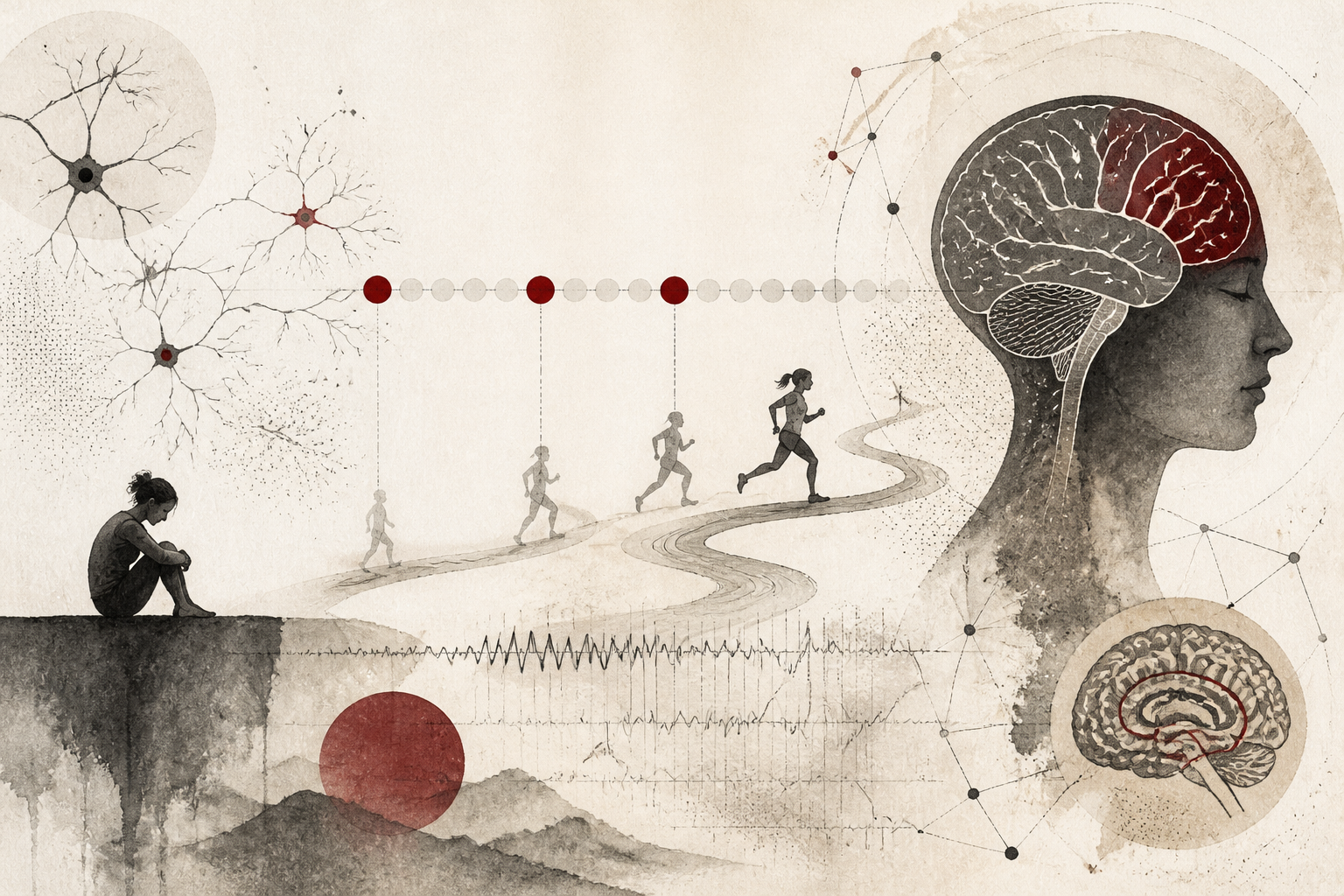
In the evolving landscape of preventative mental health, the prescriptive power of physical activity remains a cornerstone of psychological resilience. However, the specific parameters of exercise—volume, intensity, and frequency—have long been a subject of debate regarding their comparative efficacy in mitigating mood disorders. A significant longitudinal study involving over 10,000 college students has provided new clarity on this debate, suggesting that for the preservation of mental well-being, the regularity of one's routine may significantly outweigh the physical strain or duration of individual sessions. The findings, originally reported by ScienceDaily, underscore a shift in focus from the physiological 'burn' to the psychological habit, highlighting consistency as the primary protective factor against future instances of depression and anxiety.
The Predictive Power of Longitudinal Observation
Traditional research into the intersection of physical activity and mental health has often relied on cross-sectional data, providing only a momentary snapshot of a participant's state of mind and activity levels. This recent inquiry distinguishes itself by utilizing a longitudinal framework, tracking a massive cohort of university students over the course of a full academic year. By establishing a baseline of exercise habits and subsequent psychological assessments, researchers were able to observe the temporal relationship between movement and mood. The college demographic represents a critical period of development where stressors are high and lifestyle habits are frequently solidified, making it an ideal environment to study the long-term implications of physical behavior. The scale of the study, encompassing more than 10,000 individuals, provides a statistically robust foundation for asserting that the patterns observed are not mere anomalies but rather systemic trends in human behavior and neurobiological response.
Consistency as a Primary Mental Health Metric
According to the data, the frequency with which a student engaged in exercise served as a more reliable predictor of mental health status twelve months later than any other measured variable of physical activity. Specifically, students who maintained a regular schedule—even if those sessions were moderate in intensity or shorter in duration—demonstrated significantly lower rates of depression and anxiety compared to their peers who exercised sporadically. The study reveals a concerning correlation for those at the other end of the spectrum: students who exercised with low frequency were markedly more likely to report clinical symptoms of mood disorders in the follow-up period. This suggests that the mental health benefits of exercise are cumulative and rely on the steady maintenance of the habit rather than the occasional pursuit of high-performance physical achievements. The finding challenges the common misconception that only strenuous or lengthy gym sessions contribute to psychological stability, instead pointing toward a 'drip-feed' model of activity where regular intervention serves as a stabilizer for the nervous system.
Neurobiological and Behavioral Mechanisms of Regularity
While the study focuses on statistical outcomes, the underlying mechanisms that explain why frequency triumphs over intensity are grounded in both neurobiology and behavioral psychology. From a physiological standpoint, regular exercise helps regulate the hypothalamic-pituitary-adrenal (HPA) axis, which manages the body's stress response. Frequent activity may prevent the chronic elevation of cortisol, the body's primary stress hormone, by providing regular outlets for physiological regulation. Furthermore, the consistent release of neurotransmitters such as endorphins and serotonin, even in smaller doses, may provide a more stable chemical environment for the brain than the irregular surges associated with infrequent, high-intensity workouts. Beyond the biological, the psychological element of self-efficacy plays a vital role. The act of adhering to a regular schedule, regardless of the difficulty of the workout, builds a sense of agency and routine. For a student population facing unpredictable academic and social pressures, the existence of a predictable, frequent physical ritual may serve as a psychological anchor, reducing the cognitive load associated with decision-making and self-regulation.
Interpreting the Threshold of Efficacy
One of the most significant implications of this research is the democratization of exercise as a mental health tool. If intensity and duration are secondary to frequency, then the barriers to entry for individuals suffering from low energy or depressive symptoms are effectively lowered. The data suggests that the 'all-or-nothing' mentality—where an individual believes a workout is only valid if it involves extreme exertion—may actually be counterproductive to long-term mental health goals if it leads to burnout or inconsistency. Instead, the study supports a more accessible approach to physical activity. The interpretation of these findings by researchers indicates that the protective effect of exercise is sustained through the act of showing up. This shift in perspective is crucial for clinical settings, where practitioners can now emphasize the importance of small, frequent movements—such as a daily walk or short active breaks—over the daunting prospect of rigorous athletic training.
Limitations and Future Directions in Research
Despite the significant sample size and longitudinal design, the study is not without limitations that warrant further investigation. Firstly, the reliance on a college-aged cohort, while informative, may not fully represent how these dynamics play out in older populations or those with pre-existing chronic health conditions. The environmental factors of a university setting, including structured schedules and proximity to fitness facilities, may also influence the ease with which frequency is maintained. Additionally, while the study establishes a clear link between low frequency and future mental health struggles, it does not explicitly define the 'tipping point'—the exact number of days per week required to trigger the protective effect. Future research should aim to quantify this threshold and explore whether different types of activity (e.g., aerobic versus resistance training) yield different results when frequency is held constant. There is also the question of causality: while regular exercise appears to protect mental health, it is also possible that early, sub-clinical symptoms of depression lead to a decrease in exercise frequency, creating a bidirectional relationship that requires deeper analysis.
Institutional and Personal Applications
For institutions like Zeit Psychology Online University and other educational bodies, this research provides a clear mandate for the design of wellness programs. Rather than focusing on high-impact intramural sports or intensive fitness challenges, the data suggests that promoting low-barrier, high-frequency movement throughout the campus could be more effective. On an individual level, these findings offer a strategy for personal mental health management that emphasizes sustainability. The takeaway is clear: the most effective workout for your mind is the one you actually do, and more importantly, the one you do often. By prioritizing the schedule over the stopwatch, individuals can build a resilient foundation that serves as a buffer against the inevitable stressors of life, ensuring that mental well-being is not just an occasional state, but a consistent reality.
Quick answers
- Is frequency or intensity more important for mental health in exercise?
- Recent research suggests that the frequency of exercise is a stronger predictor of long-term mental health than the intensity or duration of the workouts.
- How does inconsistent exercise affect mental health in college students?
- Students who exercise less frequently are significantly more likely to develop symptoms of depression and anxiety within a year compared to those who exercise regularly.
- Can short workouts help with depression and anxiety?
- Yes, because consistency matters more than duration; frequent, shorter, or moderate workouts can be more effective for mental health than occasional intense ones.
Editorial Team