Early Branching Observed in Neural Stem Cell Lineages
Recent research challenges established models of cortical development by demonstrating that stem cells diverge into parallel lineages earlier than previously assumed.
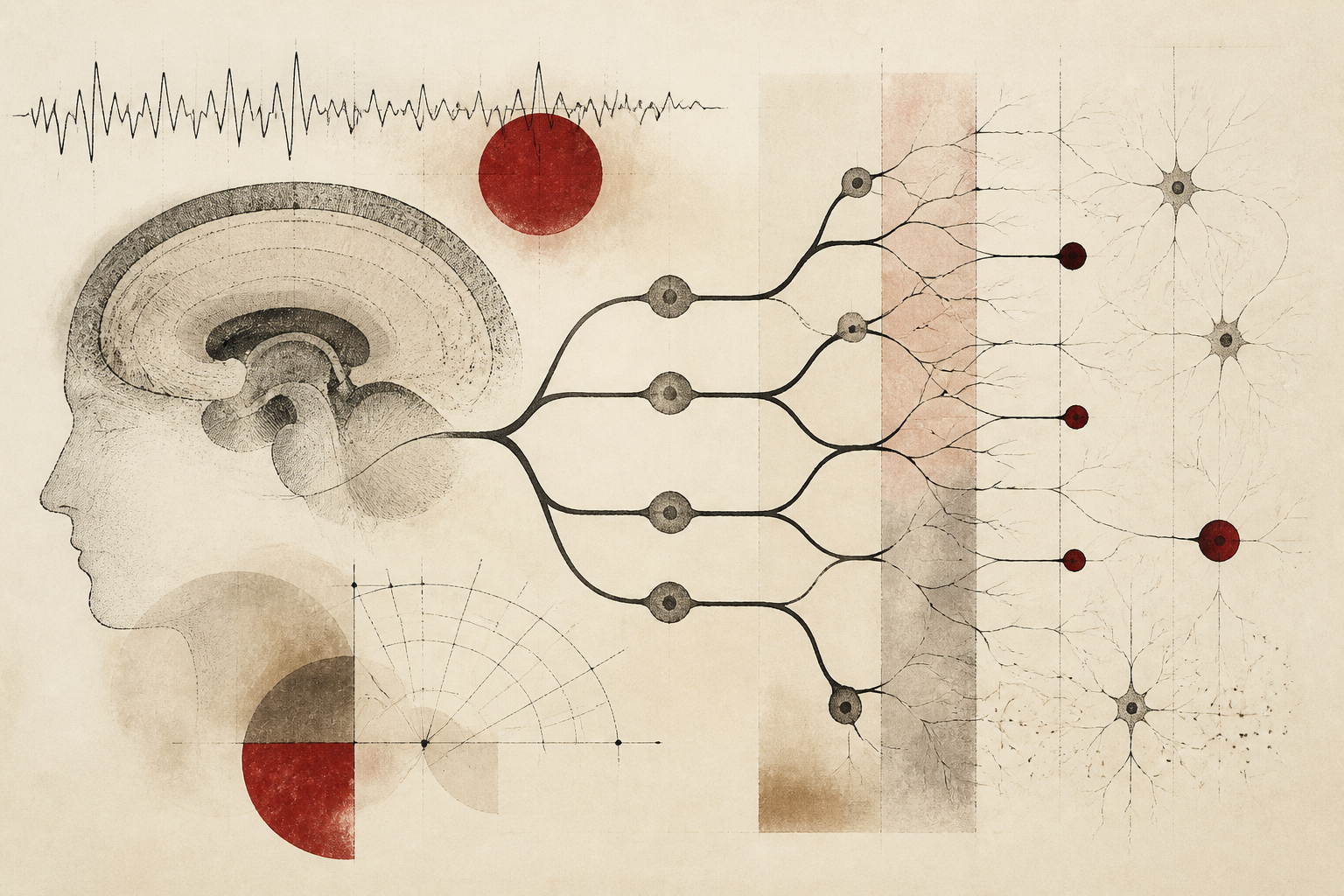
New research published in *Nature* and highlighted by *NeuroscienceNews.com* is significantly reshaping long-held tenets regarding the development of the cerebral cortex. This work suggests a fundamental departure from the traditional understanding of how neural stem cells differentiate, proposing that the intricate architecture of the brain's highest cognitive center arises from a parallel branching mechanism rather than a strictly sequential progression. This paradigm shift in neurodevelopmental biology promises to deepen our understanding of cortical formation and may offer new avenues for investigating neurodevelopmental conditions.
Redefining Cortical Development
The cerebral cortex, a highly convoluted structure responsible for complex processes such as language, memory, and executive function, is arguably the most complex region of the mammalian brain. Its development has long been a focal point of neuroscience, with established models positing a largely sequential and temporal process for neuronal generation. According to these models, neural stem cells were thought to follow a predictable, stepwise timeline, producing distinct types of neurons in a specific order over an extended developmental period. This sequential model implied a relatively uniform progression, where different neuronal layers of the cortex would be populated one after another, building the intricate structure in a predefined sequence. The prevailing view underscored a chronological production line, where the identity of a neuron was largely dictated by the timing of its birth and migration.
Early Divergence: A New Model
The recent investigation, however, challenges this established view by presenting compelling evidence for an earlier and more divergent process. Through sophisticated cell-tracking techniques, researchers observed that neural stem cells branch into distinct lineages much earlier in embryonic development than previously theorized. This early divergence means that progenitor cells can commit to specific fates—producing either deep-layer or upper-layer neurons—almost immediately upon the initiation of cortical formation. Instead of a single lineage producing all neuronal types sequentially, the study suggests that multiple distinct lineages emerge early on, operating in parallel. This implies that the initial pool of neural stem cells rapidly diversifies, setting up separate developmental pathways that concurrently generate the diverse cellular components of the cortex.
The methodology behind this discovery involved advanced approaches to trace the developmental trajectories of individual neural stem cells and their progeny. By meticulously marking and following cells from the earliest stages of cortical formation, researchers were able to directly observe their lineage commitments. These techniques allowed for an unprecedented resolution of cellular fate decisions, revealing that certain progenitor cells rapidly commit to generating neurons destined for specific cortical layers. This high-resolution tracing provided direct visual and molecular evidence of parallel processing in neuronal generation, rather than a single, overarching temporal sequence that dictates all fates.
Implications for Brain Assembly and Disorder
This discovery of early divergence has profound implications for developmental biology and our understanding of how the human brain is assembled. It suggests that the remarkable diversity and complexity of the brain are not merely a product of prolonged maturation and sequential differentiation but are deeply rooted in early-stage cellular specialization. The existence of these parallel pathways indicates that different neuronal populations can be generated simultaneously. This parallel generation provides a more robust and potentially flexible framework for brain assembly, allowing for the concurrent formation of distinct cortical components. Such a mechanism could confer significant evolutionary advantages, enabling the rapid and efficient construction of a complex organ.
Furthermore, this paradigm shift in understanding cortical development may offer crucial new insights into the etiology of various neurodevelopmental disorders. If the timing or balance of these early lineage branching events is disrupted, it could lead to significant imbalances in the ratio or distribution of specific cortical cell types. Such imbalances might manifest as altered cortical circuitry or impaired functional connectivity, potentially contributing to the pathological underpinnings of conditions such as autism spectrum disorder or epilepsy. These disorders often involve subtle yet pervasive alterations in cortical structure and function, and a disruption in early cellular fate decisions could provide a fundamental explanation for their origins.
Future Directions and Clinical Relevance
While this study offers a compelling new perspective, it also opens up numerous avenues for future research. Key questions remain regarding the precise molecular mechanisms that govern these early lineage commitments. What are the specific intrinsic and extrinsic cues that dictate a stem cell's decision to branch into one lineage versus another? How do genetic and environmental factors influence the fidelity and balance of these parallel pathways? Further investigation is needed to fully delineate the molecular machinery and signaling cascades that orchestrate this early divergence, and to understand how these processes are conserved or varied across different species.
For psychology and neuroscience students and clinicians, these findings are particularly salient. They underscore the critical importance of early embryonic development in shaping the fundamental architecture of the brain, and by extension, its function. Understanding the precise timing and mechanisms of cortical assembly can inform therapeutic strategies for neurodevelopmental disorders, potentially leading to earlier diagnostic markers or interventions aimed at correcting disrupted developmental trajectories. This research highlights that the foundations of cognitive architecture are laid with far more complexity and speed than once thought, emphasizing the need for continued exploration into how these early cellular decisions dictate long-term neurological health and behavior. This deeper understanding of the fundamental principles of neurodevelopment will undoubtedly enrich the educational landscape for future generations of neuroscientists and clinicians, equipping them with a more nuanced view of brain health and disease.
Quick answers
- How does this study change the view of brain development?
- It shifts the model from a slow, sequential process to one where stem cells split into specialized parallel lineages very early on.
- What is the cerebral cortex?
- The outer layer of the brain responsible for complex functions like reasoning, emotion, and sensory processing.
- What are the clinical implications of early neural branching?
- It may help explain the origins of neurodevelopmental disorders caused by imbalances in specific brain cell populations.
Rewritten by Zeit editorial AI. Based on original reporting at NeuroscienceNews.com.