Divergent Pathways: New Research Challenges the Neural Mimicry of AI Models
A groundbreaking study reveals that even AI models predicting brain activity with high accuracy utilize internal mechanisms fundamentally different from biological neural processes.
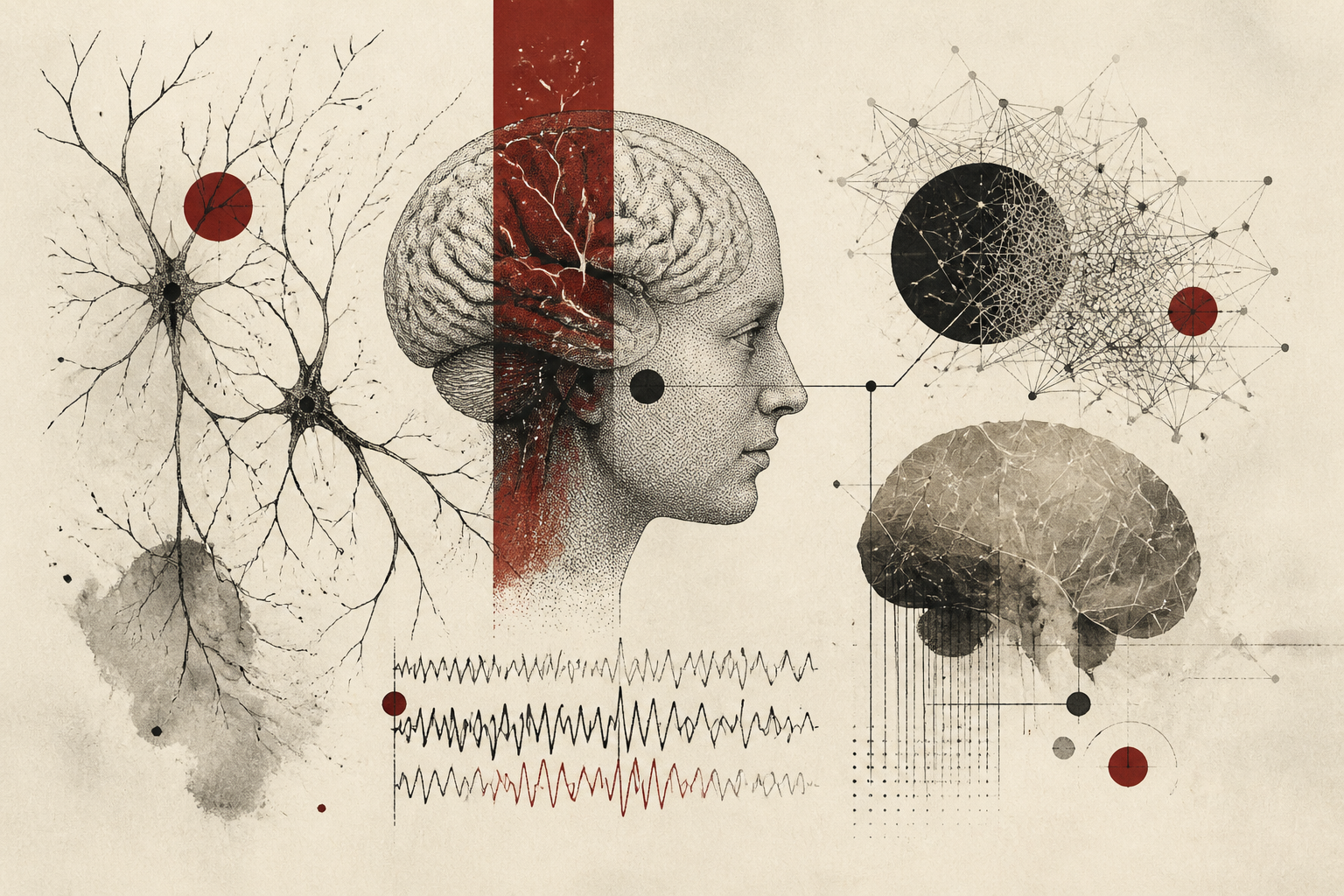
The long-standing ambition of computational neuroscience has been to construct artificial systems that not only perform tasks with human-level proficiency but also mirror the underlying biological architecture of the human mind. For years, the prevailing sentiment within the field suggested that as artificial intelligence models—specifically deep neural networks—became more adept at predicting brain activity patterns, they were effectively converging toward a functional replica of the human brain. However, a significant discovery reported by ScienceDaily suggests that this assumption of structural and process-oriented alignment may be fundamentally flawed. Researchers have identified a critical disconnect: even when AI models achieve high predictive accuracy regarding how a brain might respond to a stimulus, the internal logic and computational pathways they employ to reach those conclusions often bear little resemblance to biological reality.
This revelation strikes at the heart of the 'black box' problem in artificial intelligence. While the output of these models may align with human neurological data, the 'how' behind the output remains distinct. This discrepancy raises profound questions about the utility of current AI as a surrogate for human cognitive research. If the underlying mechanisms differ, the insights gained from observing an AI’s internal states may not be transferable to our understanding of human psychology or neurobiology. As Zeit Psychology Online University examines these findings, it becomes clear that the field must recalibrate its reliance on AI as a perfect mirror for the mind.
The Illusion of Functional Convergence
To understand the weight of these findings, one must look at the history of neural network development. Modern AI, particularly Large Language Models and image recognition systems, was originally inspired by the interconnected structure of biological neurons. This historical lineage led many to believe in the theory of functional convergence—the idea that there is an optimal computational solution for processing information, and that both evolution and machine learning would eventually arrive at the same method. When researchers observed that certain layers of deep networks responded to visual stimuli in ways that correlated with the human visual cortex, the theory seemed to be validated.
However, the latest research indicates that these correlations may be superficial. The study highlights that predictive success does not equate to process alignment. In other words, an AI might predict that a human will perceive an optical illusion in a certain way, but the AI reaches that prediction through statistical weightings and mathematical shortcuts that the human brain, constrained by biological energy limits and evolutionary history, does not use. This suggests that the AI is essentially 'cheating' from a biological perspective, utilizing high-dimensional data processing that lacks the modularity and feedback loops inherent in human neuroanatomy.
Methodological Discrepancies and Internal Logic
The methodology behind this discovery involved a rigorous comparison of internal activation patterns between state-of-the-art AI models and high-resolution neuroimaging data. By isolating specific cognitive tasks, the researchers were able to map the 'decision-making' journey of the artificial system against the electrochemical signaling of the human brain. While the final data points often matched, the intermediate steps—the hidden layers of the neural network—showed a marked divergence.
One of the primary mechanisms identified as a point of departure is the way AI handles context and noise. Human brains utilize a complex system of top-down processing, where prior knowledge and expectations actively shape sensory input. In contrast, many AI models rely heavily on bottom-up data aggregation. Even when models are designed to include 'attention' mechanisms, these are mathematical abstractions that do not replicate the inhibitory and excitatory neurotransmission found in the human prefrontal cortex. The researchers found that the AI models often relied on 'brute force' statistical correlations that are absent in the more efficient, heuristic-based processing of the human mind. This suggests that the AI is solving a different mathematical problem than the one the brain is solving, even if the external result appears identical.
Interpretation of the Reliability Gap
The interpretation of these findings has immediate implications for the reliability of AI in neuroscience research. If AI is used as a model to test new theories about brain function, and that model operates on a different internal logic, the resulting theories may be artifacts of the machine's architecture rather than discoveries about human biology. This creates a 'reliability gap' where the predictive power of a model masks its structural inaccuracy.
Furthermore, this discovery challenges the 'scaling hypothesis'—the belief that simply making models larger and feeding them more data will eventually result in human-like consciousness or reasoning. If the fundamental pathways are divergent, scaling will only increase the efficiency of a non-human form of intelligence, rather than bridging the gap to biological mimicry. For psychologists and neuroscientists, this means that AI should perhaps be viewed as a distinct species of intelligence—a 'silicon alien'—rather than a digital twin of the human psyche. This shift in perspective is crucial for maintaining academic rigor in computational psychology.
Limitations and Open Questions
Despite the clarity of these findings, several limitations remain. The study primarily focused on current architectures, such as transformers and convolutional neural networks. It remains an open question whether future architectures, such as neuromorphic computing or spiking neural networks, might achieve the process-level alignment that current models lack. Additionally, the research was conducted on specific cognitive tasks; it is possible that for simpler sensory tasks, the divergence is less pronounced than it is for complex reasoning or linguistic processing.
Another open question involves the definition of 'thinking.' If two systems arrive at the same correct answer, does the internal path matter? In a purely engineering context, the answer might be no. However, in the context of psychology and medical neuroscience, the path is everything. Understanding the 'why' behind a cognitive failure or a psychiatric symptom requires a model that fails for the same reasons a human does. Current AI models do not yet exhibit these 'human-like' errors in a consistent way, further highlighting the gap in internal logic.
Why the Distinction Matters for the Future
Why does it matter if AI thinks differently than we do? For the students and faculty at Zeit Psychology Online University, the answer lies in the application of these technologies to human health. If we use AI to design neuroprosthetics or to model the effects of pharmaceuticals on the brain, we must be certain that the model reacts to stimuli in a biologically authentic manner. A model that achieves the right result through the wrong process could lead to catastrophic errors when applied to clinical settings.
Moreover, this research serves as a humbling reminder of the complexity of the human brain. It suggests that biological intelligence possesses unique qualities—perhaps related to our embodiment, our metabolic constraints, or our social evolution—that are not easily captured by current computational paradigms. As we continue to integrate AI into psychological research, we must do so with a critical eye, recognizing that while these machines are powerful tools for data analysis, they are not yet mirrors of the soul. The path forward requires a more nuanced integration of biological principles into AI design, moving beyond simple mimicry toward a deeper, more authentic structural alignment.
Quick answers
- Does AI process information the same way the human brain does?
- No. Recent research indicates that even when AI accurately predicts brain activity, its internal computational processes and logic differ significantly from biological neural pathways.
- Why is it a problem if AI and the brain use different internal processes?
- It limits the reliability of AI as a tool for neuroscience. If the internal mechanisms differ, researchers cannot safely assume that an AI's behavior explains how the human brain works.
- What is the 'black box' problem in AI mentioned in the study?
- It refers to the difficulty in understanding how deep learning models reach their conclusions, making it hard to verify if their internal logic aligns with human cognitive functions.
Editorial Team