Dietary Intervention and Neural Plasticity: Daily Peanut Consumption and Brain Metabolism
Recent research suggests that consistent intake of skin-roasted peanuts improves brain insulin responsiveness, potentially offering a nutritional strategy to mitigate cognitive decline.
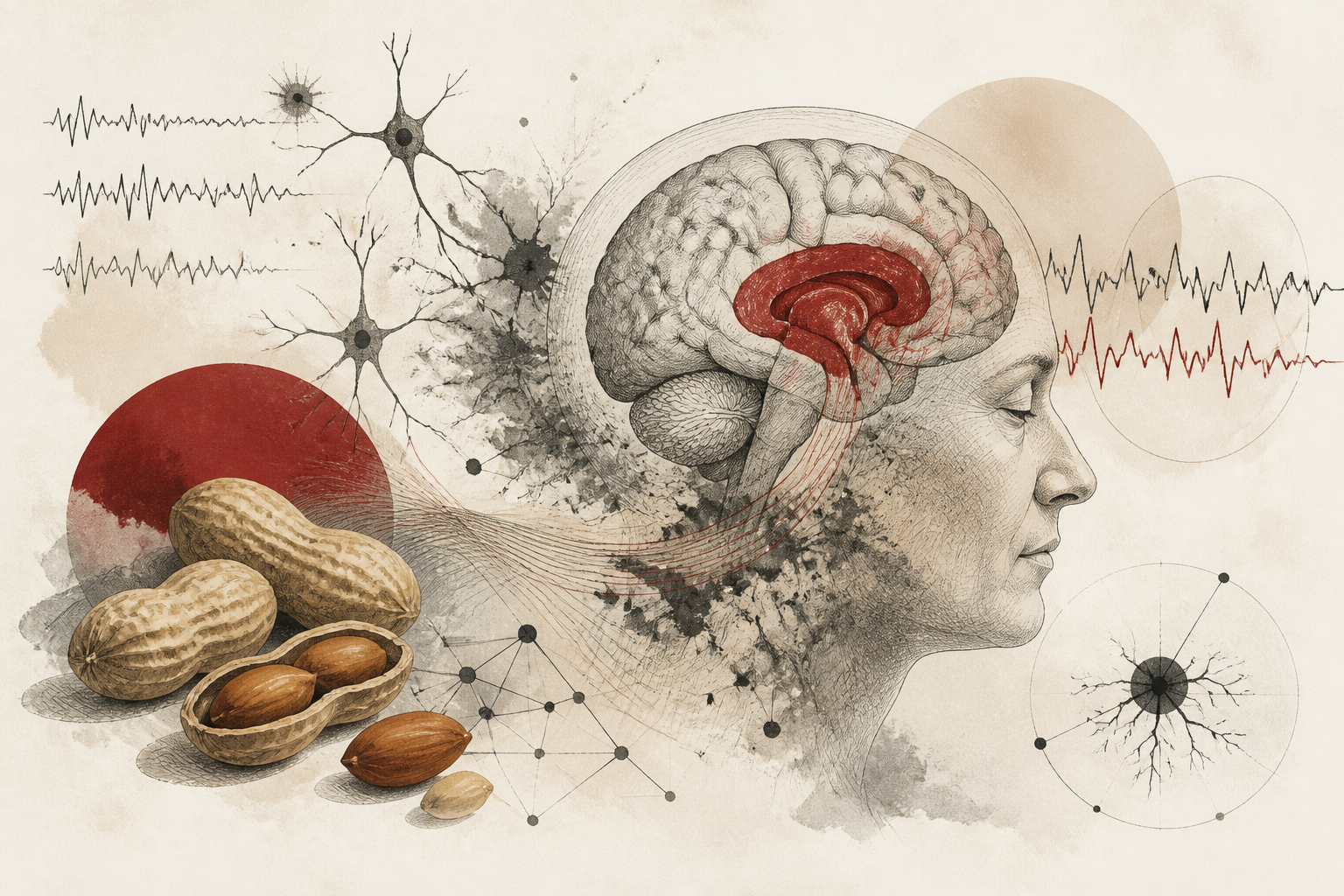
In the evolving landscape of nutritional neuroscience, the relationship between dietary habits and cognitive maintenance has become a focal point for researchers addressing the global rise in age-related neurological disorders. A significant new study, originally reported by ScienceDaily, highlights a potentially accessible intervention for preserving cognitive integrity in aging populations. The research posits that the daily consumption of peanuts may serve as a functional dietary habit to support brain health and memory function in older adults. By focusing on the metabolic interactions within specific cerebral regions, the study provides a compelling look at how common legumes might influence the physiological markers associated with cognitive resilience.
Historically, the peanut has been valued for its nutrient density, containing a profile rich in monounsaturated fats, fiber, and various bioactive compounds. However, its specific impact on the metabolic health of the brain—distinct from systemic metabolic health—has remained under-explored until recently. As the global population ages, the search for preventative strategies against neurodegenerative conditions like Alzheimer’s disease has intensified, leading scientists to investigate the intersection of nutrition and neurology with greater precision. This latest inquiry moves beyond general cardiovascular benefits, zeroing in on the neurological mechanisms that govern memory and executive function.
Metabolic Pathways and Cognitive Preservation
The core findings of this investigation revolve around the concept of brain insulin responsiveness. In healthy states, insulin serves as a critical signaling molecule in the brain, facilitating glucose uptake and supporting synaptic plasticity, which is the foundation of memory formation and learning. As individuals age, this responsiveness can diminish, a condition sometimes referred to as 'type 3 diabetes' or central insulin resistance. This metabolic dysfunction is increasingly recognized as a precursor to more severe cognitive impairment. The study observed that participants who consumed approximately two servings of unsalted, skin-roasted peanuts daily for a duration of 16 weeks exhibited a measurable improvement in insulin responsiveness within brain regions critical for memory storage and retrieval.
This improvement is particularly noteworthy because the hippocampal region—the primary seat of memory—is highly sensitive to metabolic fluctuations. By enhancing the efficiency of insulin signaling, the dietary intervention appeared to bolster the neural environment against the typical decay associated with the aging process. The researchers noted that these changes were not merely peripheral but represented a shift in the central nervous system's ability to manage energy and maintain cellular communication. The data suggests that the unique combination of polyphenols and fatty acids found in peanuts may work synergistically to enhance the permeability or sensitivity of these neural pathways.
Investigative Methodology and Physiological Markers
To reach these conclusions, the research team employed a rigorous longitudinal design, tracking a cohort of older adults over a four-month period. The experimental group was tasked with integrating skin-roasted peanuts into their daily diets, while control parameters were maintained to ensure that the observed effects could be attributed to the specific nutritional intervention rather than lifestyle changes. The choice of 'skin-roasted' peanuts is scientifically significant, as the skins of peanuts are high in resveratrol and other phenolic compounds which have demonstrated neuroprotective properties in previous laboratory models. By utilizing unsalted varieties, the researchers controlled for potential confounding variables like sodium-induced hypertension, which could negatively impact vascular brain health.
Measuring insulin responsiveness in the brain requires sophisticated neuroimaging and metabolic tracking. The study utilized advanced methodologies to observe how these brain regions responded to stimuli and how effectively they processed glucose. The 16-week timeframe was selected to allow for physiological adaptation, moving beyond short-term spikes in nutrient levels to observe sustained changes in the brain's metabolic architecture. The researchers aimed to bridge the gap between nutritional intake and observable neurological outcomes, providing a quantitative basis for what had previously been qualitative observations regarding Mediterranean-style diets and cognitive health.
Implications for Neurodegenerative Risk Mitigation
The interpretation of these results has profound implications for the prevention of Alzheimer’s disease and other forms of dementia. One of the early markers of Alzheimer’s is a decline in glucose metabolism in the temporal lobes. If a simple dietary addition can improve insulin responsiveness, it might serve as a primary or secondary preventative measure. The study suggests that the bioactive compounds in peanuts may help maintain the integrity of the blood-brain barrier or directly influence the neuro-inflammatory markers that typically impede insulin signaling. This suggests that the benefits of peanuts are multi-modal, addressing both the energy requirements of neurons and the inflammatory environment that often leads to neurodegeneration.
Furthermore, the findings provide a more nuanced understanding of 'healthy fats.' While the medical community has long advocated for unsaturated fats to protect the heart, this research underscores their necessity for the brain. The brain is the most energy-demanding organ in the body, and its reliance on efficient metabolic signaling cannot be overstated. By demonstrating that a specific food item can alter the insulin sensitivity of the brain, the study opens the door for 'precision nutrition'—the idea that specific cognitive vulnerabilities can be addressed through targeted dietary prescriptions.
Constraints and Future Research Trajectories
While the results are promising, the scientific community maintains a cautious stance regarding the limitations of the study. A 16-week period, while sufficient for observing metabolic shifts, does not provide long-term data on the actual prevention of clinical dementia. It remains to be seen whether the improvements in insulin responsiveness translate into a lower incidence of Alzheimer’s over a decade or more. Additionally, the study's reliance on a specific dosage—two servings per day—raises questions about the dose-response relationship. Would a smaller amount yield similar benefits, or is there a threshold that must be reached to trigger these neurological changes?
Another open question involves the role of individual genetics. Genetic factors, such as the presence of the APOE4 allele, significantly influence a person’s risk for Alzheimer’s and may also affect how they metabolize certain nutrients. Future studies will need to explore whether the peanut-based intervention is equally effective across different genetic profiles. Furthermore, the interaction between peanuts and other dietary components must be considered; a diet high in processed sugars might negate the insulin-sensitizing effects of the peanuts. Researchers are also interested in whether other nuts or legumes, such as walnuts or lentils, might offer similar or synergistic benefits through different metabolic pathways.
The Strategic Value of Nutritional Neurology
The significance of this research lies in its potential for scalability and accessibility. Unlike expensive pharmacological interventions, peanuts are a relatively low-cost, shelf-stable, and widely available food source. For public health officials, this offers a tangible recommendation for aging populations that does not require complex medical oversight. The study serves as a reminder that the tools for maintaining cognitive health may be found in the grocery store as much as in the pharmacy. As we continue to unravel the complexities of the mind-body connection, the role of everyday nutrition stands out as a critical pillar of geriatric care.
In conclusion, the investigation into peanuts and brain health marks a significant step forward in our understanding of how diet influences the aging brain. By demonstrating that regular consumption can improve insulin responsiveness in memory-critical regions, the study provides a scientific basis for a simple yet effective lifestyle intervention. As reported by ScienceDaily, these findings contribute to a growing body of evidence that supports the use of functional foods to protect our most vital organ against the ravages of time and disease. The challenge moving forward will be to integrate these nutritional insights into broader public health strategies to ensure a cognitively healthy future for the aging global population.
Quick answers
- How many peanuts should you eat daily for brain benefits according to the study?
- The study suggests consuming about two servings of unsalted, skin-roasted peanuts every day to see improvements in brain insulin responsiveness.
- What specific brain function did the peanut study show improvement in?
- The research found significant improvements in insulin responsiveness within brain regions responsible for memory and cognitive function in older adults.
- Why were skin-roasted peanuts specifically used in this research?
- Peanut skins are rich in polyphenols and bioactive compounds like resveratrol, which are believed to provide neuroprotective benefits and enhance metabolic signaling.
Rewritten by Zeit editorial AI. Based on original reporting at ScienceDaily — Mind & Brain.