Decoding Personality: The Genomic Architecture of Human Trait Variation
Recent genomic analysis identifies over 1,200 genetic variants linking Big Five personality traits to health, longevity, and socioeconomic status.
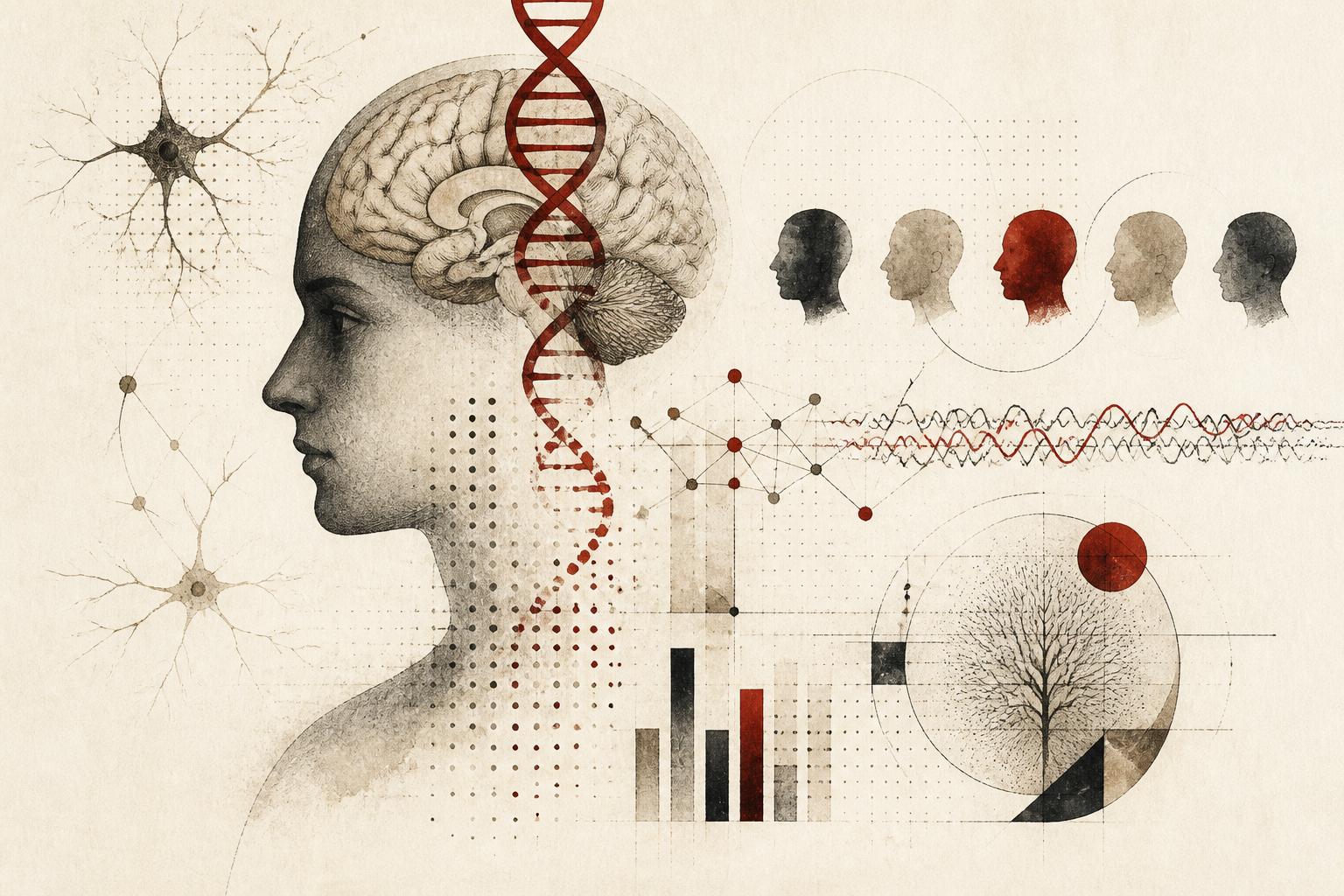
The perennial debate concerning the origins of human character—the classic tension between nature and nurture—has entered a new phase of empirical clarity. For decades, psychologists have utilized the Big Five framework to categorize personality into openness, conscientiousness, extraversion, agreeableness, and neuroticism. While behavioral genetics has long suggested that these traits are heritable, the specific molecular mechanisms remained largely elusive. However, recent research highlighted by ScienceDaily reveals a significant leap in our understanding of the biological basis of character. By identifying more than 1,200 genetic variants associated with these core personality dimensions, scientists have uncovered a genomic architecture that is far more expansive than previously estimated. This discovery suggests that the predispositions which shape how we interact with the world are deeply embedded in our DNA, influencing not only our social behavior but also the trajectory of our health and economic lives.
The Genetic Landscape of Individual Differences
The foundation of this research lies in the massive scale of contemporary genomic datasets. By analyzing the genetic profiles of hundreds of thousands of individuals, researchers were able to pinpoint specific locations on the human genome, known as variants, that correlate with variations in personality scores. Traditionally, personality was viewed through a largely social-constructivist lens, where early childhood environment and parental influence were seen as the primary architects of the self. While the influence of the environment remains undeniable, this new data suggests that the internal biological blueprint is significantly more detailed than earlier models predicted. The identification of 1,200 variants provides a granular map of how minute changes in our genetic code can aggregate to produce a specific temperament, such as a high degree of conscientiousness or a tendency toward neuroticism.
Historically, the search for 'personality genes' was often frustrated by the realization that no single gene dictates a complex behavior. Instead, these recent findings reinforce the concept of polygenicity, where thousands of small-effect variants work in concert. The significance of this specific study is not merely the quantity of variants identified, but the way these variants intersect with other domains of human existence. The research demonstrates that the genetic markers for personality do not exist in a vacuum; they overlap significantly with the markers for long-term health, income levels, and even daily habits. This suggests that the genetic forces shaping our personality are the same forces influencing our physiological resilience and social mobility.
Mechanisms of Trait Expression and Life Outcomes
To understand how these 1,200 variants influence a person's life, it is necessary to examine the pleiotropic nature of these genes—a phenomenon where a single genetic variant influences multiple, seemingly unrelated phenotypic traits. The data reveals that the variants associated with high conscientiousness, for instance, frequently overlap with those associated with longevity and a lower risk of metabolic diseases. Similarly, variants linked to extraversion and openness show correlations with higher educational attainment and income brackets. This does not imply a deterministic path where one's DNA guarantees a specific salary or lifespan, but it does suggest that the biological leanings toward certain personality types provide a 'tailwind' or 'headwind' for specific life outcomes.
The methodological approach used to derive these findings involves genome-wide association studies (GWAS), which scan the entire genome for small variations that occur more frequently in people with particular traits. By correlating these variations with standardized personality assessments, researchers can calculate polygenic scores. These scores serve as an estimate of an individual's genetic predisposition toward a specific trait. The finding that these scores also predict health outcomes and career success highlights the integrated nature of the human organism. It suggests that what we perceive as 'personality' may be the psychological manifestation of underlying biological systems that also govern our physical health and cognitive efficiency.
Interpretations, Limitations, and the Environmental Factor
Despite the breakthrough in identifying 1,200 variants, it is critical to interpret these findings within the broader context of gene-environment interaction. The researchers emphasize that while the genetic component is more substantial than previously realized, it does not account for the entirety of human personality. Environment remains a powerful, and perhaps dominant, force in shaping the final expression of these traits. A genetic predisposition toward neuroticism, for example, may never manifest as a clinical anxiety disorder if the individual is raised in a stable, supportive environment. Conversely, a genetic leaning toward high conscientiousness might be suppressed by lack of access to educational resources or systemic social barriers.
Furthermore, there are inherent limitations to current genomic research. A primary concern is the diversity of the datasets used; many large-scale genetic studies have historically relied on populations of European descent, which may limit the generalizability of the findings to global populations with different genetic backgrounds. Additionally, the 'missing heritability' problem persists: even with 1,200 variants identified, we still cannot fully explain the total heritability estimated from twin studies. This suggests that there are many more variants, or perhaps more complex epigenetic mechanisms, yet to be discovered. The study serves as a milestone, but it is not the final word on the biological origins of the self.
Implications for Future Research and Society
The discovery of a wide genetic connection between personality and life outcomes raises profound questions for both medicine and social policy. If personality is significantly influenced by genetics, could we eventually use genomic screening to identify individuals at risk for personality-related health issues, such as stress-induced cardiovascular disease? Could educational systems be tailored to accommodate the natural temperamental leanings of students to optimize learning? These possibilities offer both promise and ethical peril. The risk of genetic essentialism—the belief that we are nothing more than our genes—is a concern that psychologists and ethicists must address as this data becomes more accessible.
Ultimately, the value of this research lies in its ability to humanize the biological sciences and biologize the social sciences. It bridges the gap between the physical reality of the brain and the subjective experience of the mind. By acknowledging the genetic scaffolding of our character, we do not diminish the importance of personal agency or environmental influence. Instead, we gain a more sophisticated understanding of the diverse starting points from which individuals begin their lives. As we continue to map the genomic landscape of the human spirit, the goal remains to use this knowledge to foster environments where every individual, regardless of their genetic predisposition, has the opportunity to thrive. The 1,200 variants identified are not just data points; they are the subtle threads that weave together the complex tapestry of human identity and destiny.
Quick answers
- How many genetic variants are linked to personality traits?
- Researchers have identified more than 1,200 genetic variants associated with the Big Five personality traits.
- Do genes determine my income and health?
- While genes influence traits that correlate with income and health, the environment still plays a powerful role in determining actual life outcomes.
- What are the Big Five personality traits in this study?
- The study focuses on Openness, Conscientiousness, Extraversion, Agreeableness, and Neuroticism.
Rewritten by Zeit editorial AI. Based on original reporting at ScienceDaily — Mind & Brain.