Decades of Data Confirm Long-Term Academic Benefits of Public Pre-K Programs
A longitudinal study of 400,000 students suggests that early public education provides a sustained advantage in grades and test scores lasting through high school graduation.
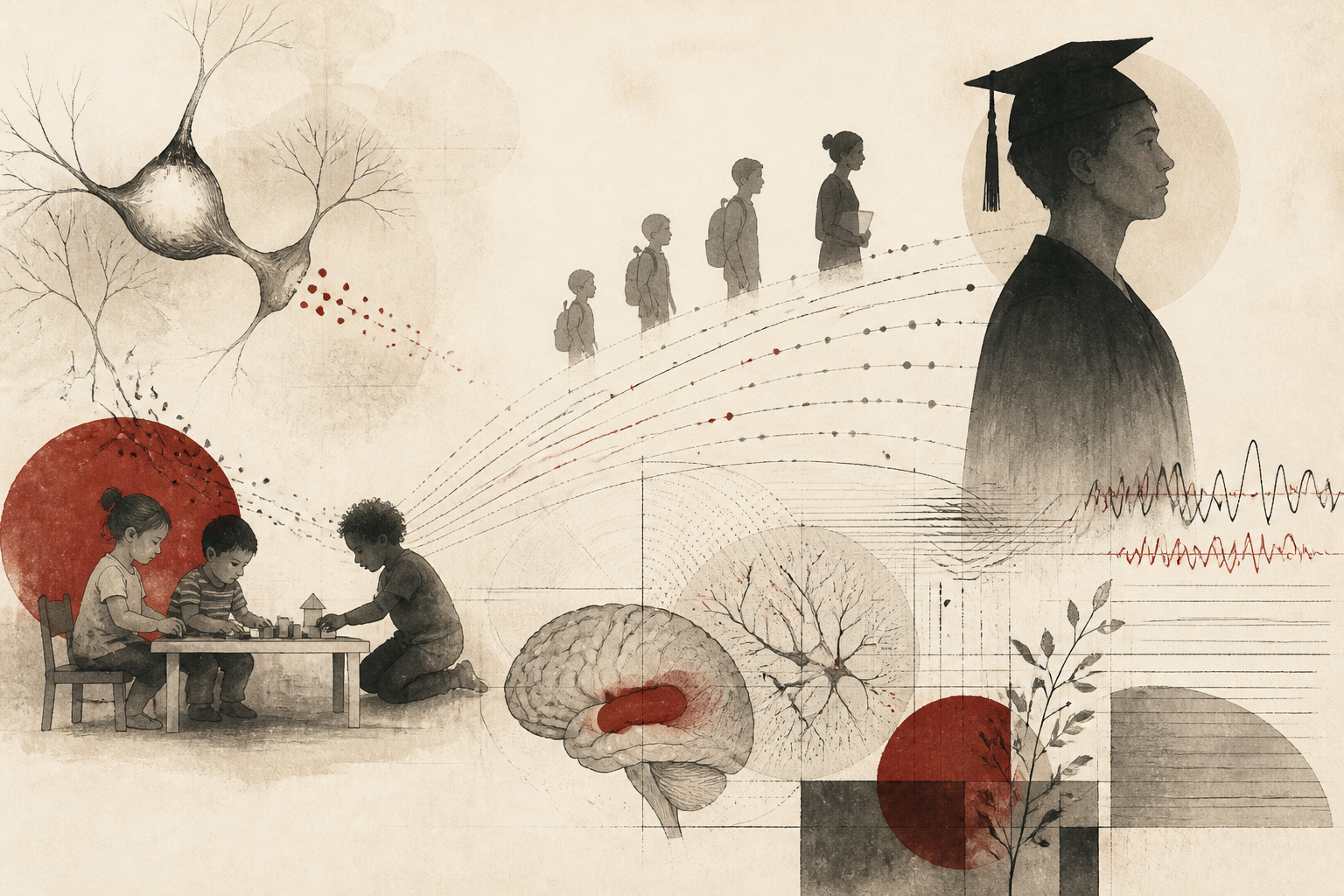
The trajectory of a child's academic career is often influenced by their earliest interactions with formal learning environments. While the debate over the efficacy of early childhood education has persisted for decades, new evidence provides a robust argument for the enduring value of public pre-kindergarten programs. A comprehensive longitudinal study, tracking 400,000 students over a twenty-year period, has revealed that children enrolled in public pre-K facilities consistently outperformed their peers who were placed in alternative childcare settings. This advantage was not merely a temporary boost observed in the primary years but a sustained phenomenon that translated into higher grade point averages and superior standardized test scores through the conclusion of their high school careers. By analyzing two decades of student progression, researchers have identified a clear link between early institutionalized education and long-term scholastic achievement.
The Landscape of Early Childhood Longitudinal Research
Historically, the "fade-out" effect has been a primary concern for developmental psychologists and educational theorists. This concept suggests that while early interventions like Head Start or private preschools provide an initial surge in cognitive development and social readiness, these gains tend to equalize by the third or fourth grade. The current study, as reported by ScienceDaily, challenges the inevitability of this decline by highlighting the specific success of public school-based pre-K programs. By utilizing a massive sample size of nearly half a million students, the research offers a level of statistical power that previous, smaller-scale studies lacked. This longitudinal approach allowed investigators to control for various socioeconomic factors and follow the cohort from their initial entry into the school system at age four through their transition into young adulthood.
Unlike private daycare or home-based care, public pre-K programs are typically integrated into the broader infrastructure of the local school district. This integration provides a unique set of variables that researchers believe are central to the program's success. The data suggests that the environment of a public school—complete with structured classrooms, standardized curricula, and oversight by state educational boards—creates a foundational architecture for learning that other settings may struggle to replicate. The study’s findings point toward a definitive correlation between these specific public settings and a student's ability to navigate the increasingly complex demands of middle and high school curricula.
Mechanisms of Sustained Academic Success
To understand why these benefits persist for twenty years, researchers looked closely at the pedagogical environment of public pre-K. One of the most significant factors identified was the presence of better-trained educators. Public school systems often require lead teachers in pre-K classrooms to hold specific certifications and degrees in early childhood education, a standard that is not universally applied across all private childcare sectors. These professionals are trained not only in basic care but in the science of early cognitive development, allowing them to implement evidence-based strategies that foster literacy, numeracy, and executive functioning from the outset. This early exposure to high-quality instruction appears to set a higher baseline for the student’s future academic engagement.
Furthermore, the study emphasizes the importance of early exposure to structured classroom settings. The transition from the home or a less formal daycare environment to a primary school can be a significant hurdle for many children. Students who attend public pre-K are introduced to the routines, social expectations, and organizational demands of a school building a full year before their peers. This "head start" in navigating the social and physical environment of school allows them to focus more energy on content mastery in later years, rather than struggling with the behavioral adjustments required by formal schooling. The research posits that this early socialization into the role of a 'student' provides a psychological and procedural advantage that accumulates interest over time, manifesting as the sustained achievement observed in the data.
Methodology and Data Interpretation
The rigor of this twenty-year study lies in its expansive dataset and its ability to track individual student outcomes over a significant portion of the human lifespan. By comparing 400,000 students across diverse demographics, the researchers were able to filter out the noise of individual school quality or regional economic fluctuations. The findings indicated that the pre-K advantage was not limited to a specific subject; rather, it was reflected across the board in both cumulative grade point averages and results on high-stakes standardized assessments. This suggests that the benefits are systemic, improving a child’s general aptitude for learning and information retention across various disciplines.
In interpreting these results, it is essential to recognize the role of continuity. Because these pre-K programs are part of the public system, there is often a curricular alignment between the pre-K level and the kindergarten and first-grade levels that follow. This seamless transition prevents the loss of momentum that can occur when a child moves from a private setting with a different philosophy into a public elementary school. The researchers suggest that the public pre-K advantage is, in part, an advantage of systemic cohesion. The students are essentially learning the "language" of their specific school district from the age of four, allowing for a more efficient transfer of knowledge as they progress through the grades.
Limitations and Evolving Questions
While the scope of the study is impressive, there remain several open questions regarding the scalability and quality control of public pre-K programs. The study acknowledges that not all public pre-K programs are created equal, and the degree of the "advantage" can vary based on the funding and resources of the specific district. Additionally, while the academic metrics are clear, the study focuses less on the non-cognitive or socio-emotional outcomes that are also critical to long-term success. Future research will need to determine if these academically successful students also show lower rates of behavioral issues or higher rates of college enrollment and workplace retention.
There is also the question of accessibility. If public pre-K provides such a definitive advantage, the disparity between children who have access to these programs and those who do not becomes a significant concern for educational equity. The researchers note that while the advantage is lasting, it highlights a potential gap in the system where children in districts without robust pre-K offerings may be starting their academic journey at a quantifiable disadvantage. Understanding how to close this gap and whether similar results can be achieved through subsidized private programs remains a critical area for further investigation.
Implications for Educational Policy
The findings of this twenty-year longitudinal study have profound implications for policymakers and educational administrators. For years, the justification for funding early childhood education has been based on short-term gains. This new evidence provides the longitudinal proof necessary to argue for pre-K as a long-term investment in human capital. By improving high school outcomes, public pre-K programs potentially reduce the need for later interventions, such as remedial education or social support services, thereby offering a high return on investment for the public sector.
In conclusion, the data from 400,000 students reveals that the first years of a child's education are not just a preparation for elementary school, but a foundation for their entire academic life. The combination of professionalized teaching staff and the early adoption of school structures within the public system creates a lasting benefit that survives the transition into adolescence. As educational institutions continue to refine their approach to early childhood, the evidence from this study, originally reported by ScienceDaily, stands as a testament to the enduring power of early, high-quality public education.
Quick answers
- How long do the benefits of public pre-K last according to the study?
- The study followed students for 20 years and found that the academic advantages, including better grades and test scores, lasted through the end of high school.
- Why does public pre-K perform better than other childcare options?
- Researchers attribute the success to better-trained teachers with specific early childhood certifications and the structured, school-based environment that prepares children for formal education routines.
- How many students were included in this research?
- The study analyzed a massive cohort of 400,000 students to ensure statistical accuracy and long-term tracking.
Rewritten by Zeit editorial AI. Based on original reporting at ScienceDaily — Mind & Brain.