Daily Routine Consistency Linked to Reduced Pain and Depression in Older Adults
University of Missouri researchers discover that maintaining regular schedules for daily activities may mitigate physical and psychological distress, even amidst sleep disturbances.
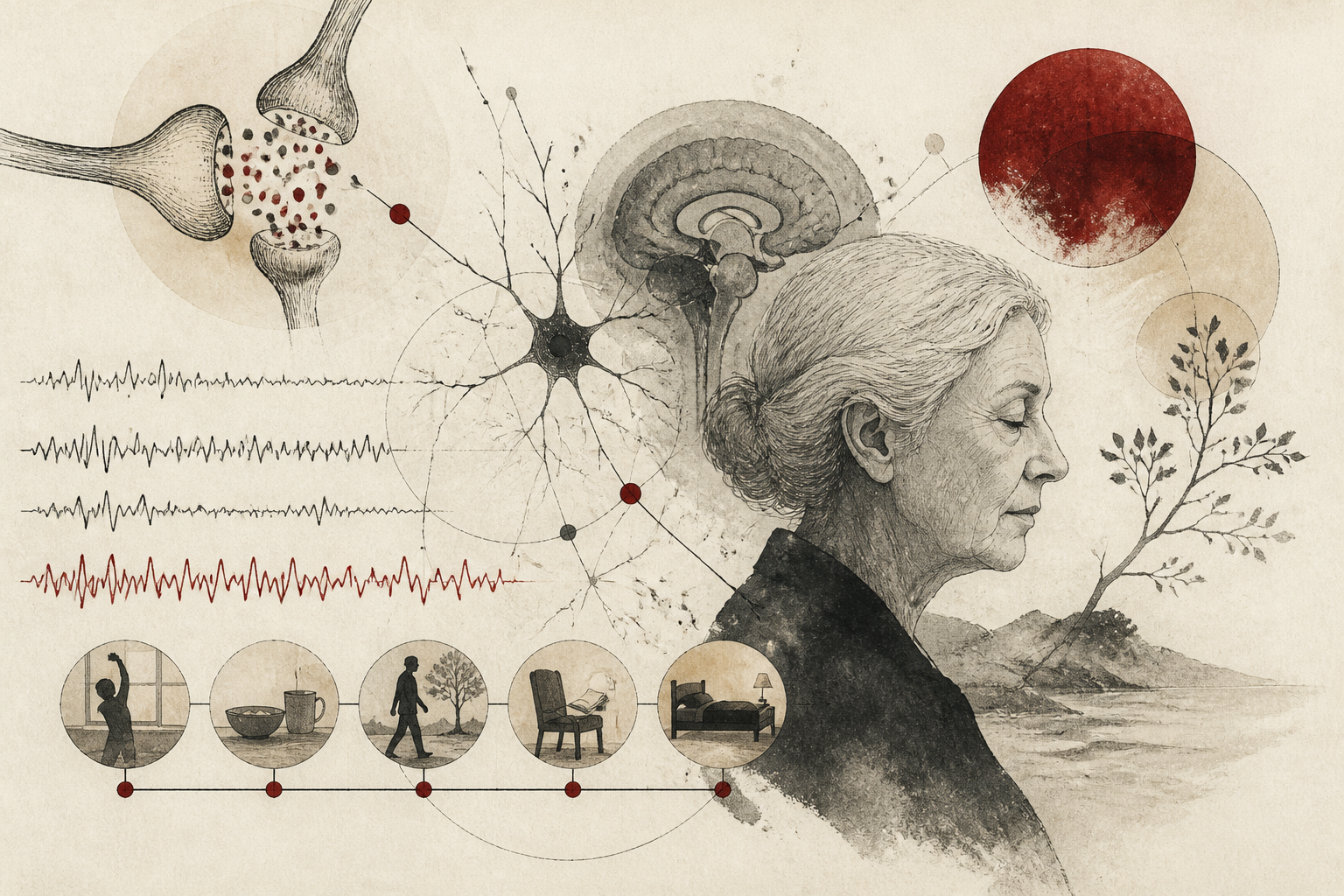
The pursuit of geriatric well-being has long prioritized pharmacological interventions and specialized physical therapies. However, emerging evidence suggests that the fundamental architecture of one's daily life—the simple repetition of habits—may serve as a significant protective factor against the debilitating effects of chronic pain and clinical depression. According to a recent investigation conducted by researchers at the University of Missouri, the maintenance of a consistent daily routine appears to be a critical determinant of health outcomes in older populations. This study, originally reported by ScienceDaily, highlights a powerful link between behavioral regularity and the mitigation of two of the most pervasive challenges facing the aging demographic.
Traditional approaches to geriatric medicine often view sleep disorders, mood fluctuations, and physical discomfort as distinct silos of pathology. Yet, the findings from the University of Missouri suggest these elements are deeply interconnected through the prism of circadian rhythmicity. By examining how older adults structure their time—ranging from when they consume their first meal to when they retire for the evening—researchers have identified that the predictability of these events correlates strongly with subjective reports of improved physical and mental health. This discovery offers a low-cost, non-invasive strategy for enhancing quality of life among seniors who may otherwise feel their health is in an irreversible state of decline.
The Intersection of Routine and Wellness
The central finding of the Missouri study is that older adults who adhere to a strict daily schedule report significantly lower levels of physical pain and fewer symptoms of depression. What makes this observation particularly noteworthy is that these benefits persisted even among individuals who suffered from insomnia. Typically, poor sleep quality is considered a primary driver of both mood disorders and increased sensitivity to pain. However, the data suggests that the external framework of a routine can act as a stabilizing force that partially offsets the physiological damage caused by sleep deprivation. Even when the internal mechanism of sleep is compromised, the external scaffolding of regular meals, exercise, and social interaction provides a sense of somatic and psychological order.
Researchers focused on the concept of 'lifestyle regularity,' a metric that tracks how closely an individual follows the same timeline day after day. For older adults, the loss of professional obligations and child-rearing duties can often lead to a 'fragmented' schedule, where waking times and activity periods become erratic. This fragmentation is not merely a social shift but a biological one. The University of Missouri team observed that those who resisted this drift toward irregularity maintained a higher baseline of resilience. The reduction in reported pain suggests that a consistent schedule may lower systemic inflammation or alter the perception of discomfort through psychological stabilization. Similarly, the decline in depressive symptoms points to the role of routine in providing a sense of agency and purpose, which are often eroded in the later stages of life.
Circadian Regulation and the Biological Clock
To understand why a routine would impact physical pain and mental health, one must look at the body’s internal timekeeping system. The mechanism proposed by the researchers involves the regulation of the circadian clock—the 24-hour cycle that governs everything from hormone release to body temperature and immune function. The body thrives on predictability; when an individual eats, moves, and sleeps at the same time every day, the internal clock can synchronize various biological processes for maximum efficiency. When this schedule becomes erratic, the resulting 'circadian misalignment' can lead to a host of health issues, including increased stress markers and mood instability.
In the aging brain, the suprachiasmatic nucleus—the master clock located in the hypothalamus—often becomes less robust. This natural decline makes older adults more susceptible to the negative effects of an irregular lifestyle. By consciously maintaining a routine, seniors may essentially be 'propping up' a weakening biological clock. The Missouri researchers posit that regular times for activities serve as 'zeitgebers,' or external cues, that signal to the body when to be alert and when to begin the process of repair. This synchronization appears to dampen the neural pathways associated with pain signaling and promotes a more stable emotional state, effectively acting as a natural regulator for the nervous system.
Clinical Interpretations and Future Research
While the correlation between routine and health is clear in the data, the interpretation of these findings requires a nuanced understanding of geriatric behavior. The researchers emphasize that the 'consistency' does not necessarily refer to the duration of the activity, but rather its timing. For instance, having breakfast at 8:00 AM every morning may be more impactful than the specific contents of the meal itself. This suggests that the brain’s need for temporal structure is as fundamental as its need for nutrition or physical movement. For clinicians, this shifts the focus from purely symptomatic relief to behavioral coaching, encouraging patients to map out their days with greater precision.
However, the study also acknowledges certain limitations and leaves several questions open for future investigation. Because the data relies heavily on self-reported measures of pain and depression, there is a risk of subjective bias. Furthermore, the researchers have yet to fully determine the direction of causality: does a routine cause better health, or are individuals who are already healthier and less depressed simply more capable of maintaining a routine? Future longitudinal studies will be necessary to track these variables over several years to see if the implementation of a new routine can actively reverse existing symptoms of depression or chronic pain. Additionally, exploring how different types of activities—such as social versus solitary routines—impact these outcomes could provide more targeted interventions.
The Broader Implications for Geriatric Care
The importance of this research lies in its accessibility. Unlike expensive medications or complex medical procedures, the adjustment of a daily schedule is a tool that is available to almost everyone, regardless of socioeconomic status or geographical location. In an era where healthcare systems are increasingly strained by the needs of an aging population, finding simple, habit-based interventions is of paramount importance. The University of Missouri’s work provides a compelling argument for viewing 'time management' as a legitimate medical intervention for the elderly.
Ultimately, the findings suggest that the way we organize our hours has a profound impact on the way our bodies function and our minds perceive the world. For the older adult struggling with the twin burdens of physical ache and emotional low, the path to improvement might not be found in a new prescription, but in the steady, predictable rhythm of a well-ordered day. By honoring the body's need for consistency, we may find a powerful ally in the fight against the most common ailments of aging, ensuring that the later years of life are characterized not by decline, but by a structured and resilient vitality.
Quick answers
- How does a daily routine affect physical pain in older adults?
- Maintaining a consistent schedule helps regulate the body's internal circadian clock, which can reduce systemic inflammation and lower the perception of physical pain.
- Can a routine help if I have insomnia?
- Yes, the study found that even when older adults struggled with insomnia, those who kept a regular daily schedule for other activities reported fewer symptoms of depression and less pain.
- What were the main findings of the University of Missouri study on daily habits?
- The researchers discovered that older adults with consistent times for sleeping, eating, and other activities had better mental health and lower pain levels than those with erratic schedules.
Editorial Team