Cranial Marrow Identified as Specialized Immune Hub for Glioblastoma Response
Researchers have identified a hidden immune organ within the skull that serves as a rapid first responder against brain tumors, offering a new pathway for oncology.
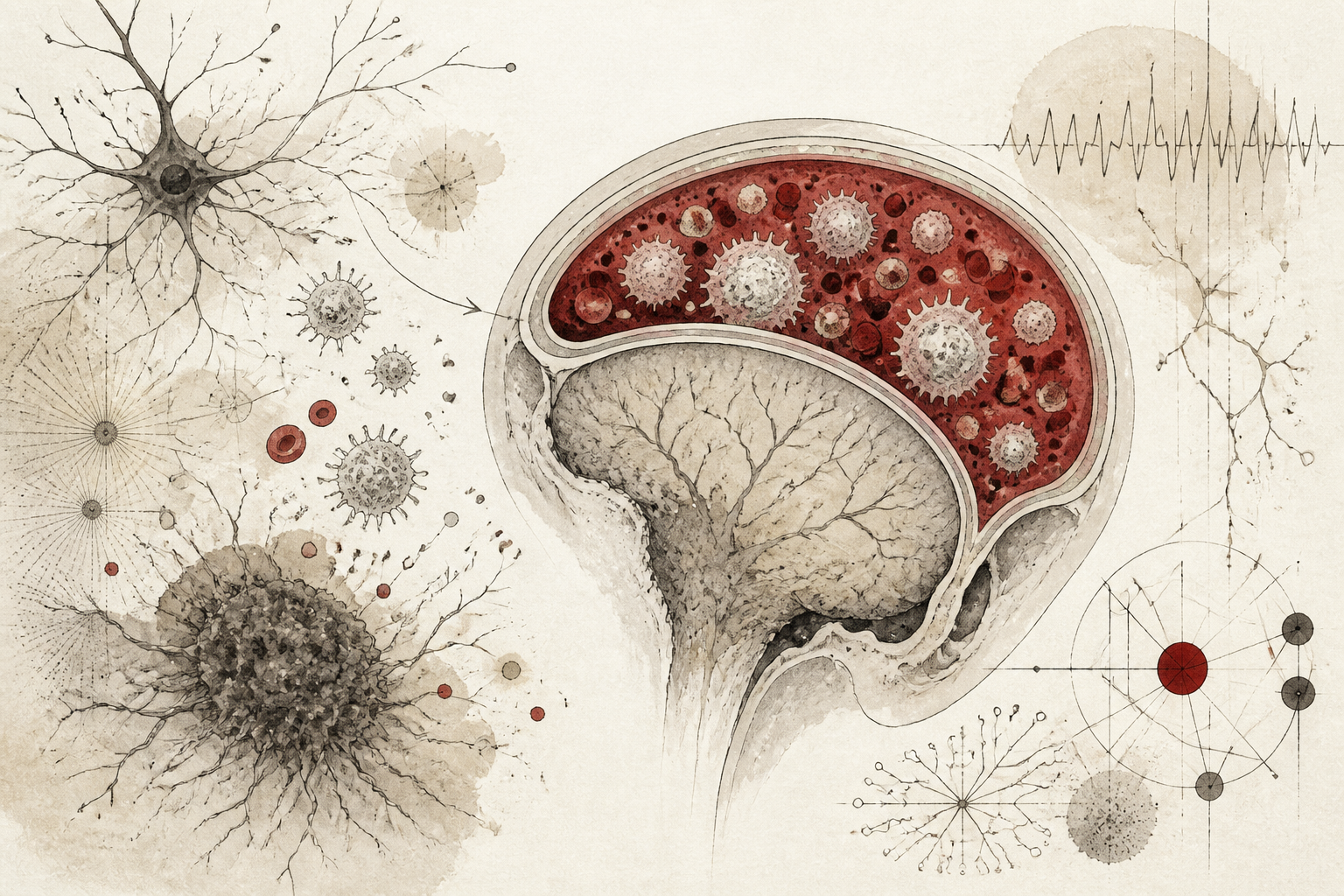
Traditional neurological paradigms have long characterized the central nervous system as an immunologically privileged site, largely shielded from the body’s systemic immune surveillance by the blood-brain barrier. However, recent investigations published in ScienceDaily and originating from new oncological research have challenged this isolationist view. Scientists have identified a previously unrecognized “immune organ” situated within the skull itself—a localized reservoir of immune activity that functions as a high-speed frontline defense against invasive brain cancers. This discovery suggests that the skull is not merely a static protective casing for neural tissue but a dynamic participant in the body's anti-tumor response, providing a specialized niche for immune cells that are uniquely positioned to intercept malignant growth.
The implications of this finding are substantial for the field of neuro-oncology, particularly concerning aggressive malignancies like glioblastoma. For decades, the primary challenge in treating brain cancer has been the inability of systemic immune cells to infiltrate the brain effectively and the immunosuppressive environment fostered by tumors. By identifying a local source of immune cells residing within the skull’s bone marrow, researchers have uncovered a tactical advantage: a nearby army of responders that do not face the same transit hurdles as cells originating in the long bones of the legs or the pelvis. This localized system appears to be primed for rapid mobilization, offering a potential breakthrough in how clinicians might approach immunotherapy for the brain.
The Discovery of a Localized Immune Reservoir
The research, conducted using murine models, focused on the behavior of bone marrow cells within the cranium during the onset of brain cancer. While it was previously understood that the skull contains marrow, its specific role in brain-specific pathology remained largely unexplored. The study revealed that when brain tumors begin to develop, the skull’s marrow does not behave like distant marrow sites. Instead, it acts as a specialized “immune organ” that detects biochemical signals from the brain and initiates a localized production of myeloid and lymphoid cells. This indicates a high degree of compartmentalization within the immune system, where the skull serves as a dedicated station for neurological health.
Evidence suggests that there are direct vascular channels—microscopic tunnels—connecting the skull marrow to the meninges, the protective membranes surrounding the brain. These channels allow for a direct exchange that bypasses the traditional systemic circulation. In the presence of a tumor, the skull marrow undergoes a rapid shift in its hematopoietic profile. Rather than producing a generic mix of blood cells, it prioritizes the generation of specific immune cells designed to target and eliminate cancerous cells. This rapid-response mechanism significantly reduces the lag time between tumor detection and immune intervention, a critical factor in the progression of high-grade gliomas.
Mechanistic Pathways and Therapeutic Potential
The core of the study’s findings rests on the observation that strengthening this local immune defense leads to measurable improvements in tumor rejection. By utilizing pharmacological or genetic interventions to stimulate the skull’s immune output, researchers observed that mice were able to mount a much more aggressive defense against implanted brain tumors. This enhanced local response resulted in slower tumor growth and, in many cases, a total rejection of the malignancy that would have otherwise been fatal. The survival rates of the treated mice were significantly higher than those in the control group, providing a clear proof-of-concept for skull-targeted therapies.
The mechanism involves a sophisticated signaling loop. As the tumor grows, it releases inflammatory cytokines and tumor-associated antigens that seep into the cerebrospinal fluid and eventually reach the marrow of the skull via the aforementioned vascular connections. Once these signals are received, the skull marrow initiates an emergency hematopoiesis. The resulting immune cells travel back through the same channels into the brain, where they engage the tumor. The study highlights that these skull-derived immune cells are often more effective and less exhausted than those that have traveled from the spleen or peripheral blood, possibly because they have been “educated” by the local environment.
Limitations and Future Academic Inquiry
While the identification of this cranial immune organ is a landmark discovery, several academic caveats remain. The primary limitation is the reliance on murine models. While the anatomical structures of the skull and the basic functions of the immune system are conserved across mammals, the human skull is significantly thicker and more complex than that of a mouse. Further research is required to confirm that the same direct vascular channels exist in humans and that they function with the same degree of efficiency during the progression of brain cancer. The scale of the human immune system also introduces variables such as age-related marrow attrition, which may affect the viability of this organ in older patients who are more susceptible to glioblastoma.
Furthermore, there are open questions regarding the specificity of this response. It is not yet clear whether the skull marrow responds similarly to other neurological threats, such as traumatic brain injury, stroke, or neurodegenerative diseases like Alzheimer’s. If the skull functions as a general-purpose responder for the brain, there is a risk that chronic inflammation in the marrow could inadvertently damage neural tissue or facilitate autoimmune reactions. Understanding the regulatory “off-switches” of this local immune organ will be just as important as learning how to activate it for cancer treatment.
Shifting the Paradigm of Neuro-Immunology
The discovery reported by ScienceDaily marks a pivotal shift in our understanding of how the body protects its most vital organ. If the skull can be targeted directly—perhaps through localized radiation, targeted drug delivery, or non-invasive stimulation—oncologists might be able to boost the brain’s natural defenses without the systemic side effects associated with traditional chemotherapy or systemic immunotherapy. This approach aligns with the growing trend of precision medicine, where treatments are tailored not just to the disease, but to the specific anatomical pathways through which the disease interacts with the host.
Ultimately, this research suggests that the skeletal system is far more integrated into the immune landscape than previously recognized. The skull, long viewed as a passive shield, is now being recast as a sentinel. As we continue to map the complex communication between the bone marrow and the brain, the possibility of “waking up” this hidden organ to fight some of the most devastating forms of cancer becomes an increasingly tangible goal for the scientific community. The next phase of research will likely involve human imaging studies to map these marrow-to-brain pathways in vivo, bringing us one step closer to a new era of neurological intervention.
Quick answers
- What is the new immune organ discovered in the skull?
- It is a specialized reservoir of bone marrow within the skull that acts as a rapid first responder by producing immune cells specifically to fight brain cancer.
- How do immune cells from the skull reach the brain?
- They travel through microscopic vascular channels that connect the skull's bone marrow directly to the meninges, bypassing the general blood circulation.
- Could this lead to new treatments for glioblastoma?
- Yes, researchers found that strengthening this local immune response improved tumor rejection and survival, suggesting that targeting the skull directly could be a new therapeutic strategy.
Rewritten by Zeit editorial AI. Based on original reporting at ScienceDaily — Mind & Brain.