Cortisol Dysregulation and Chronic Cannabis Use: Evaluating Circadian Stress Response
Recent research indicates frequent cannabis users experience elevated morning cortisol, suggesting a potential disruption of the hypothalamic-pituitary-adrenal axis.
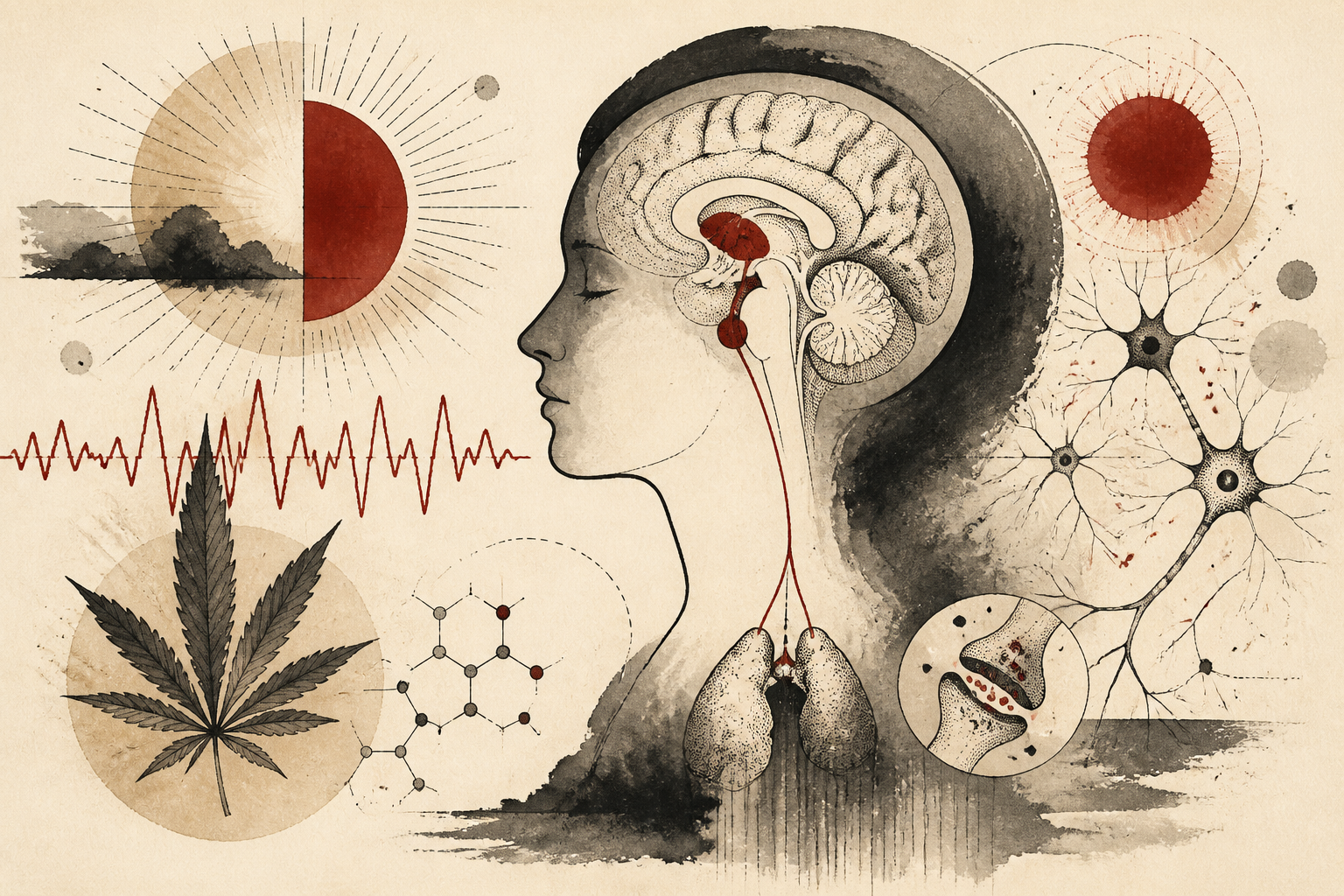
The relationship between psychoactive substances and the human endocrine system has long been a focal point of neurobiological inquiry. Among the most commonly consumed substances globally, cannabis is frequently cited by users as a primary tool for self-medicating symptoms of anxiety and physiological stress. However, a significant new investigation published in the domain of psychoneuroendocrinology, and reported via ScienceDaily, suggests that the physiological reality may be more complex than perceived symptomatic relief. Data indicate that individuals who consume cannabis on a frequent basis exhibit significantly higher levels of cortisol upon waking compared to non-users. This discovery points toward a systemic shift in the hypothalamic-pituitary-adrenal (HPA) axis, the primary mechanism by which the human body modulates its response to environmental stressors and internal rhythms.
Cortisol, often colloquially termed the stress hormone, is not merely a marker of distress but a critical regulator of energy, immune function, and the circadian cycle. In a healthy endocrine system, cortisol levels typically follow a specific diurnal rhythm: they are lowest at night and peak shortly after waking in a phenomenon known as the cortisol awakening response. This morning surge is theorized to prepare the body and mind for the demands of the upcoming day. When this rhythm is disrupted—manifesting as either blunted or excessively elevated morning levels—it often signals an underlying dysregulation of the HPA axis, which can have long-term implications for metabolic health, cognitive clarity, and emotional stability. The finding that frequent cannabis users enter their day with an already elevated hormonal baseline suggests that the substance may be fundamentally altering how the body manages its internal clock and readiness state.
The Mechanisms of Endocrine Alteration
To understand why cannabis might influence cortisol production, one must examine the intersection of the endocannabinoid system and the HPA axis. The human body naturally produces cannabinoids that bind to receptors throughout the brain, particularly in the hypothalamus. These receptors play a crucial role in regulating the release of corticotropin-releasing hormone, which eventually triggers the adrenal glands to produce cortisol. When exogenous cannabinoids, such as THC found in cannabis, are introduced into the system frequently, they may overwhelm these natural regulatory pathways. Over time, the body’s sensitivity to these signals may shift, leading to a state of chronic activation or a failure to return to a baseline state during the sleep-wake transition.
Researchers involved in the study utilized a rigorous protocol to track the hormonal fluctuations of participants. By collecting saliva samples at specific intervals throughout the day, particularly immediately upon waking, the team was able to map the diurnal curve of cortisol. The data revealed a stark contrast: while infrequent users or non-users showed a standard, moderate rise, the frequent user group exhibited a baseline that was already significantly higher the moment they opened their eyes. This suggests that the physiological 'stress' of the previous day’s consumption, or perhaps the withdrawal symptoms occurring during sleep, prevents the body from achieving a true resting state, keeping the HPA axis in a state of high alert throughout the night.
Methodological Approaches and Statistical Clarity
The methodology employed in this research was designed to isolate the specific impact of cannabis frequency from other confounding variables such as age, body mass index, and sleep duration. Participants were categorized based on their self-reported usage patterns, with frequent users defined as those consuming cannabis multiple times per week or daily. By focusing on the cortisol awakening response, the researchers targeted the most sensitive window of the HPA axis's daily cycle. This window is particularly telling because it occurs before the influence of daily stressors—like work, traffic, or interpersonal conflict—can cloud the data. The elevated levels found here are therefore considered reflective of the body’s internal hormonal set-point rather than a reaction to external events.
Furthermore, the study sought to determine if the method of consumption or the potency of the cannabis played a mitigating role. While the core finding remained consistent across various forms of use, the primary takeaway was the correlation between frequency and hormonal elevation. This suggests that the chronic nature of the exposure is the driving force behind the endocrine shift. By maintaining a neutral academic lens, the researchers avoided moralizing the usage, instead focusing on the objective physiological markers that define how the brain and body adapt to prolonged chemical exposure. This approach provides a clearer picture of the biological trade-offs involved in regular cannabis use, moving beyond subjective reports of relaxation to hard biochemical data.
Limitations and Future Directions in Endocrine Research
Despite the significance of these findings, the study acknowledges several limitations that warrant further investigation. Firstly, the cross-sectional nature of the data makes it difficult to definitively prove a causal link. While the correlation between cannabis use and elevated morning cortisol is strong, researchers must consider the possibility of a bidirectional relationship. It is possible that individuals with naturally higher cortisol levels or pre-existing HPA axis dysregulation are more likely to seek out cannabis as a form of self-soothing. To resolve this question of causality, longitudinal studies are required to track hormonal changes in individuals before and after they establish a frequent cannabis habit.
Additionally, the study raises questions regarding the specific components of cannabis that drive this hormonal response. While THC is the primary psychoactive agent, other cannabinoids like CBD may have different or even antagonistic effects on the HPA axis. The current research does not fully disentangle how various chemical ratios within the plant influence cortisol production. Future trials involving controlled dosages and specific cannabinoid profiles would be necessary to understand if certain strains or products carry a higher risk for endocrine disruption. There is also the question of duration; it remains unclear how long these hormonal shifts persist if a user ceases consumption, or if the HPA axis eventually returns to a standard diurnal rhythm.
Clinical Implications for Stress Management
The broader implications of this study are particularly relevant for clinicians and individuals who utilize cannabis for its supposed anti-stress properties. If the substance intended to reduce stress actually results in a higher physiological stress baseline, users may be trapped in a cycle of diminishing returns. The perceived psychological relief may be masking a deepening physiological imbalance. For the medical community, this highlights the importance of monitoring the endocrine health of patients who use medicinal cannabis, especially those treating chronic anxiety or sleep disorders. The elevated morning cortisol could potentially contribute to long-term issues such as insulin resistance, cardiovascular strain, and heightened systemic inflammation, all of which are associated with chronic HPA axis overactivity.
Ultimately, this research serves as a critical reminder that psychoactive substances do not act in isolation. They interact with deeply embedded biological systems that have evolved over millennia to maintain homeostasis. When we interfere with these systems through regular external intervention, the body attempts to compensate in ways that may be counterproductive to our long-term health. As cannabis becomes increasingly accessible and socially normalized, understanding these hidden physiological costs is essential for informed decision-making. The goal of future research at institutions like Zeit Psychology Online University will be to further illuminate these pathways, ensuring that the quest for mental well-being is supported by a comprehensive understanding of our underlying biology.
Quick answers
- How does frequent cannabis use affect morning cortisol levels?
- Frequent users often wake up with significantly higher levels of cortisol compared to non-users, indicating a potential disruption of the body's natural stress-response rhythms.
- What is the HPA axis and why does it matter in cannabis research?
- The HPA axis is the body's central stress-response system. Research suggests cannabis may interfere with this system, altering how the body prepares for daily stress.
- Can cannabis help with chronic stress according to this study?
- While users report feeling less stressed, the study suggests that physiologically, their bodies may be in a state of higher baseline stress, creating a possible contradiction between perceived and actual relief.
Rewritten by Zeit editorial AI. Based on original reporting at ScienceDaily — Mind & Brain.