Comprehensive Whole-Body Tracking Redefines Behavioral Neuroscience Methodologies
A new platform named WHOLISTIC offers unprecedented resolution in monitoring whole-body movements, bridging the gap between neural activity and physical behavior.
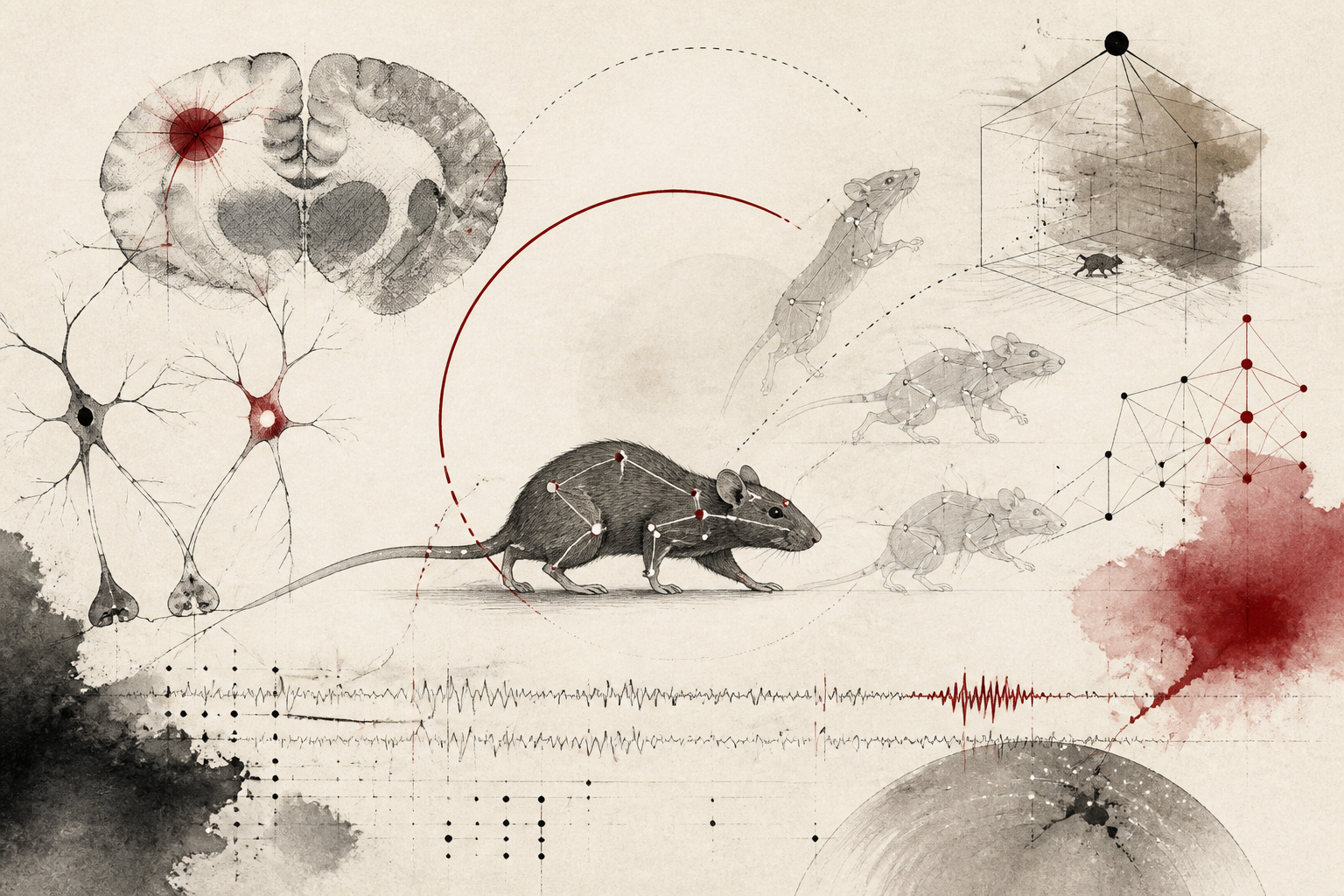
In the evolving landscape of behavioral neuroscience, the precision with which researchers can quantify physical movement has often lagged behind the sophisticated tools used to measure neural firing. While optogenetics and high-density electrophysiology allow for the monitoring of thousands of neurons simultaneously, the corresponding behavioral data has frequently remained qualitative or confined to specific appendages. However, a recent publication in Nature Neuroscience introduces a transformative framework titled WHOLISTIC, which promises to unify these disparate scales of observation. By providing a comprehensive system for tracking the entire body of a subject with high temporal and spatial resolution, this development addresses a long-standing bottleneck in the study of motor control and the neurobiology of action.
The historical challenge in this field involves the sheer complexity of animal geometry. Traditional tracking methods often rely on a few key landmarks, such as the nose, tail base, or center of mass. While these points provide a proxy for location, they obscure the subtle nuances of posture, limb coordination, and fine motor skills that characterize complex biological behavior. As researchers at the forefront of this study argue, understanding how the brain generates movement requires a complete picture of the physical output. WHOLISTIC represents an attempt to provide this missing perspective by capturing the full kinematic signature of a subject, allowing for a more granular mapping of brain-to-behavior relationships than previously possible.
The Architecture of Comprehensive Kinematic Observation
The fundamental innovation of the WHOLISTIC platform lies in its integrated approach to data acquisition and processing. Unlike previous iterations of behavioral tracking that focused on localized regions, this system is designed to maintain a consistent skeletal model across the entire subject. By utilizing advanced computer vision and machine learning algorithms, the platform can distinguish between individual digits, limb segments, and axial movements simultaneously. This shift from point-tracking to a holistic model allows the software to account for occlusions—instances where one body part blocks the view of another—which has historically been a major source of data loss in behavioral experiments.
According to the findings reported in Nature Neuroscience, the system leverages a multi-camera array to construct a three-dimensional representation of the subject. This spatial reconstruction is then processed through a neural network trained to identify anatomical constraints. For instance, the system understands the range of motion of a joint, ensuring that the digital model does not produce biologically impossible postures. This grounding in physiological reality is what separates WHOLISTIC from general-purpose motion capture tools used in the entertainment industry. It is tailored specifically for the rigorous requirements of laboratory environments, where subtle changes in gait or posture may serve as biomarkers for neurological disorders or pharmacological effects.
Deciphering the Mechanisms of Behavioral Integration
The methodological strength of WHOLISTIC is evidenced by its ability to synchronize kinematic data with high-bandwidth neural recordings. In the experiments described by the researchers, the platform was used to observe subjects as they performed varied tasks, ranging from simple locomotion to complex manipulation of objects. The resulting dataset provided a high-dimensional view of how neural circuits coordinate across different muscle groups. One of the key mechanisms identified through this approach is the concept of behavioral modularity—the idea that complex actions are built from a library of simpler, stereotyped movements.
By tracking the entire body, the researchers were able to decompose complex behaviors into these fundamental building blocks with greater accuracy than ever before. The system identified patterns of coordination that were previously invisible to less comprehensive tracking methods. For example, a change in the position of a subject's head was often preceded by subtle adjustments in the hind limbs and tail to maintain balance. These anticipatory postural adjustments are critical for a complete understanding of motor planning, yet they are frequently missed in studies that focus solely on the primary effector of an action. The WHOLISTIC framework ensures that these systemic interactions are captured and quantified.
Interpretations of the Neural-Behavioral Interface
The interpretation of these findings suggests that the brain does not control movements in isolation but rather manages a continuous flow of whole-body states. This perspective shifts the focus of neuroscience from individual motor commands to the global management of physical equilibrium and intent. Data from the WHOLISTIC platform indicates that neural activity in the motor cortex is more closely aligned with the global state of the body than with the movement of a single limb. This has profound implications for how we model neural coding; it suggests that the “language” of the motor system is one of comprehensive coordination rather than discrete commands.
Furthermore, the ability to track the entire body allows for a more nuanced interpretation of sensory-motor loops. Because the system records the exact position of every sensory surface—such as the whiskers or the paws—researchers can precisely determine the timing and nature of sensory feedback. This level of detail is essential for understanding how the brain updates its motor plans in real-time based on environmental interaction. The researchers posit that this holistic view will lead to more robust models of the cerebellum and basal ganglia, structures known for their roles in error correction and the sequencing of complex movements.
Limitations and Evolving Research Questions
Despite the significant advancements represented by WHOLISTIC, the researchers acknowledge certain limitations inherent in the current technology. The primary constraint involves the computational resources required to process high-resolution, multi-camera video data in real-time. While the system provides an exhaustive record of movement, the analysis of such high-dimensional data remains a challenge. There is a risk of “overfitting” models to the noise within the behavioral data, requiring sophisticated statistical techniques to extract meaningful biological signals from the massive volume of kinematic information.
Additionally, the system’s reliance on clear lines of sight means that highly cluttered environments or social interactions between multiple subjects still pose significant tracking hurdles. Future iterations of the platform will likely need to incorporate more robust algorithms for multi-animal tracking to study social neuroscience. Open questions also remain regarding the scalability of this model across different species. While the current study demonstrates success in standard laboratory models, adapting the skeletal constraints to animals with vastly different morphologies—such as avians or non-mammalian vertebrates—will require further refinement of the underlying machine learning models.
Implications for Future Research and Clinical Application
The broader significance of the WHOLISTIC platform extends beyond the confines of basic research. In the context of translational neuroscience, the ability to quantify behavior with such precision offers a new toolkit for assessing the efficacy of treatments for motor-related conditions, such as Parkinson’s disease, Huntington’s disease, and spinal cord injuries. Currently, clinical assessments often rely on semi-quantitative scales that are subject to observer bias. By replacing these with objective, whole-body kinematic profiles, researchers can detect the earliest signs of motor degradation or the subtle improvements brought about by new therapeutic interventions.
At Zeit Psychology Online University, the arrival of such technology underscores a larger trend toward the digitization of behavior. As we move toward a future where neural and physical data are integrated into a single, seamless stream of information, the distinction between “mind” and “body” in experimental protocols continues to blur. The WHOLISTIC system, as detailed in Nature Neuroscience, serves as a bridge, allowing scientists to see the full physical manifestation of neural processing. It transforms the subject from a collection of data points into a coherent, moving organism, providing the necessary context for the next generation of breakthroughs in brain science.
Quick answers
- What is the primary advantage of the WHOLISTIC tracking system?
- It provides a comprehensive, three-dimensional skeletal model of the entire body, allowing researchers to track subtle movements and limb coordination that traditional point-tracking methods miss.
- How does this technology impact the study of neural activity?
- By synchronizing precise physical movements with neural recordings, it allows scientists to map how specific brain circuits coordinate complex, whole-body actions rather than isolated limb movements.
- What are the limitations of the current WHOLISTIC platform?
- The system requires significant computational power for data processing and faces challenges in cluttered environments or during complex social interactions between multiple animals.
Rewritten by Zeit editorial AI. Based on original reporting at Nature Neuroscience.