Cannabinol and Dependency: Assessing the Tolerance Risks of CBN in Sleep Aids
Recent neuropharmacological research indicates that the popular sleep-aid cannabinoid CBN may induce significant tolerance and withdrawal symptoms previously underestimated by consumers.
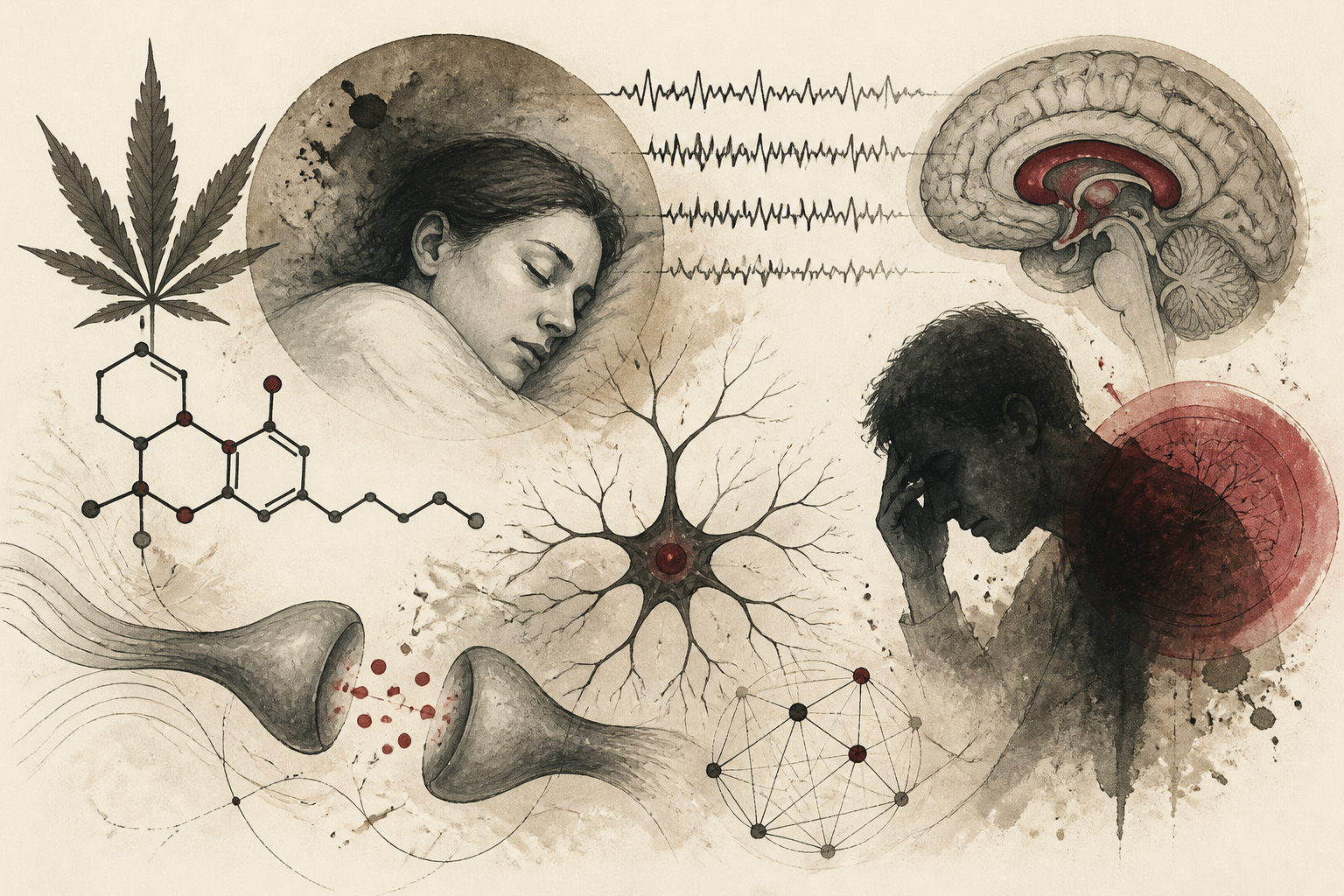
The burgeoning market for over-the-counter sleep aids has recently been disrupted by the proliferation of cannabis-derived compounds, most notably cannabinol (CBN). Long marketed as a non-psychoactive sedative alternative to its more famous cousin, tetrahydrocannabinol (THC), CBN has enjoyed a reputation for safety and low dependency risk. However, a new study published in the journal ScienceDaily suggests that this perception may be scientifically premature. Research conducted on animal models indicates that repeated exposure to CBN can lead to a physiological state of tolerance and pronounced withdrawal symptoms, challenging the prevailing narrative that minor cannabinoids are inherently less habit-forming than primary psychoactive agents. As regulatory bodies struggle to keep pace with the rapidly evolving retail landscape, these findings provide a necessary academic caution regarding the long-term consumption of these ubiquitous 'sleep gummies.'
The Neurochemical Landscape of Minor Cannabinoids
To understand the implications of this new research, one must first distinguish between the various constituents of the Cannabis sativa plant. While THC is known for its intoxicating effects and CBD (cannabidiol) for its anti-inflammatory properties, CBN is typically formed through the degradation of THC as it ages or is exposed to light and oxygen. Historically, this meant CBN was found only in trace amounts in older cannabis products. However, modern chemical isolation and synthesis techniques have allowed manufacturers to concentrate CBN into high-dosage formats, specifically targeting the insomnia-prone demographic. This transition from a trace byproduct to a primary active ingredient has happened with relatively little clinical oversight, leaving a gap between commercial availability and scientific validation of safety profiles.
Research has historically focused on the CB1 and CB2 receptors within the human endocannabinoid system. THC’s high affinity for the CB1 receptor in the brain accounts for its psychoactive and addictive potential. Early assessments of CBN suggested a much lower affinity for these receptors, leading to the assumption that it would not produce the same compensatory neurobiological changes that lead to addiction. The new data suggests this assumption was flawed, as the behavioral responses in mice indicates that the brain’s homeostatic mechanisms react to chronic CBN exposure in a manner strikingly similar to their reaction to THC.
Experimental Evidence of Tolerance and Withdrawal
In the study detailed by ScienceDaily, researchers utilized a controlled experimental design to observe the effects of chronic CBN administration. By using mouse models—a standard in early-stage pharmacological research due to their similar endocannabinoid pathways to humans—the team was able to monitor how the subjects' sensitivity to the compound changed over time. The findings were twofold. First, the researchers observed the rapid development of tolerance, a phenomenon where the same dosage of a substance produces a progressively diminishing effect, necessitating higher amounts to achieve the initial physiological response. In a clinical sleep context, this suggests that users who start with one gummy may soon find themselves requiring two or three to achieve the same sedative outcome, a hallmark of dependency cycles.
Secondly, the researchers monitored for withdrawal symptoms upon the cessation of CBN administration. When the compound was removed from the subjects' systems, they exhibited physiological markers of distress and behavioral irritability. This indicates that the neural circuits had adapted to the presence of CBN, and the removal of the substance created a neurochemical imbalance. This 'hidden dark side' of the ingredient suggests that while it may not produce the immediate 'high' associated with recreational cannabis, it engages the same biological machinery that governs habit formation and physical reliance. The researchers emphasize that these markers of dependency are statistically significant and warrant a immediate re-evaluation of how these products are categorized by health authorities.
Mechanisms of Action and Physiological Interpretation
The biological mechanism behind this dependency appears to be rooted in the desensitization of cannabinoid receptors. When the brain is consistently flooded with an external cannabinoid like CBN, it may respond by 'downregulating' its natural receptor sites to maintain balance. This structural change means that once the external supplement is removed, the body’s internal endocannabinoid system is no longer functioning at its baseline capacity, leading to the observed withdrawal symptoms. The study posits that even though CBN is less potent than THC, its ability to persistently occupy these receptors creates a long-term shift in neurochemistry that was previously overlooked due to the compound’s reputation as a 'minor' cannabinoid.
Interpreting these results for human populations requires a nuanced understanding of dosage and frequency. In the retail market, CBN is often sold in combination with melatonin or CBD, which may mask or complicate the emergence of withdrawal symptoms. However, the core finding remains that CBN is not a neutral agent. Its interaction with the mammalian brain is profound enough to trigger the same defensive adaptations seen with more regulated substances. For the academic community, this necessitates a shift in focus from the acute effects of cannabis (the immediate high) to the chronic effects of isolated cannabinoids on the brain’s long-term stability.
Limitations and the Path for Future Inquiry
While the findings are compelling, the research community acknowledges several critical limitations. Primarily, the study was conducted on mice, and while murine models are foundational to pharmacology, they do not perfectly replicate human social and psychological complexities surrounding sleep and addiction. Humans may use sleep gummies as part of a multifaceted routine, and the psychological expectation of sleep may influence the perceived efficacy and withdrawal of the drug. Furthermore, the long-term effects of CBN on human cognitive health, liver function, and cardiovascular stability remain largely unmapped. We do not yet know if the tolerance developed over weeks of use persists for months, or if the withdrawal symptoms in humans would be severe enough to disrupt daily functioning.
Another open question involves the 'entourage effect'—the theory that cannabinoids work differently when taken together rather than in isolation. Many commercial products use isolated CBN, which might be more habit-forming than if it were consumed in its natural, whole-plant context. Future longitudinal studies in humans are required to determine the exact threshold at which CBN use transitions from therapeutic to problematic. Researchers also call for more transparency in labeling, as many consumers may be unaware that their sleep aid contains a compound with the potential for physical dependency.
Implications for Public Health and Regulation
The broader significance of this research lies in its potential to influence public health policy. Currently, in many jurisdictions, CBN falls into a regulatory gray area, often sold with fewer restrictions than THC-containing products. This accessibility, combined with a marketing narrative of 'natural wellness,' has led to widespread adoption among seniors and professionals who would otherwise avoid cannabis. If CBN indeed carries risks similar to THC in terms of habit formation, the current hands-off approach to regulation may be exposing a large segment of the population to unintended substance use disorders.
As we move forward, the academic voice must advocate for a 'precautionary principle' regarding minor cannabinoids. Until human clinical trials can definitively rule out or quantify the risk of addiction, these substances should be approached with the same clinical scrutiny as pharmaceutical sleep aids. The 'hidden dark side' of CBN serves as a potent reminder that 'natural' is not synonymous with 'harmless,' and that the neurobiology of sleep is far too delicate to be altered by unregulated chemical interventions without comprehensive understanding.
Quick answers
- Is CBN in sleep gummies addictive?
- Recent animal studies indicate that repeated exposure to CBN can lead to tolerance and withdrawal symptoms, suggesting a potential for physical dependency similar to THC.
- Does CBN have the same effects as THC?
- While CBN is less psychoactive than THC and does not produce a typical 'high,' it interacts with the same brain receptors and may share similar risks regarding habit formation.
- Why do people use CBN for sleep?
- CBN is marketed as a sedative cannabinoid that helps with insomnia, but current research warns that its long-term safety and efficacy in humans are not yet fully understood.
Rewritten by Zeit editorial AI. Based on original reporting at ScienceDaily — Mind & Brain.