Biochemical Pathways of Psychedelic Efficacy: The Role of 5-HT2AR–β-arrestin Signaling
Recent research in Nature Neuroscience identifies a specific signaling pathway responsible for the long-lasting antidepressant effects of psychedelic compounds beyond acute experiences.
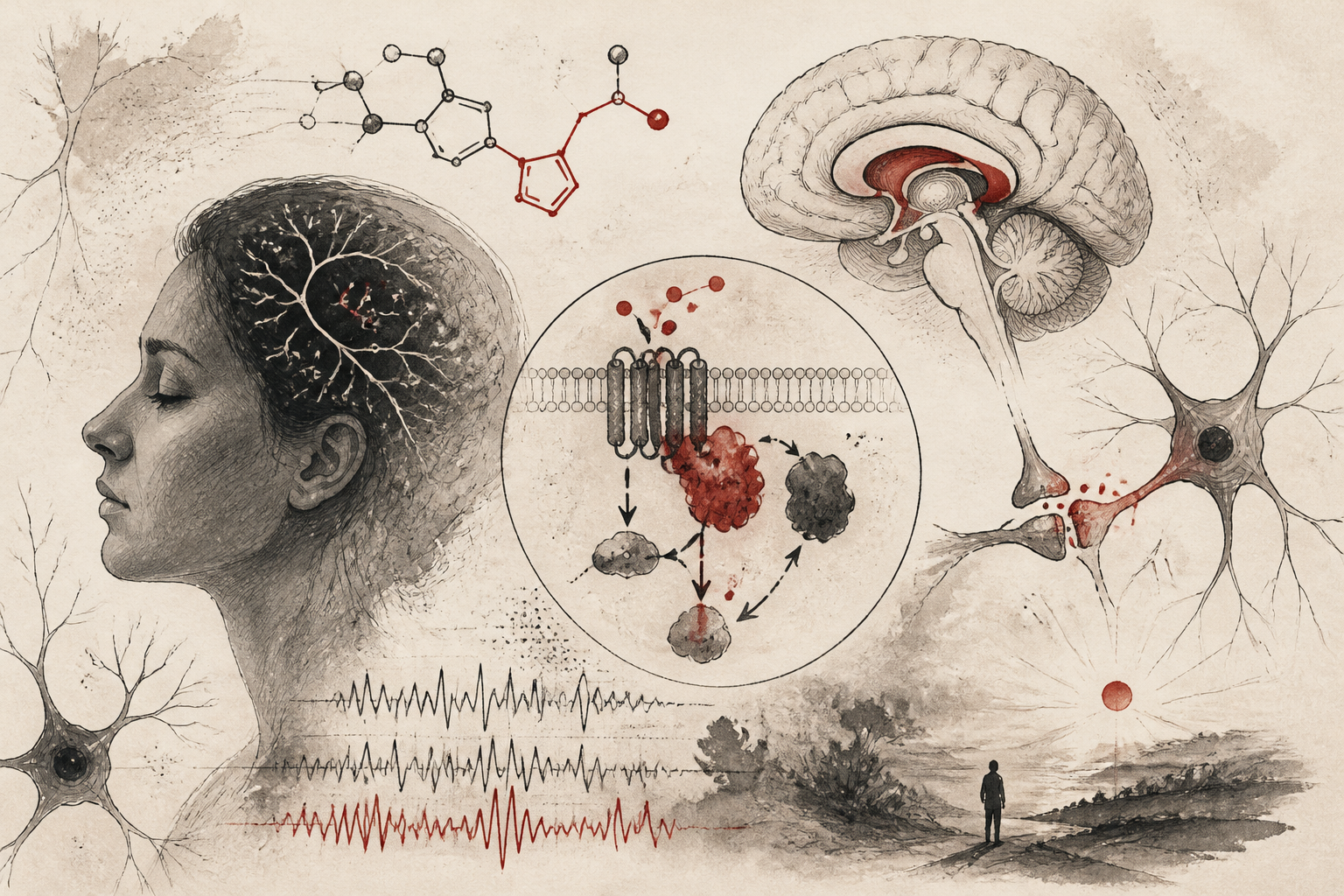
The field of neuropharmacology is currently undergoing a paradigm shift as researchers revisit the therapeutic potential of psychedelic substances, such as psilocybin and LSD, for the treatment of refractory depression. While these substances have long been associated with profound, acute alterations in consciousness, the biological mechanisms that sustain their antidepressant effects weeks or months after the substance has cleared the system have remained elusive. A seminal study recently published in Nature Neuroscience, titled "Sustained antidepressant-like effects of psychedelics through 5-HT2AR–β-arrestin signaling," offers a detailed molecular roadmap for this phenomenon. The findings suggest that the clinical benefits of psychedelics may be decoupled from their hallucinogenic properties, centering instead on a specific intracellular signaling pathway involving the recruitment of β-arrestin proteins. This discovery not only advances our understanding of serotonin receptor biology but also paves the way for a new generation of psychiatric medications that could offer the benefits of psychedelics without the necessity of a supervised hallucinogenic trip.
The Serotonergic Mechanism and the Beta-Arrestin Paradigm
Traditional understanding of psychedelic action has focused almost exclusively on the serotonin 2A receptor (5-HT2AR). It is well-established that the binding of psychedelic molecules to these receptors in the prefrontal cortex triggers the intense visual and auditory distortions characteristic of a "trip." However, the 5-HT2AR is a G protein-coupled receptor (GPCR), a complex molecular switch that can initiate multiple downstream signaling pathways. When a ligand binds to a GPCR, it can activate G proteins or recruit scaffolding proteins known as β-arrestins. Until recently, it was unclear which of these pathways was responsible for the rapid and sustained structural changes in the brain—known as neuroplasticity—that correlate with improved mood in patients with depression.
The research team at the center of the Nature Neuroscience study utilized a variety of sophisticated molecular probes and genetically modified models to isolate these pathways. They observed that while G protein activation is largely responsible for the acute behavioral changes associated with psychedelics, the recruitment of β-arrestin is the critical driver of long-term therapeutic outcomes. By shifting the focus from the receptor itself to the specific signaling bias induced by the drug, the researchers have identified a biochemical "fork in the road." This suggests that the brain's ability to rewire itself in response to these compounds is a separate biological event from the sensory disruptions experienced during the drug's active phase.
Experimental Methodologies and Molecular Findings
To test their hypothesis, the researchers employed a series of behavioral assays in murine models designed to simulate antidepressant responses, such as the forced swim test and the sucrose preference test. They compared the effects of classic psychedelics with newly synthesized "biased ligands"—compounds engineered to activate the β-arrestin pathway without triggering the G protein pathway associated with hallucinations. The results were striking: mice treated with β-arrestin-biased compounds exhibited significant improvements in stress resilience and hedonic behavior that persisted long after the initial administration. Crucially, these mice did not display the "head-twitch response," a standard laboratory proxy for hallucinogenic activity in humans.
Furthermore, the study utilized advanced neuroimaging and histological techniques to track the growth of dendritic spines—the small protrusions on neurons that receive signals from other nerve cells. Depression is often characterized by the atrophy of these structures in regions like the prefrontal cortex. The researchers found that the β-arrestin pathway directly stimulates the production of brain-derived neurotrophic factor (BDNF), which in turn promotes synaptogenesis. This molecular chain reaction provides a physical basis for the "reset" that many patients report after psychedelic-assisted therapy. The persistence of these structural changes explains why a single dose of a psychedelic can result in months of symptomatic relief, a feat that traditional daily antidepressants like SSRIs rarely achieve.
Interpretation of the Signaling Bias
The implications of this signaling bias are profound for the future of clinical psychiatry. If the antidepressant effects are indeed mediated by β-arrestin recruitment rather than the hallucinogenic G protein activation, the medical community may be able to develop "non-hallucinogenic psychedelics." Such drugs would theoretically offer the same rapid-acting and durable benefits as psilocybin but could be administered in a standard outpatient setting, similar to traditional medicine. This would remove the significant logistical and financial barriers associated with the current model of psychedelic-assisted therapy, which requires hours of supervision by trained clinicians during the hallucinogenic experience.
However, this interpretation also challenges some existing theories in the psychedelic community. Many practitioners believe that the subjective, mystical experience is a necessary component of the healing process, providing patients with new psychological insights and emotional breakthroughs. The Nature Neuroscience findings suggest a more reductionist, biological view: that the primary benefit is a chemical repair of the brain's circuitry. While the psychological experience may be a potent catalyst for change, this research indicates that the underlying molecular machinery of β-arrestin signaling is sufficient to induce the structural neuroplasticity required for recovery from depression.
Limitations and Future Academic Inquiry
While the study represents a significant leap forward, it is not without its limitations. The research was primarily conducted in animal models, and while the 5-HT2AR system is highly conserved across species, the human brain's response to these compounds is exponentially more complex. The "head-twitch response" is a useful proxy, but it cannot fully capture the nuances of human consciousness or the depth of the psychedelic experience. Moreover, the study focused on a specific set of biomarkers and behavioral indicators; it remains to be seen how these molecular pathways interact with the complex social and environmental factors that contribute to human depression.
Open questions remain regarding the safety and long-term effects of chronic β-arrestin activation. In other systems, such as the opioid receptor system, β-arrestin recruitment is associated with the development of tolerance and side effects. Researchers will need to determine whether a similar risk exists for these new serotonergic ligands. Additionally, the study calls for further investigation into the genetic variability of the 5-HT2AR gene among humans. It is possible that certain individuals possess receptor variants that are more or less prone to β-arrestin recruitment, which could explain why some patients respond dramatically to psychedelic therapy while others see little to no benefit.
Why This Research Matters
This study is a landmark because it provides a clear target for drug development in a field that has long relied on trial and error. By identifying 5-HT2AR–β-arrestin signaling as the key to sustained antidepressant effects, Nature Neuroscience has provided a blueprint for the next generation of mental health treatments. For the millions of individuals suffering from treatment-resistant depression, these findings offer hope for a future where the brain's capacity for renewal can be harnessed safely and effectively. It shifts the narrative of psychedelic medicine from the fringes of counterculture into the rigorous center of molecular biology, ensuring that these powerful compounds are understood not just for the visions they induce, but for the fundamental healing they may facilitate at the cellular level.
Quick answers
- What is the primary discovery of the Nature Neuroscience study on psychedelics?
- The study identified that the sustained antidepressant effects of psychedelics are driven by the 5-HT2AR–β-arrestin signaling pathway, rather than the pathway responsible for hallucinations.
- Can the antidepressant effects of psychedelics occur without hallucinations?
- According to the research, using 'biased ligands' that only activate the β-arrestin pathway can produce antidepressant-like effects in models without triggering hallucinogenic responses.
- Why is β-arrestin recruitment important for the brain?
- It promotes the production of BDNF and increases synaptogenesis, which helps repair and regrow neural connections that have atrophied due to depression.
Rewritten by Zeit editorial AI. Based on original reporting at Nature Neuroscience.