Balancing Data Sovereignty and Global Collaboration in Modern Neuroscience
Researchers examine the ethical and technical friction between open science mandates and the rising demand for indigenous and national data sovereignty in neuroimaging.
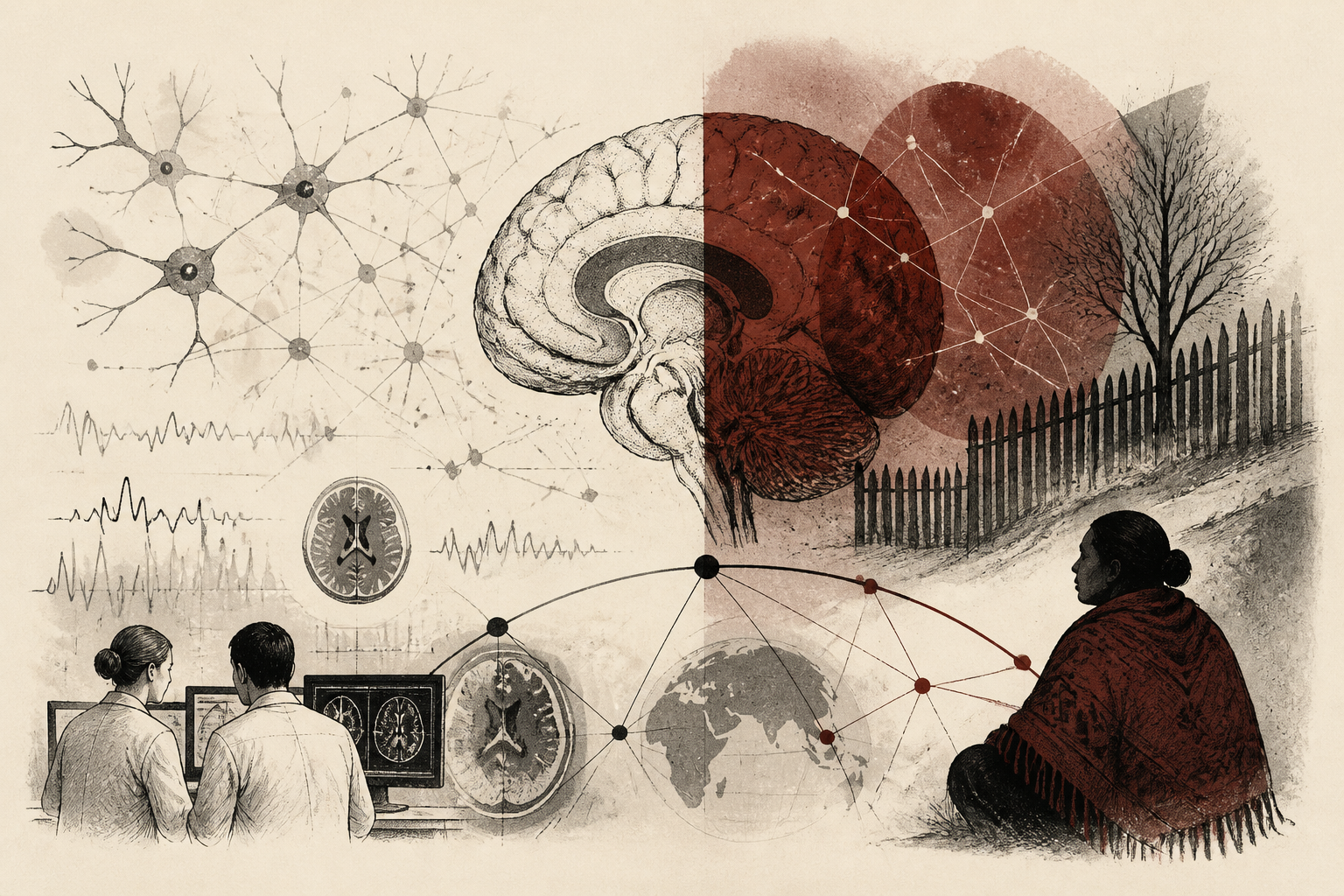
The rapid expansion of neurobiological research has historically relied on the free flow of large-scale datasets across international borders. However, as the field moves toward a more inclusive global framework, a fundamental tension has emerged between the principles of open science and the necessity of data sovereignty. In a recent analysis published in Nature Neuroscience, researchers address the complex landscape of reconciling high-throughput global collaboration with the rights of individuals, communities, and nations to maintain control over their biological information. This paradigm shift represents one of the most significant ethical and procedural challenges for the current generation of neuroscientists, requiring a sophisticated reevaluation of how brain data is collected, stored, and shared.
The Evolution of Open Science and Its Discontents
For decades, the standard for excellence in neuroscience has been the democratization of data. Large consortia and open-access repositories were established to solve the problem of small sample sizes and the lack of statistical power in neuroimaging studies. By pooling resources, researchers could identify subtle neural patterns that would be invisible in a single-lab study. While this movement has undoubtedly accelerated discovery, it often operated under a Western-centric framework that prioritized universal access over the nuanced rights of the data contributors. The Nature Neuroscience report highlights that the assumption of 'data as a global public good' frequently ignores the historical context of exploitation, particularly regarding marginalized populations and Indigenous groups.
Data sovereignty, in contrast, asserts that data should be subject to the laws and governance of the people from whom it was collected. This is not merely a legal hurdle but a fundamental expression of self-determination. For many communities, biological data, including genomic information and structural brain scans, carries profound cultural and spiritual significance. The imposition of open-data mandates by funding bodies in the Global North can, therefore, create a new form of digital colonialism, where data is extracted from the Global South or Indigenous territories, analyzed elsewhere, and published without local benefit or oversight. Reconciling these two forces requires moving beyond a binary choice between total openness and total isolation.
Methodological Approaches to Distributed Governance
The findings presented in the recent analysis suggest that the solution lies in a shift from centralized data models to distributed architectures. The researchers explore the utility of federated learning and 'data visiting' as viable alternatives to 'data sharing.' In a traditional model, researchers download raw data from a central server to their own local machines. Under a federated framework, the data remains at its site of origin—governed by local ethics boards and national regulations—while the analysis algorithms travel to the data. Only the resulting statistical summaries, which do not contain raw identifiable information, are sent back to the central hub.
This mechanism effectively bypasses the legal complexities of international data transfer agreements while maintaining the statistical power of large-scale collaboration. The report details how this technical workaround respects data sovereignty by ensuring that the primary custodians of the data never lose physical or legal control. Furthermore, the adoption of the CARE Principles—Collective Benefit, Authority to Control, Responsibility, and Ethics—alongside the established FAIR Principles (Findable, Accessible, Interoperable, and Reusable) provides a comprehensive ethical roadmap. While FAIR focuses on the technical utility of data, CARE ensures that the human elements of the data lifecycle are prioritized, particularly for groups that have been historically excluded from the decision-making processes of scientific research.
Interpretations of the Sovereignty-Collaboration Nexus
The interpretation of these findings suggests that neuroscience must move toward a more 'polycentric' governance model. This means moving away from a single set of rules enforced by international journals and toward a tiered system that respects local jurisdictional requirements. The authors argue that sovereignty does not necessarily mean the end of collaboration; rather, it demands a more rigorous form of partnership. When data is treated as a shared resource under the control of its originators, the resulting science is often more robust. Local researchers, who understand the cultural and environmental context of the participants, can provide insights that outsiders might miss, thereby reducing bias in the interpretation of neuroimaging results.
Moreover, the study emphasizes that the technological infrastructure for this shift already exists but is currently underutilized due to a lack of standardization. The transition to a sovereignty-respecting model requires significant investment in the digital capacity of laboratories worldwide. If the global neuroscience community wants access to diverse datasets, it must be willing to fund the infrastructure that allows those datasets to be managed locally. This interpretation challenges the prevailing academic incentive structure, which often rewards individual publication speed over long-term community trust-building.
Limitations and Open Questions in Data Policy
Despite the promise of federated learning and decentralized governance, several limitations remain. The researchers acknowledge that maintaining distributed datasets is significantly more expensive than centralized storage. It requires continuous local technical support and standardized metadata across all participating sites. There is also the unresolved question of 're-identification' risks. Even if raw data does not leave its country of origin, some critics argue that highly specific statistical summaries could still potentially be used to identify small, unique populations.
Furthermore, the definition of sovereignty remains fluid. While national sovereignty is defined by borders, Indigenous sovereignty often transcends them, leading to complex legal overlaps. How should a researcher proceed when a national government mandates data sharing, but the specific community from which the data was sourced objects? The Nature Neuroscience article does not provide a definitive answer to these conflicts but highlights them as critical areas for future legal and ethical scholarship. There is also a risk that excessive fragmentation of data could lead to a 'silo effect,' where the technical barriers to entry become so high that only the most well-funded labs can participate in global studies, potentially exacerbating the very inequities the sovereignty movement seeks to address.
Implications for the Future of Neurobiological Inquiry
The importance of this discourse cannot be overstated for the future of Zeit Psychology Online University and the broader academic community. As neuroscience increasingly informs public policy, education, and medicine, the integrity of the data underlying these decisions is paramount. A global neuroscience that ignores data sovereignty risks losing the trust of the public and producing results that are only applicable to a narrow subset of humanity. By integrating sovereignty into the core of the scientific method, the field can move toward a truly global enterprise that is both ethically sound and scientifically superior.
Ultimately, the reconciliation of collaboration and sovereignty is a call for a more mature form of open science. It is an acknowledgment that the 'openness' of the past was often one-sided. The path forward involves a commitment to co-designing research projects with participants from the outset, ensuring that the benefits of neuroscientific discovery are shared as widely as the data itself. As international regulations like the GDPR in Europe and similar acts in other regions continue to evolve, the ability to navigate these sovereignty requirements will become a core competency for any neuroscientist operating on the world stage. The goal is a resilient, inclusive framework where the privacy of the individual and the progress of the collective are no longer in competition.
Quick answers
- What is the difference between data sharing and data visiting in neuroscience?
- Data sharing involves transferring raw data to a central repository or another researcher, whereas data visiting allows researchers to run analysis algorithms on data that remains at its original, locally-governed site.
- How do the CARE principles supplement the FAIR principles?
- While FAIR principles focus on the technical accessibility and reuse of data, the CARE principles (Collective Benefit, Authority to Control, Responsibility, and Ethics) address the human rights, interests, and governance of the people the data represents.
- Why is data sovereignty a concern for Indigenous communities in brain research?
- It prevents 'digital colonialism' by ensuring communities retain control over their biological and cultural information, preventing exploitation and ensuring research provides local benefits.
Rewritten by Zeit editorial AI. Based on original reporting at Nature Neuroscience.