Astrocytic Regulation of Mitochondrial Transport in C9ORF72 ALS Models
Recent research reveals that astrocytes drive critical mitochondrial transport deficits in motor neurons, offering new therapeutic targets for C9ORF72-linked Amyotrophic Lateral Sclerosis.
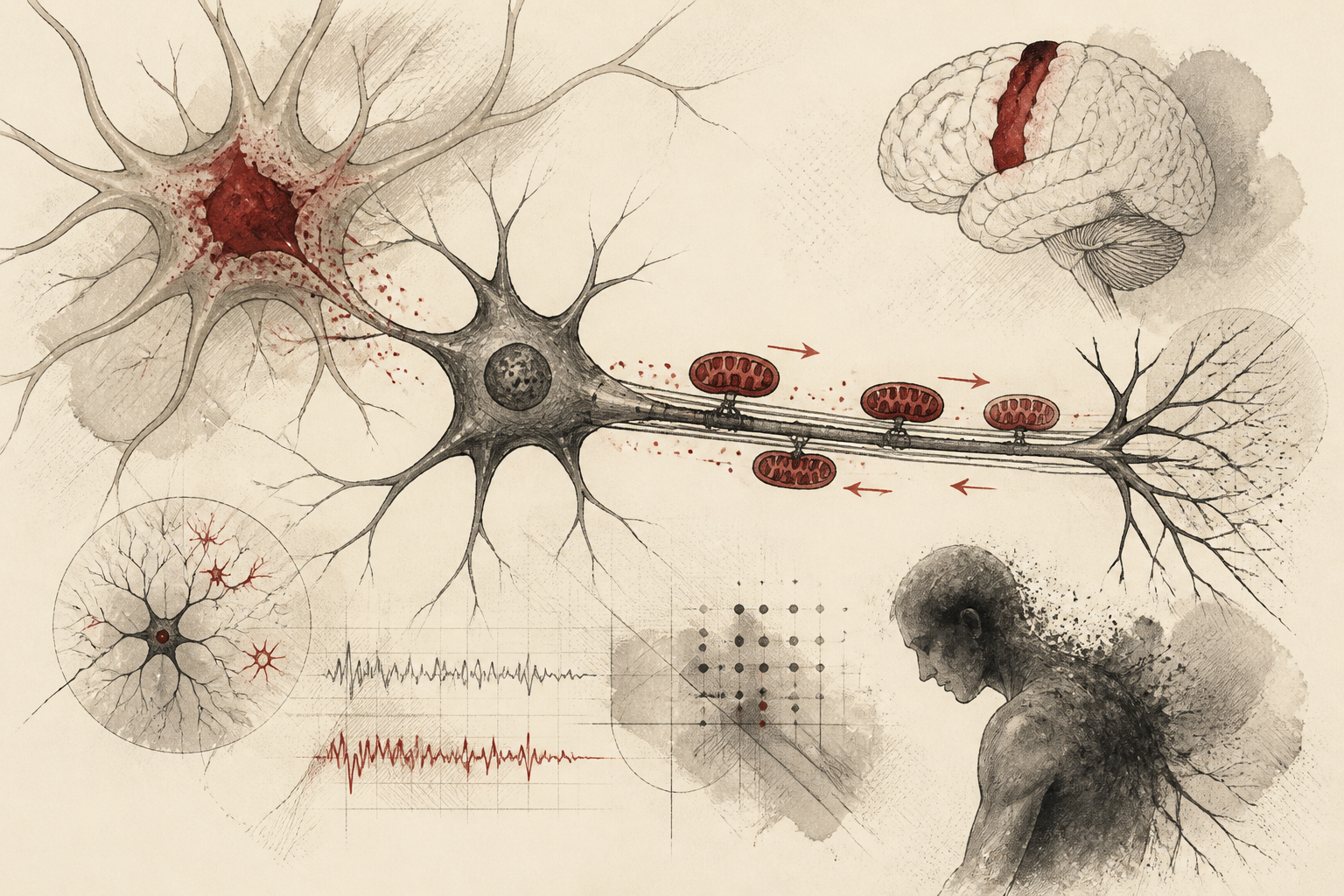
The pathophysiology of Amyotrophic Lateral Sclerosis (ALS) has long been framed through a neuron-centric lens, focusing on the progressive degeneration of motor neurons that leads to systemic muscle atrophy and eventual respiratory failure. However, a growing body of evidence suggests that the supporting cells of the central nervous system, particularly astrocytes, play a far more active role in the disease progression than previously understood. According to a significant study published in Nature Neuroscience, researchers have identified that in the most common genetic form of ALS—the C9ORF72 repeat expansion—astrocytes are not merely bystanders but are primary drivers of axonal mitochondrial transport deficits. This discovery shifts the focus toward the metabolic and structural crosstalk between glial cells and neurons, providing a more comprehensive view of how neurodegeneration initiates at the cellular level.
Historically, the C9ORF72 mutation has been associated with various cellular malfunctions, including RNA toxicity and the formation of dipeptide repeat proteins. Yet, the specific mechanism by which these genetic anomalies translate into the physical failure of motor neuron axons remained elusive. The research published in Nature Neuroscience clarifies this by demonstrating that the dysfunction begins with a breakdown in the movement of mitochondria—the organelles responsible for cellular energy—along the long, thin axons of motor neurons. When these energy powerhouses cannot reach the distal ends of the neuron, the cell loses its ability to maintain synaptic integrity, leading to the characteristic die-back phenomenon observed in ALS patients.
Cellular Mechanisms and Mitochondrial Dynamics
The findings detailed in the study highlight a critical interplay between astrocytic health and neuronal function. By utilizing human-induced pluripotent stem cell (iPSC) models, the research team was able to isolate the effects of C9ORF72-mutant astrocytes on healthy motor neurons and vice versa. The most striking observation was that healthy motor neurons, when co-cultured with astrocytes carrying the C9ORF72 mutation, began to exhibit significant impairments in mitochondrial transport. Specifically, the speed and frequency of mitochondrial movement along the axon were markedly reduced. This suggests that astrocytes secrete factors or fail to provide essential metabolic support, which in turn destabilizes the transport machinery within the motor neuron.
Further investigation into the molecular mechanism revealed that the impairment is linked to increased oxidative stress and the disruption of the microtubule network that serves as the 'highway' for mitochondrial transport. In C9ORF72 models, the astrocytes appear to induce a state of bioenergetic failure in neighboring neurons. The researchers observed that this was not a localized event but a systemic failure of the axonal transport system. By analyzing the proteomic profile of these astrocytes, the study identified specific signaling pathways that are upregulated in the diseased state, contributing to a toxic environment that prevents mitochondria from reaching the areas of highest energy demand at the neuromuscular junction.
Experimental Methods and Observational Rigor
The methodology employed in this study was particularly rigorous, involving a combination of live-cell imaging and advanced microfluidic platforms. These platforms allowed the researchers to physically separate the cell bodies of the motor neurons from their distal axons, providing a clear view of how mitochondria travel over long distances. By introducing C9ORF72-mutant astrocytes into these controlled environments, the team could observe the real-time degradation of transport dynamics. The use of iPSC-derived cells ensured that the findings were relevant to human physiology, overcoming many of the limitations associated with traditional rodent models of ALS, which often fail to replicate the exact genetic context of human C9ORF72 expansions.
In addition to imaging, the researchers utilized pharmacological interventions to see if the transport deficits could be reversed. They found that by targeting specific astrocytic pathways or by providing external mitochondrial support, they could partially restore the motility of the organelles within the axons. This aspect of the study is crucial as it moves beyond descriptive science into the realm of potential therapeutic application. It confirms that the neuronal damage in ALS is, at least in part, a non-cell-autonomous process, meaning it is influenced by the surrounding environment rather than being solely a result of internal neuronal programming.
Interpretations and Clinical Implications
The interpretation of these results provides a compelling argument for 'glia-centric' therapeutic strategies. If astrocytes are indeed responsible for the early-stage transport failures in ALS, then treatments that solely target neurons may continue to see limited success in clinical trials. Instead, the data suggests that protecting astrocytic function or neutralizing the toxic factors they release could stabilize motor neurons and delay the onset of symptoms. This research reinforces the 'dying-back' hypothesis of ALS, where the disease starts at the periphery and moves toward the cell body, by showing that mitochondrial starvation at the axon terminal is a primary event driven by glial dysfunction.
Furthermore, the study sheds light on the broader implications of C9ORF72 mutations across different types of neurodegenerative diseases, including Frontotemporal Dementia (FTD). Since the C9ORF72 expansion is a common genetic thread between ALS and FTD, the mechanism of astrocytic-driven mitochondrial failure might be a shared pathway in both conditions. This opens the door for a unified approach to treating these disorders, focusing on the metabolic stabilization of the axonal environment through glial intervention.
Limitations and Future Directions
Despite the breakthrough nature of these findings, the researchers acknowledge several limitations. While iPSC models are highly representative of human genetics, they often represent a developmental or 'young' state of the cell, which may not fully capture the aging process that is so critical in the development of ALS in late adulthood. Additionally, the complex interactions of the central nervous system involve more than just neurons and astrocytes; microglia and oligodendrocytes also play significant roles in maintaining the neural environment. Future research will need to incorporate these other cell types to build a truly holistic model of the ALS niche.
Open questions also remain regarding the exact identity of the astrocytic secretions that trigger the transport deficit. While the study points toward certain signaling proteins and oxidative stress markers, a definitive 'toxin' or 'missing nutrient' has yet to be uniquely isolated for clinical targeting. Determining whether these astrocytic changes occur before or after the first signs of neuronal stress in a living patient remains a challenge that requires more advanced longitudinal neuroimaging and biomarker studies.
The Path Forward in ALS Research
The significance of this work published in Nature Neuroscience cannot be overstated for the academic and medical communities. It fundamentally redefines the role of astrocytes from passive support structures to active regulators of neuronal health and disease. By pinpointing mitochondrial transport as a specific point of failure regulated by glia, the research provides a tangible target for drug development. For students and researchers at Zeit Psychology Online University, this serves as a reminder of the intricate interdependence of cell types within the brain. The fight against ALS is increasingly becoming a battle to preserve the cellular ecosystem, ensuring that the dialogue between neurons and their supporting glia remains functional long into the human lifespan.
Quick answers
- How do astrocytes contribute to ALS progression in C9ORF72 patients?
- Astrocytes with the C9ORF72 mutation impair the transport of mitochondria along motor neuron axons, leading to energy failure and nerve degeneration.
- What is the significance of mitochondrial transport in motor neurons?
- Mitochondria must travel long distances to the ends of axons to provide energy for muscle communication; failure in this transport causes neurons to 'die back' from the muscle.
- Can the mitochondrial transport deficits in ALS be reversed?
- Research indicates that targeting specific astrocytic pathways or reducing oxidative stress can partially restore mitochondrial movement in experimental models.
Rewritten by Zeit editorial AI. Based on original reporting at Nature Neuroscience.