APOE4 Risk Gene Linked to Early Neuronal Atrophy and Circuit Hyperactivity
Researchers identify the Nell2 protein as a key driver of early cellular changes in the brain long before clinical Alzheimer's symptoms manifest.
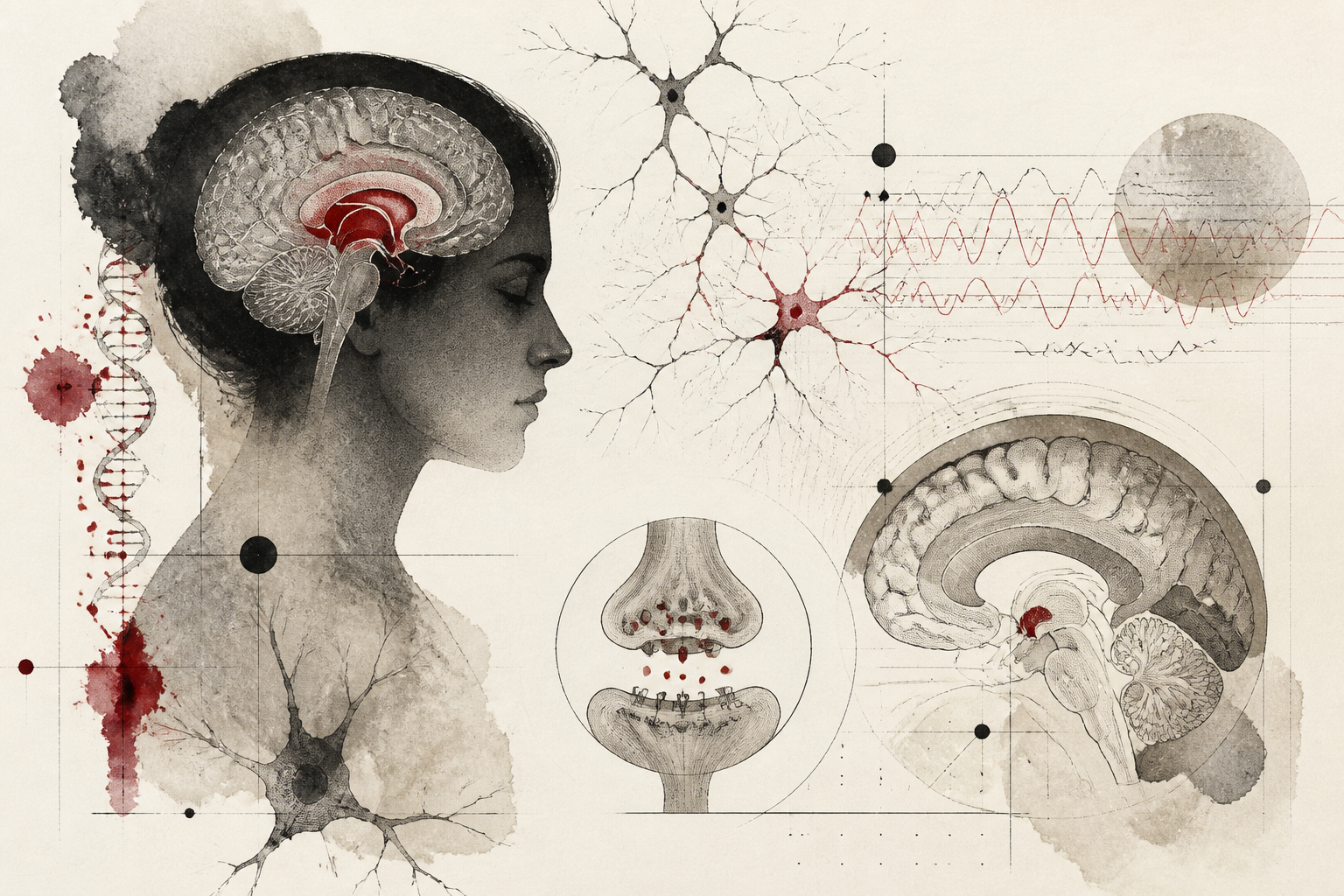
The trajectory of Alzheimer’s disease often begins decades before a patient experiences their first moment of clinical forgetfulness. In the complex search for the biological catalysts of this decline, the APOE4 gene variant has long stood as the most significant genetic risk factor for late-onset Alzheimer’s disease. However, the precise mechanism by which this genetic blueprint translates into structural brain decay has remained partially obscured. According to recent research published via ScienceDaily, scientists have identified a potential molecular pathway that explains how APOE4 disrupts the brain’s architecture years before the emergence of cognitive symptoms. The study highlights the role of a specific protein, Nell2, which appears to trigger a cascade of cellular shrinkage and neurological instability, offering a new focal point for early intervention strategies.
Cellular Morphogenesis and Genetic Predisposition
In the landscape of neurodegenerative research, understanding the transition from health to pathology is essential for the development of preventative medicine. For years, the scientific community has observed that individuals carrying the APOE4 allele exhibit higher rates of beta-amyloid accumulation and tau protein tangles. Yet, recent findings suggest that the damage may start even earlier at the cellular level, affecting the physical dimensions of the neurons themselves. The researchers discovered that in the presence of the APOE4 gene, the brain begins to produce an excess of a protein known as Nell2. This protein is typically involved in neural development and signaling, but its overabundance in the APOE4 context appears to correlate with a physical reduction in the size of neurons.
This cellular shrinkage is not a dormant state; rather, it coincides with a paradoxical increase in activity within memory circuits. While one might assume that smaller or damaged neurons would be less active, the study observed that these diminished cells contributed to a state of unusual hyperactivity. This phenomenon, often referred to as "noisy" neural signaling, suggests that the brain is struggling to maintain functional efficiency, firing more frequently to compensate for structural deficiencies. The research indicates that this early-stage hyperactivity is not a benign side effect but is a reliable predictor of more severe memory impairment later in life. By identifying this shift in the mouse models, investigators have mapped a timeline of degradation that precedes the traditional hallmarks of Alzheimer’s disease.
The Mechanism of Nell2 and Circuit Instability
The methodological approach of the study involved observing the biological progression of mice engineered to express the human APOE4 gene. By isolating the variables associated with this genetic risk, the research team was able to pinpoint the elevation of Nell2 as a critical bridge between the gene and the observed physiological changes. Nell2 acts as a signaling molecule, but when its levels are dysregulated, it appears to disrupt the homeostatic balance of the hippocampal circuits—the areas of the brain most vital for forming and retrieving memories. The physical shrinking of the neurons observed in these models suggests that the protein may be interfering with the structural integrity of the cytoskeleton or the maintenance of the dendritic arbor, though the exact metabolic pathway remains an area for further investigation.
Crucially, the study emphasized that the hyperactivity observed in the adult mice was not merely a correlative finding. Using advanced neuroimaging and electrophysiological recordings, the researchers demonstrated that the circuits were firing in an erratic, uncoordinated fashion. This hyper-excitability is believed to be a precursor to the eventual exhaustion and death of the neurons. The researchers’ ability to link the overexpression of Nell2 directly to this circuit-wide instability provides a clearer biological target than previously understood. It shifts the focus from the end-stage plaques and tangles toward the foundational health of the individual neuron and its ability to maintain its physical volume and functional rhythm.
Reversibility and Potential for Intervention
Perhaps the most significant finding of the study lies in the potential for therapeutic reversal. In a series of follow-up experiments, the researchers sought to determine if the damage caused by Nell2 was permanent or if the brain retained a degree of plasticity that could be exploited for treatment. By reducing the levels of Nell2 in adult mice that had already begun to show signs of neuronal shrinkage and circuit hyperactivity, the team observed a remarkable recovery. The abnormal cellular changes were largely reversed, and the hyperactive firing patterns stabilized toward more typical levels. This suggests that the brain’s memory architecture remains responsive to intervention even after the initial genetic instructions of APOE4 have begun to take effect.
This discovery raises significant hopes for the development of pharmacological treatments that target Nell2 levels in humans. If the protein’s activity can be modulated through medication or gene therapy, it may be possible to halt the progression of Alzheimer’s-related damage in its earliest phases. The ability to intervene before the onset of cognitive decline is a primary goal of modern gerontology, and the Nell2 pathway offers a tangible mechanism for achieving this. By focusing on the stabilization of memory circuits rather than just the clearance of metabolic waste like amyloid, the researchers are opening a new front in the fight against neurodegeneration.
Limitations and the Path to Clinical Application
While the results in mouse models are compelling, the research team cautions that there are significant hurdles to overcome before these findings can be translated into human clinical practice. The primary limitation is the biological difference between murine models and human physiology. Although the mice were bred to carry the human APOE4 gene, the human brain is infinitely more complex, and the interaction between Nell2 and other age-related factors may differ. Furthermore, the timing of the intervention is critical; the study focused on the "early" stages of the disease, which in humans could span several decades. Identifying the precise window in which Nell2 modulation would be most effective in a human patient requires sophisticated longitudinal data that is not yet available.
Another open question involves the systemic effects of reducing Nell2. Because the protein plays roles in other parts of the nervous system, researchers must ensure that a targeted reduction does not result in unintended side effects. The goal will be to develop a delivery system that can specifically address Nell2 levels in the hippocampus and related memory centers without disrupting the broader neurochemical balance. Future research will likely focus on identifying biomarkers that can detect elevated Nell2 levels in human patients through non-invasive means, such as blood tests or advanced PET scans, allowing for the identification of at-risk individuals before neuronal shrinkage becomes irreversible.
Implications for Neuropsychology and Public Health
The broader implications of this study, as reported by ScienceDaily, extend into the realms of public health and neuropsychological screening. If the APOE4-Nell2 pathway is validated in human subjects, it would change how we view genetic risk. Instead of a deterministic sentence of future decline, the presence of the APOE4 gene could be managed as a treatable metabolic condition. This shift in perspective is vital for the millions of people worldwide who carry the APOE4 allele and live with the uncertainty of their future cognitive health. The research underscores the importance of early detection and the need for a multifaceted approach to brain health that addresses the structural, electrical, and chemical components of the disease.
In conclusion, the identification of Nell2 as a driver of early neuronal shrinkage and circuit hyperactivity provides a vital piece of the Alzheimer’s puzzle. By bridging the gap between genetic risk and physical brain changes, this study offers a hopeful path toward interventions that can protect the brain’s integrity long before memory fades. As the scientific community continues to explore the mechanisms of the APOE4 gene, the focus on preserving the physical health of neurons and the stability of their communication networks will remain a cornerstone of neurodegenerative research at institutions like Zeit Psychology Online University.
Quick answers
- What is the relationship between the APOE4 gene and Alzheimer's disease?
- APOE4 is the strongest genetic risk factor for late-onset Alzheimer's. Recent research suggests it increases the protein Nell2, which causes neurons to shrink and memory circuits to become hyperactive years before symptoms appear.
- How does the Nell2 protein affect the brain?
- Excess Nell2 leads to the physical shrinkage of neurons and triggers abnormal hyperactivity in memory circuits. This 'noisy' signaling is a predictor of future memory loss.
- Can the damage caused by the APOE4 gene be reversed?
- In mouse models, reducing the levels of the Nell2 protein reversed neuronal shrinkage and stabilized hyperactive brain circuits, suggesting potential for early-stage human interventions.
Rewritten by Zeit editorial AI. Based on original reporting at ScienceDaily — Mind & Brain.