Alcohol Abstinence and Relapse: Neural Signatures of Compulsive Re-engagement
Recent research suggests that periods of alcohol withdrawal may trigger specific neural activity that heightens the risk of developing compulsive drinking habits upon relapse.
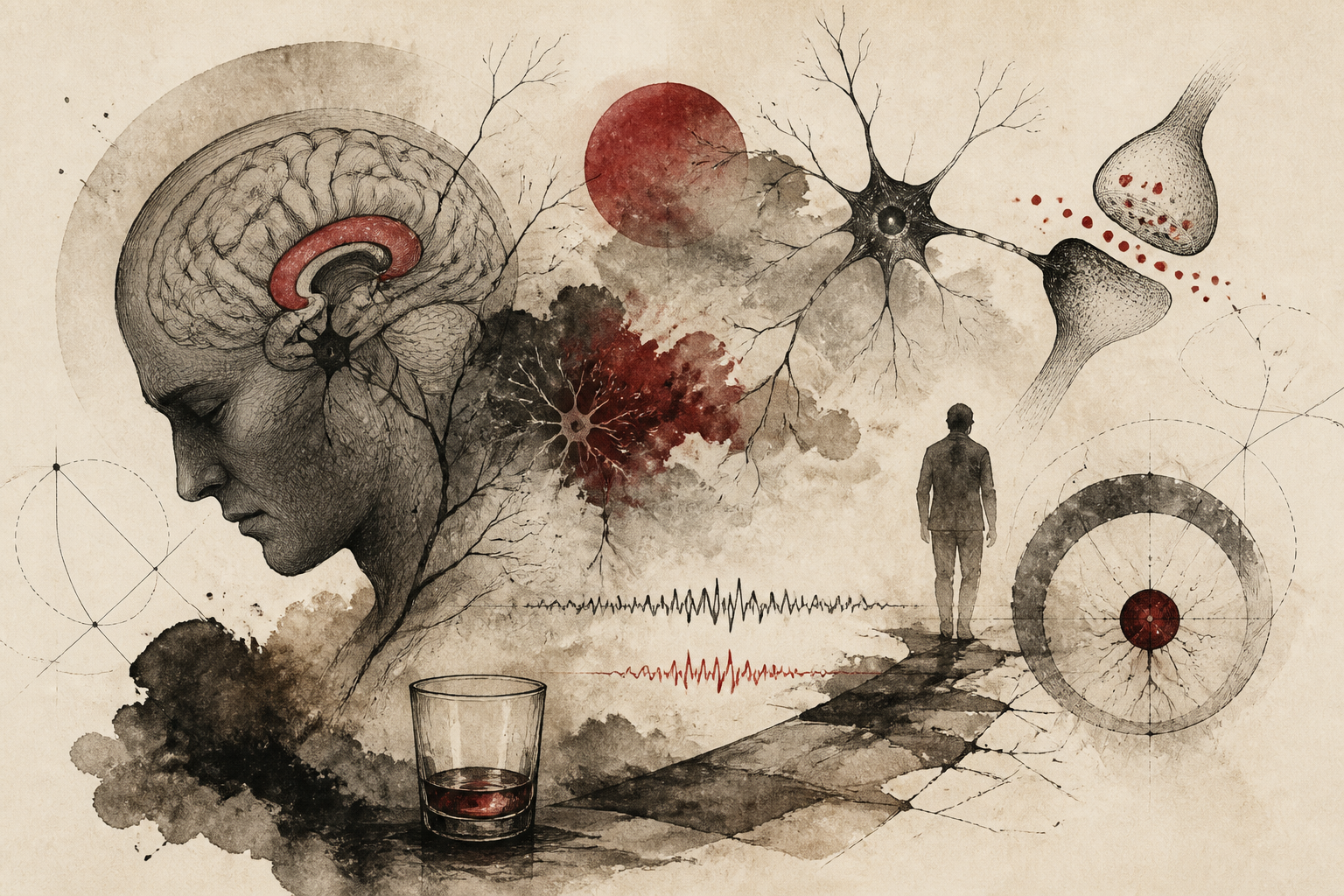
The transition from voluntary alcohol consumption to uncontrollable, compulsive usage remains one of the most significant challenges in clinical addiction treatment. For many individuals struggling with alcohol use disorders, the period of abstinence is not merely a recovery phase but a window of neurological vulnerability. According to recent findings published in the domain of neuroscience and addiction research, the act of quitting alcohol may, paradoxically, prime the mammalian brain for a more severe return to substance use. Researchers have identified that mice demonstrating compulsive drinking behaviors after a period of abstinence exhibit a profound increase in activity within specific neural circuits associated with stress and addiction. Most notably, this biological signal manifests before the re-introduction of alcohol, suggesting a predictive physiological marker for relapse severity. This discovery, as reported by ScienceDaily, offers a critical lens into the neurobiological shifts that occur during withdrawal and how these shifts dictate future behavioral trajectories.
The Neurobiology of Withdrawal and Compulsion
To understand why some individuals return to moderate use while others descend into compulsive patterns, researchers must look at the limbic system and the prefrontal cortex—the brain's emotional and executive hubs. In the study referenced, the focus shifted toward the intricate signaling that occurs when a subject is deprived of a chronic substance. During the initial phases of alcohol exposure, the brain’s reward system is the primary driver of behavior. However, as the cycle of consumption and abstinence repeats, the locus of control often shifts. The research highlighted by ScienceDaily indicates that mice that eventually developed compulsive drinking habits—defined as continuing to seek alcohol despite negative consequences or showing an inability to regulate intake—showed more than double the activity in a specific brain region linked to both stress responses and addictive behaviors. This hyperactivity suggests that the brain is not merely resetting during abstinence; it is undergoing a recalibration that may lower the threshold for compulsive re-engagement.
Mechanisms of Neural Priming and Stress Circuitry
The methodology employed to uncover these findings involved monitoring neural activity patterns during the transition from chronic drinking to forced abstinence and then back to alcohol access. By utilizing advanced imaging and recording techniques, scientists were able to track the firing rates of neurons in real-time. The most compelling evidence emerged during the quiet period of abstinence. The researchers observed that the signal of heightened activity in stress-related circuits appeared well before the subjects were even given the opportunity to drink again. This suggests a 'priming' mechanism: the brain is essentially preparing for a high-stress state that it attempts to mitigate through alcohol consumption. The doubling of activity in these regions serves as a biological precursor, separating the subjects who would later drink moderately from those who would fall into a compulsive, high-risk pattern. This distinction is vital because it moves the understanding of relapse from a failure of willpower to a measurable physiological state dictated by neural circuitry.
Implications for Predictive Diagnostics and Clinical Intervention
The ability to identify a biological signal that precedes the act of relapsing has profound implications for the future of addiction medicine. If the findings in murine models can be successfully translated to human neurobiology, clinicians might one day be able to use neuroimaging or biomarkers to assess a patient’s risk level during the withdrawal phase. In the current clinical landscape, relapse prevention is often reactive, occurring after the individual has already returned to substance use. By identifying the "double activity" signal in stress-related brain regions, healthcare providers could theoretically intervene earlier, providing targeted pharmacological or behavioral therapies to stabilize the neural environment before the compulsion to drink becomes overwhelming. This shift toward predictive diagnostics would represent a paradigm shift in how recovery is managed, prioritizing the physiological stabilization of stress circuits as a prerequisite for long-term sobriety.
Limitations and Theoretical Open Questions
While the study provides a robust framework for understanding the neural precursors of compulsion, there are significant hurdles to overcome before these findings can be integrated into human clinical practice. First, the neurological complexity of the human brain far exceeds that of the murine models used in the study. While the basic circuitry of stress and reward is conserved across species, the social, environmental, and cognitive factors that influence human addiction are not present in a laboratory setting. Furthermore, the researchers must determine whether this heightened neural activity is a permanent change caused by chronic alcohol exposure or a transient state that can be reversed through specific interventions. Another open question involves the role of genetics: why do only certain subjects exhibit this doubled activity during abstinence? Identifying the genetic or environmental triggers that cause this specific neural signature will be the next frontier in this line of inquiry.
The Path Forward in Addiction Research
In conclusion, the research reported by ScienceDaily underscores the necessity of viewing alcohol abstinence not as a static state of recovery, but as a dynamic period of neurological transition. The discovery that stress-related brain activity doubles in those prone to compulsive drinking provides a roadmap for future studies into the 'hidden' triggers of relapse. By focusing on the signals that appear before the behavior occurs, the scientific community is moving closer to a proactive model of mental health care. For students and practitioners of psychology, this emphasizes the importance of a multidisciplinary approach—one that marries behavioral observation with a deep understanding of neurocircuitry. As we continue to decode the brain's response to substance withdrawal, the goal remains clear: to provide individuals with the biological and psychological tools necessary to navigate the high-stress window of abstinence without succumbing to the physiological pull of compulsion.
Quick answers
- How does alcohol abstinence affect the brain's stress regions?
- Research indicates that in mice that develop compulsive drinking habits, activity in brain regions associated with stress and addiction more than doubles during periods of abstinence.
- Can scientists predict who is likely to relapse after quitting alcohol?
- Based on the study, a specific neural signal appears before drinking resumes, which could potentially help researchers and clinicians predict which individuals are at the highest risk for compulsive relapse.
- What is the significance of the doubled activity in the brain before drinking begins?
- This suggests a priming mechanism where the brain's stress circuits are hyper-activated during withdrawal, creating a physiological state that predisposes the individual to compulsive substance use once alcohol becomes available.
Rewritten by Zeit editorial AI. Based on original reporting at ScienceDaily — Mind & Brain.