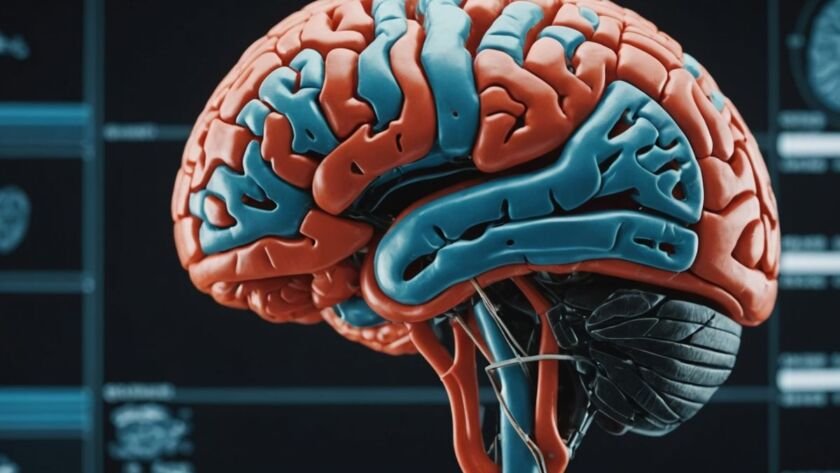
Researchers have made a groundbreaking discovery in understanding Long COVID’s brain fog, revealing that compromised blood vessel integrity in the brain is a key factor. This finding offers hope for targeted therapies and a deeper understanding of post-viral neurological conditions.
Key Takeaways
Blood Vessel Integrity Compromised: Disrupted blood vessel integrity in Long COVID patients with…
In a groundbreaking discovery, researchers have identified a specific pattern of autoantibodies in the blood that can predict the onset of multiple sclerosis (MS) years before clinical symptoms appear. This finding could pave the way for early diagnosis and more effective treatment of the debilitating disease.
Key Takeaways
Early Detection: A unique set of autoantibodies…
Advanced MRI scans, particularly diffusion tensor imaging (DTI), are showing promise in predicting which concussion patients are at risk for long-term symptoms. This breakthrough could significantly improve the accuracy of prognoses, helping to identify patients who may need further follow-up and treatment.
Key Takeaways
DTI improves prediction accuracy for long-term symptoms in concussion patients.
Standard…
Recent research from Texas A&M University reveals that children of parents with alcohol use disorders (AUD) are at risk of early aging symptoms, such as high cholesterol, heart problems, arthritis, and early-onset dementia. This risk is exacerbated if both parents have alcohol issues, particularly affecting male offspring due to inherited mitochondrial dysfunction.
Key Takeaways
Children…
Recent research has unveiled a groundbreaking discovery: sensory neurons play a crucial role in promoting breast cancer metastasis. By secreting neuropeptides, these nerves enhance tumor growth and spread, revealing a potential new therapeutic target. This finding opens new avenues for cancer treatment and underscores the critical link between the nervous system and cancer.
Key Takeaways…
A new drug, PIPE-307, shows promise in reversing multiple sclerosis (MS) damage by promoting myelin regeneration around nerve cells, potentially restoring movement and function. Developed by researchers at UC San Francisco and Contineum Therapeutics, this innovative therapy targets a specific receptor, M1R, and has already demonstrated success in animal models. PIPE-307 is currently in Phase…
Recent advancements in artificial intelligence (AI) and neuroscience are revolutionizing our understanding of the human brain, from decoding DNA to predicting hit songs and even reading daydreams. These breakthroughs promise to transform fields like genomics, personalized medicine, entertainment, and mental health diagnostics.
Key Takeaways
AI models are decoding complex genetic information, predicting hit songs, converting…
A groundbreaking clinical trial has revealed that fecal microbiota transplantation (FMT) may significantly improve motor symptoms in patients with Parkinson’s disease (PD). This innovative treatment involves transplanting healthy donor stool into patients, showing promising results over a 12-month period.
Key Takeaways
FMT significantly improved motor symptoms in Parkinson’s patients compared to a placebo group after…
Scientists at the University of Southern California have developed an innovative AI-powered system to track ingestible devices that monitor disease markers in the gut. This non-invasive technology could revolutionize how individuals monitor their gastrointestinal (GI) tract health at home, eliminating the need for invasive hospital tests.
Key Takeaways
AI-powered system tracks ingestible devices for monitoring…
A groundbreaking study has revealed that dopamine signals have a minimal impact on rapid neural activity in the striatum, challenging long-held beliefs about dopamine’s role in brain signaling. Using advanced optical neural chip technology, researchers found that dopamine signals within normal physiological ranges do not significantly affect neural processing.
Key Takeaways
Dopamine signals within normal…
Researchers at Washington University School of Medicine in St. Louis have developed a groundbreaking method to transform skin cells into brain neurons, capturing the aging effects crucial for studying late-onset Alzheimer’s disease. This innovative technique allows for detailed analysis of Alzheimer’s hallmarks, such as amyloid beta buildup, in lab-derived neurons.
Key Takeaways
Researchers transformed skin…
A groundbreaking study has revealed that certain genetic factors may enable partial or full recovery from amyotrophic lateral sclerosis (ALS), a rare phenomenon that has puzzled scientists for decades. This discovery opens new avenues for potential ALS treatments by targeting the IGF-1 pathway.
Key Takeaways
Certain genetic factors may allow partial or full recovery from…